Kitchen Cupboard Gas Struts for Lift-Up Cabinet Doors
TieYing manufactures kitchen cupboard gas struts for kitchen cabinet manufacturers, furniture hardware brands, distributors and OEM customers. Our gas spring solutions help lift-up cabinet doors open with less manual effort and provide support throughout the intended opening movement.
Whether you are developing a new kitchen cabinet range, sourcing components for mass production or replacing existing cabinet lift supports, we can help evaluate the gas spring specifications required for your application.
From force and stroke to extended length, end fittings and mounting positions, each specification should match the cabinet door’s dimensions, weight, hinge arrangement and available installation space.
Why Work with TieYing?
Custom gas spring specifications for different cabinet designs
Application-based force and dimensional selection
Mounting fittings and configuration options
Technical support for OEM and ODM projects
Sample evaluation and bulk supply arrangements
Gas Struts Designed for Modern Kitchen Cupboards
Kitchen cupboards make efficient use of wall and overhead storage space. However, upward-opening doors must be easy to lift, remain supported in the intended open position and close without placing unnecessary stress on the cabinet hardware.
A properly selected gas strut uses its internal gas pressure to generate extension force, helping counterbalance the door during movement. The resulting performance depends on more than the gas spring’s force rating. Door weight, centre of gravity, hinge position and mounting geometry all affect the lifting assistance available.Easier Opening for Overhead Cabinets
Large or heavy cupboard doors can be difficult to raise, particularly when they are positioned above head height. A suitably specified gas strut helps reduce the manual effort required to open the door.Support During Access
When a cupboard door is open, the gas spring can help support it in its intended position. The correct force and mounting arrangement are essential for maintaining suitable support throughout the required movement.Controlled Opening and Closing
Gas struts work together with the cabinet hinges and any required damping components. The complete mechanism should provide predictable movement without excessive opening force or damaging impact during closing.Where soft-close performance is required, a suitable damping solution must be selected. Standard gas struts do not automatically provide soft closing.Compact Hardware Integration
Kitchen cupboards often have limited internal clearance around shelves, hinges and stored items. Suitable gas spring dimensions and mounting fittings help the mechanism fit within the cabinet while allowing the door to move through its intended opening range.Consistent Performance in Production
Kitchen cabinet manufacturers need repeatable performance across multiple units. Using agreed force ratings, dimensions, mounting configurations and product specifications helps support consistent assembly and operation across production runs.Kitchen Cupboard Gas Strut Applications
Lift-Up Kitchen Wall Cabinets
Lift-up wall cabinets use upward-opening doors to provide convenient access to overhead storage. Gas struts assist the lifting movement and help support the door when open.The required force, stroke and mounting positions depend on the door’s dimensions, weight, hinge arrangement and desired opening angle.Flap-Style Cabinet Doors
Flap-style cupboard doors may open upward from a horizontal or angled position, depending on the cabinet design. The gas spring must provide suitable leverage throughout the opening arc while allowing the door to close fully.Mounting geometry is particularly important because the leverage available to the gas spring changes as the door moves.Wide or Heavy Cabinet Fronts
Wide doors, solid wood panels and certain glass-fronted designs can create greater support requirements. Depending on the door’s weight, stiffness and geometry, the design may require two matched gas struts installed in a suitable arrangement.The cabinet structure and mounting points must also be strong enough to withstand the loads generated during operation.Compact Overhead Cupboards
Compact kitchens often leave little room for internal hardware. A suitable gas spring must fit within the available space while providing the necessary stroke and clearance throughout the opening movement.The design should account for nearby shelves, hinges, cabinet sides and other components that could interfere with the gas spring.Custom Modular Kitchen Systems
Kitchen cabinet brands may use different door materials, dimensions, hinge systems and opening mechanisms across their product ranges.For OEM projects, TieYing can review drawings or existing samples to help develop a gas spring specification that matches the intended cabinet configuration.How to Choose the Right Gas Struts for Kitchen Cupboards?

Selecting kitchen cupboard gas struts requires more than matching a force rating to the door’s weight. The complete door mechanism must be considered to achieve suitable lifting assistance, movement and fitment.
1. Door Weight and Centre of Gravity
Start with the total weight of the moving door assembly, including the door panel, frame, glass and attached hardware.
The centre of gravity determines how much turning moment the door creates around its hinge axis. Two doors with the same weight may require different gas spring forces because their dimensions, weight distribution and hinge positions differ.
Door weight is an important starting point, but it is not sufficient to determine the final specification.
2. Gas Spring Force
Gas spring force is normally specified in Newtons (N). It determines the extension force available to assist the door.
The required force depends on the door’s weight, centre of gravity, number of gas springs and mounting geometry.
An underspecified gas spring may provide insufficient lifting assistance. An excessive force rating can make the door difficult to close or cause it to open too aggressively.
TieYing recommends evaluating the complete cabinet mechanism before confirming the required force rating.
3. Stroke and Overall Length
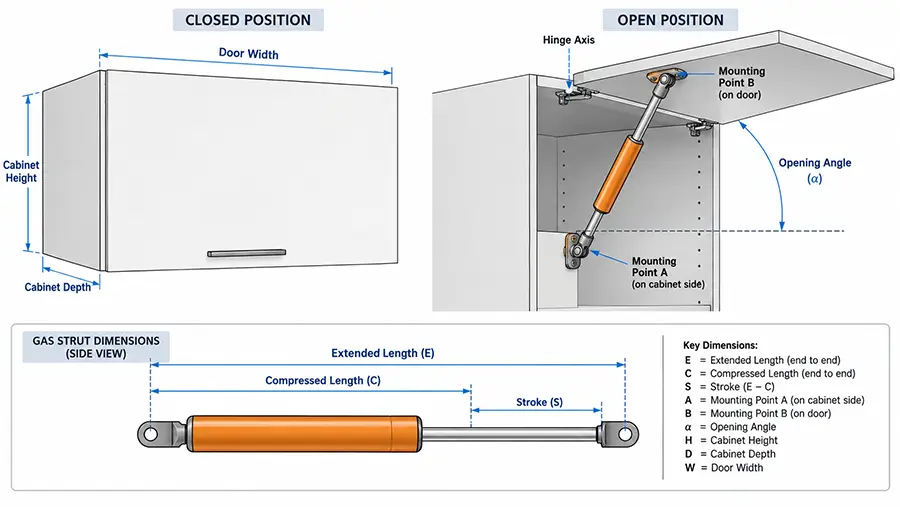
Stroke is the distance the gas spring rod travels between its compressed and extended positions. Extended length and compressed length determine whether the component fits the cabinet and provides the required movement.
An unsuitable stroke may prevent the door from reaching its intended opening angle. An incorrect overall length may create interference or restrict the movement of the mechanism.
Both the fully closed and fully open positions should be checked before finalizing the dimensions.
The cabinet mechanism should also have suitable travel limits so that the gas spring is not unintentionally used as the mechanical stop.
4. Hinge Position and Mounting Geometry
The positions of the gas spring mounting points relative to the hinge axis directly affect the available leverage.
Moving a mounting bracket can change the effective lifting assistance, required stroke, working angle and clearance throughout the opening movement.
A suitable mounting position should therefore be evaluated across the complete movement arc rather than only when the door is closed.
5. One Gas Strut or Two?
The required number of gas struts depends on the door’s dimensions, weight, stiffness, hinge arrangement and mounting geometry.
Some smaller doors may be suitable for a single gas strut. Wider or heavier doors may require two matched units to provide more balanced support and reduce uneven loading.
There is no universal door-weight or width threshold that determines the correct configuration for every cabinet. The specific mechanism must be assessed before the final arrangement is confirmed.
6. End Fittings and Mounting Brackets
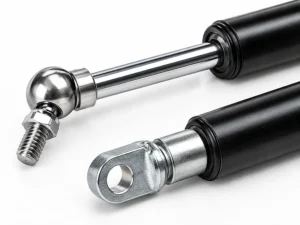
End fittings must be compatible with the cabinet structure and allow the gas spring to move freely throughout its working range.
Depending on the application, the design may use ball-joint fittings, eyelet connections, mounting brackets or other suitable hardware.
Bracket strength, screw positioning and the material supporting the bracket are also important. Thin cabinet panels may require appropriate reinforcement to withstand repeated operating loads.
7. Opening Angle and Available Clearance
The required opening angle affects the gas spring’s stroke, mounting positions and available leverage.
The design should be checked for interference with shelves, cabinet sides, adjacent doors and surrounding structures.
For overhead cupboards, it is also important to consider the intended access opening and whether the door can be operated comfortably in the available space.
8. Material and Surface Finish
Kitchen environments can expose hardware to moisture, steam, grease and cleaning products. The appropriate material and surface finish should be selected according to the actual exposure conditions and maintenance requirements.
Where corrosion resistance is important, suitable protective finishes or stainless steel options can be evaluated.
The final choice should reflect the intended environment and the available product specifications rather than relying on a general claim that all gas springs are suitable for every kitchen condition.
9. Closing Behaviour and Damping
Some cabinet designs require lifting assistance only, while others also need reduced closing speed or impact.
A standard gas spring and a gas damper serve different functions. The gas spring generates extension force to assist movement, while a damper resists movement and helps control speed.
If the cabinet requires soft closing, the gas spring, hinge system and damping components should be evaluated together to achieve the intended result.

Custom Kitchen Cupboard Gas Struts for OEM Projects
Kitchen cabinet manufacturers rarely use exactly the same door dimensions, hinge systems and installation spaces. A standard gas spring may suit one cabinet design, while another requires different force, stroke, length or mounting hardware.
TieYing supports custom gas spring development based on application requirements, technical drawings, existing samples and dimensional specifications.Custom Force and Stroke
Gas spring force and stroke can be evaluated according to the door load, required travel and mounting geometry.Custom Extended and Compressed Lengths
Overall dimensions can be reviewed against the available cabinet space and the required opening movement.End Fittings and Mounting Configurations
Suitable mounting connections and brackets can be discussed according to the cabinet frame, door panel and installation requirements.Material and Surface Finish Options
Material and surface finish options can be evaluated according to the intended kitchen environment, appearance requirements and corrosion exposure.Motion Control Requirements
Where additional closing control is needed, TieYing can review whether a suitable damped gas spring configuration or a separate damping component is appropriate.OEM/ODM and Bulk Supply
For kitchen cabinet brands, furniture hardware distributors and OEM customers, TieYing supports project-based development and custom manufacturing discussions.Specifications, sample requirements, packaging and repeat-order arrangements can be agreed according to the project and available manufacturing options.The final configuration should be confirmed against the actual cabinet design before mass production.Common Kitchen Cupboard Gas Strut Problems and Solutions
Poor cabinet movement is not always caused by a defective gas spring. The force rating, mounting geometry, hinge arrangement and available travel should be checked together.
The Cupboard Door Is Difficult to Lift
The gas spring may provide insufficient assistance for the door’s weight and geometry. Hinge friction, unsuitable mounting positions or an incorrect opening mechanism may also contribute.
What to check: Door weight, centre of gravity, hinge condition, gas spring force and mounting locations.
The Door Opens Too Aggressively
Excessive force or unsuitable leverage can cause the door to rise too quickly or require too much effort to close.
What to check: Gas spring force, mounting positions, opening path and any required damping components.
The Door Will Not Stay in Its Intended Open Position
The gas spring may be underspecified, or the mounting geometry may not provide enough support at the relevant opening angle.
What to check: Actual door load, centre of gravity, gas spring condition and available support throughout the movement.
The Door Cannot Close Fully
An unsuitable compressed length, incorrect stroke or interference with other cabinet hardware may prevent the door from closing completely.
What to check: Closed-position dimensions, mounting points, clearance and the complete movement path.
The Door Moves Unevenly
A wide door supported by mismatched gas springs or poorly aligned brackets may twist or move unevenly.
What to check: Force matching, symmetrical mounting, hinge alignment and bracket stiffness.
The Door Slams During Closing
A standard gas spring does not automatically guarantee soft-close performance. If the application requires reduced closing speed or impact, the damping arrangement should be reviewed.
What to check: Gas spring function, hinge compatibility and whether a suitable damping component is required.
If the problem persists, provide TieYing with photographs, door dimensions, existing gas spring specifications and the mounting arrangement. Reviewing the complete mechanism is generally more useful than replacing the component with a higher-force model without checking the underlying cause.
How TieYing Supports Kitchen Cabinet Gas Spring Projects?
Developing a suitable gas spring configuration involves understanding the cabinet design, confirming the specifications and checking that the component fits the intended mechanism.
Step 1: Share Your Application
Provide cabinet drawings, photographs, door dimensions, estimated weight, hinge positions and the required opening angle.Step 2: Review the Technical Requirements
Evaluate the door load, mounting geometry, available installation space, required stroke and any damping requirements.Step 3: Confirm the Proposed Specification
Review the proposed force, dimensions, end fittings and mounting configuration against the cabinet design.Step 4: Evaluate Samples
Where required, use samples to check fitment, opening effort, closing behaviour and compatibility with the cabinet structure.Step 5: Confirm Production Requirements
Once the configuration is approved, confirm the agreed specifications, order quantity, packaging and other production requirements.Step 6: Support Repeat Orders
For ongoing OEM and distributor programs, agreed specifications and packaging requirements help maintain consistency across repeat orders.What Information Is Needed for a Kitchen Cupboard Gas Strut Quote?
Providing the right information helps TieYing evaluate your application and identify the additional measurements needed to recommend a suitable gas spring.
Cabinet and Door Details
- Door width and height
- Complete moving door weight, if known
- Door material and frame construction
- Hinge type and hinge position
- Required opening angle
Gas Spring Requirements
- Existing gas spring model, if applicable
- Force rating, if known
- Stroke and extended length, if known
- Available installation space
- End fittings and mounting bracket requirements
Operating Requirements
- Desired opening and closing behaviour
- Whether additional damping or soft-close performance is needed
- Expected operating frequency
- Environmental and corrosion-resistance requirements
Purchasing Requirements
- Estimated order quantity
- Expected annual demand, if available
- Sample or prototype requirements
- Packaging, labeling and OEM branding requirements
Why Choose TieYing as Your Kitchen Cupboard Gas Strut Supplier?
Choosing the right kitchen cupboard gas strut supplier involves more than comparing product prices. Cabinet manufacturers need components that fit their designs, provide suitable lifting assistance and meet their production requirements.
TieYing manufactures gas springs for industrial and furniture applications, helping kitchen cabinet manufacturers, furniture hardware brands, distributors and OEM customers find suitable solutions for their projects. We focus on application requirements, product specifications and customization to help customers develop gas spring solutions that work with their cabinet designs.Application-Based Gas Spring Selection
Every kitchen cupboard has its own combination of door weight, dimensions, hinge position and available installation space. Selecting a gas spring based on weight alone may lead to unsuitable opening or closing behaviour.TieYing can review your cabinet drawings, existing samples and technical requirements to help evaluate the appropriate force, stroke, extended length and mounting configuration. This application-based approach helps reduce specification errors before production begins.Custom Specifications for Different Cabinet Designs
Standard gas springs may not fit every kitchen cabinet design. Custom projects can require different force ratings, dimensions, end fittings or mounting arrangements.TieYing supports gas spring customization according to project requirements and available manufacturing options. Whether you are developing a new cabinet model or adapting an existing product, we can discuss the specifications needed to match your application.Support for OEM and ODM Projects
Kitchen cabinet brands and furniture hardware companies often need components developed around their own product designs rather than off-the-shelf solutions.TieYing works with B2B customers on application reviews, specification discussions and custom gas spring projects. Drawings, product samples and dimensional information can help establish the requirements for prototype evaluation and production planning.Consistent Specifications for Repeat Orders
For cabinet manufacturers and distributors, maintaining consistent product specifications across repeat orders is important for assembly, inventory planning and finished-product performance.Agreeing on the gas spring force, dimensions, end fittings and other relevant specifications helps establish a clear basis for repeat purchasing. TieYing can discuss product documentation, packaging and order requirements with customers as part of their ongoing supply arrangements.Gas Spring Solutions for Different Kitchen Applications
Kitchen hardware requirements vary between compact wall cupboards, wide lift-up doors and other flap-style cabinet designs. The appropriate gas spring must suit the intended movement and available mounting space.TieYing considers the application requirements when discussing gas spring configurations, helping customers identify suitable options for their cabinet structures and operating needs.Direct Communication With a Gas Spring Manufacturer
Working directly with a manufacturer allows buyers to discuss technical requirements, product dimensions and customization needs with the source of supply.Instead of selecting a component by appearance alone, customers can share drawings, photographs or existing samples for a more informed specification review. This helps create a clearer process for evaluating product suitability before committing to a production order.A Practical Partner for Long-Term B2B Supply
For kitchen cabinet manufacturers, hardware distributors and OEM customers, a suitable supplier should understand both the product requirements and the purchasing process.TieYing supports project discussions covering gas spring specifications, sample requirements, order quantities and packaging arrangements. By establishing clear requirements at the beginning of a project, both parties can work toward a more consistent and efficient supply process.


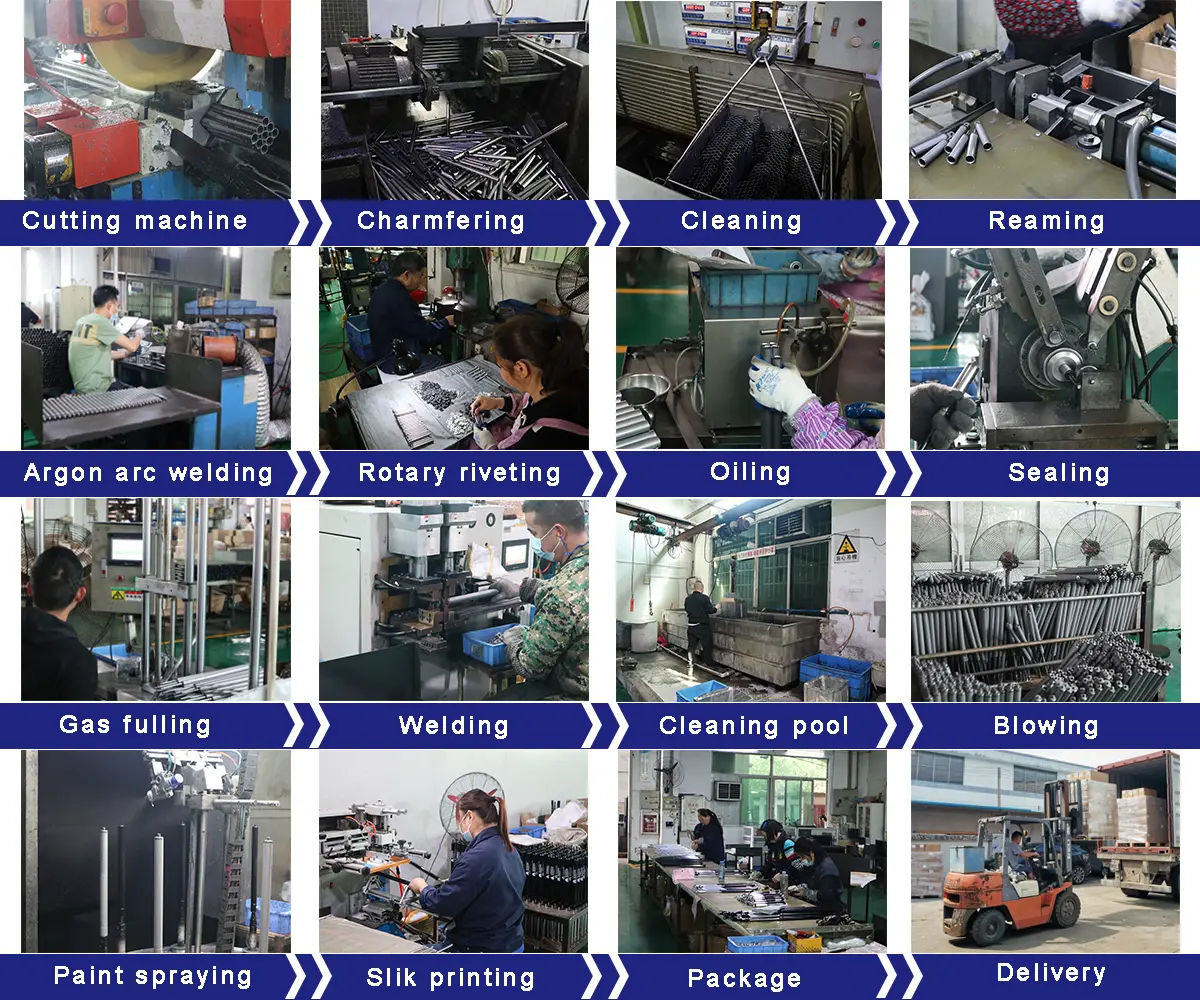
TieYing Factory Video Verified by SGS
Competitive Advantages of TieYing Gas Springs
| Item | TieYing Gas Springs (TieYing Supplier) | Standard Gas Springs (Other Supplier) |
|---|---|---|
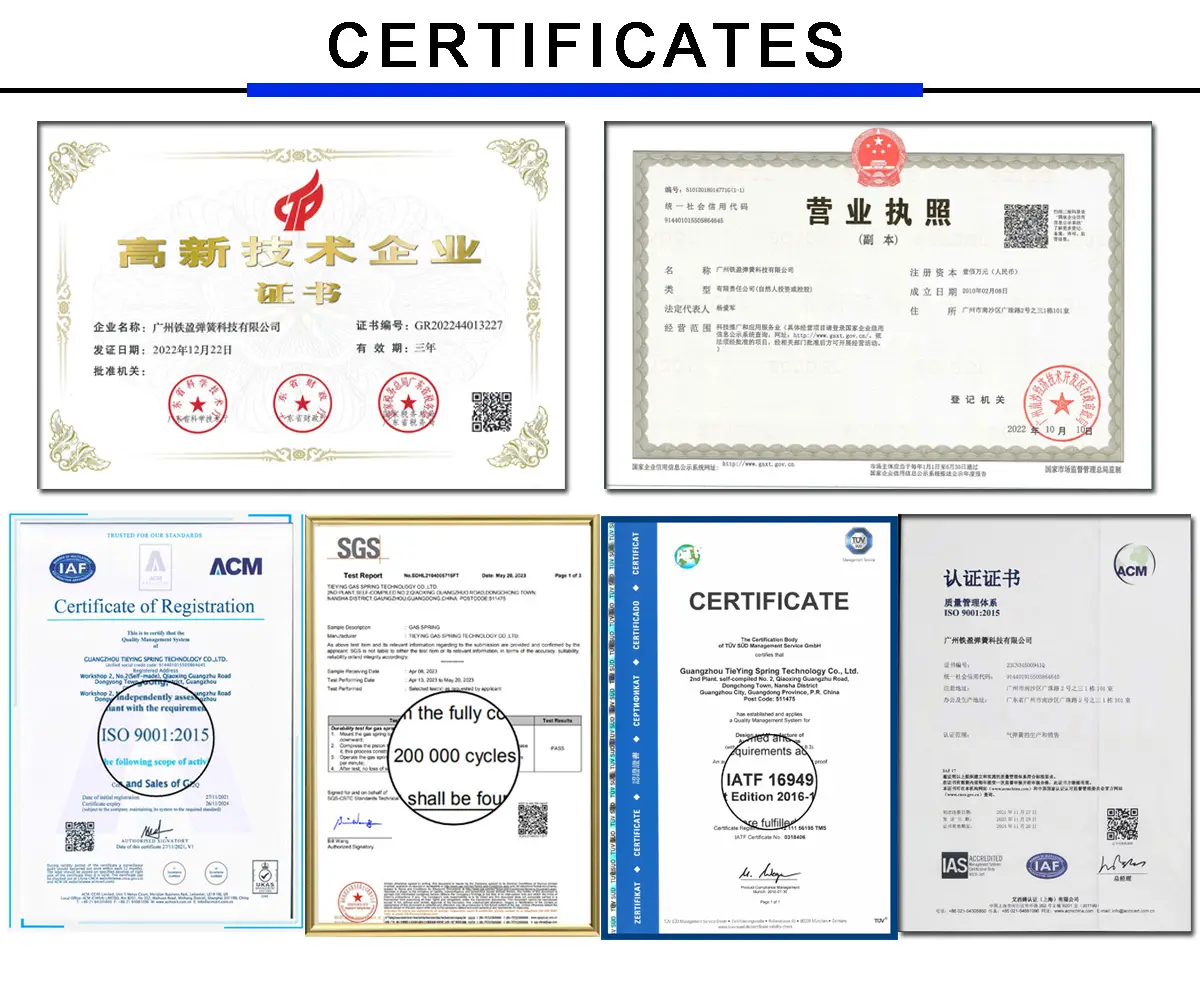
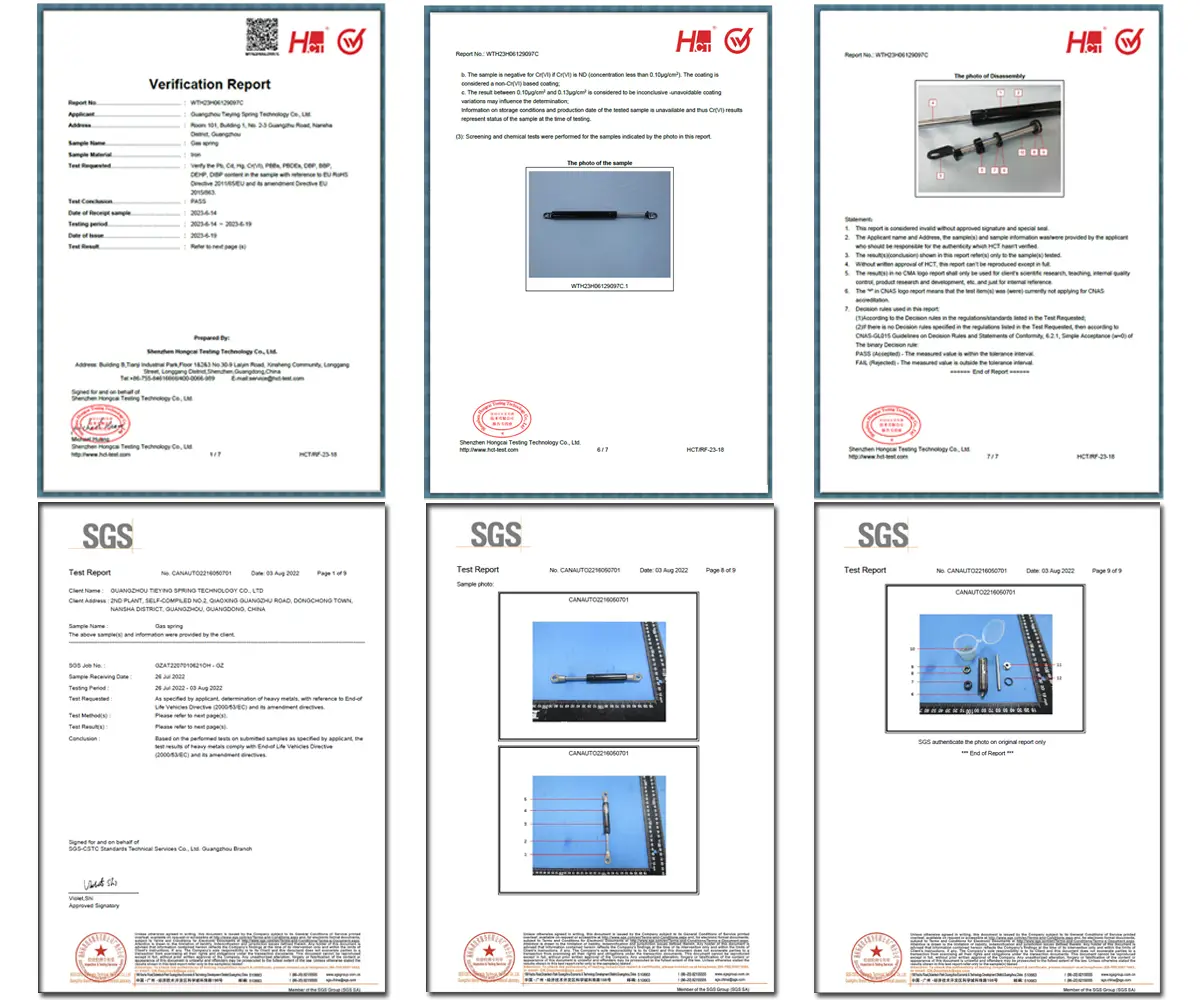
| Certificate | SGS 200000 Cycles Durability Test, ROHS, T16949, IS09001 | Maybe just ISO9001 |
| Material | Top seamless steel (Full inspection by Professional testing equipment) | Maybe steel |
| Oil | Anti-wear hydraulic oil from Garmany | Maybe Semi-Synthetic |
| Piston Roughness | Up to Ra 0.696um | Maybe Ra 0.4um |
| Gas spring resistance | 100°C~-40°C | Maybe 60°C |
| Gas | 99.99% nitrogen | Maybe oxygen / Impure nitrogen |
| Uselife | 80,000-200,000 cycles with SGS test report | Maybe 50,000 cycles |
| Salt spray testing | Up to 96 hours | Maybe up to 12 hours |
| Inspection | All procedure sampling inspect, complete inspect before delivery | Maybe sampling inspection |
| Defective product | Re-produce new, If reach 10%, 100% items re-produce new | Maybe Repair |
Frequently Asked Questions About Kitchen Cupboard Gas Struts
What are kitchen cupboard gas struts?
Kitchen cupboard gas struts are gas springs designed to assist the opening and support of cupboard doors, particularly upward-opening wall cabinets and flap-style doors. Their force and dimensions must match the door’s weight, hinge arrangement and mounting geometry.
How do I choose the right gas strut for a kitchen cupboard?
Start with the door’s dimensions, complete moving weight, centre of gravity, hinge position, required opening angle and available installation space. The required force, stroke and extended length should then be evaluated against the mounting geometry. Door weight alone is not enough to determine the correct specification.
How many gas struts does a kitchen cupboard door need?
The number depends on the door size, weight, stiffness, hinge arrangement and mounting geometry. Some smaller doors may use one gas strut, while wider or heavier doors may require two matched units. The configuration should be confirmed for the specific cabinet design.
Do kitchen cupboard gas struts provide soft closing?
Not all gas struts provide soft-close performance. A standard gas spring assists lifting and supports the moving door, while damping controls movement speed. If soft closing is required, a suitable damped gas spring, separate damper or compatible lift-up mechanism may be necessary.
Can TieYing manufacture custom kitchen cupboard gas struts?
TieYing supports custom gas spring development based on application requirements, drawings, samples and dimensional specifications. Available options for force, stroke, overall length, fittings and damping should be confirmed for each project.
Can gas struts fit into compact kitchen cabinets?
They can be suitable for compact cabinet designs when the force, stroke, overall length and mounting positions are matched to the available space. The gas spring must move through its full working arc without interfering with shelves, hinges or stored items.
Are kitchen cupboard gas struts suitable for humid environments?
The appropriate material and surface finish depend on exposure to moisture, steam, grease and cleaning products. Where corrosion resistance is important, suitable protective finishes or stainless steel options can be evaluated for the application.
Can I replace an existing kitchen cupboard gas strut?
Yes, but the replacement should match the original component’s force, stroke, overall length, end fittings and mounting geometry. If the existing gas strut performs poorly, review the complete mechanism before selecting a replacement with a different force rating.
What information should I provide for a quotation?
Provide the cabinet door dimensions, approximate weight, hinge position, required opening angle, available installation space, photographs or drawings, and estimated order quantity. Existing product specifications or samples are also useful.
Does TieYing support OEM and bulk orders?
TieYing supports OEM/ODM and custom manufacturing projects for B2B customers. Product specifications, sample evaluation, packaging and repeat-order arrangements can be discussed according to the application and agreed project requirements.
Looking for a Kitchen Cupboard Gas Strut Manufacturer?
The right gas spring should fit your cabinet structure, provide suitable lifting assistance and work reliably with the intended hinge and damping system.
TieYing works with kitchen cabinet manufacturers, furniture hardware brands, distributors and OEM customers to evaluate application requirements and develop suitable gas spring configurations.
Send us your cabinet drawing, door dimensions, existing sample or technical requirements. Our team can review your application and discuss a suitable configuration for your project.