
Custom Furniture Gas Struts for Smooth, Controlled Movement
- Custom force, stroke and dimensions
- Solutions for a wide range of furniture mechanisms
- Mounting fittings and configuration options
- OEM/ODM manufacturing and bulk supply support
Furniture Gas Struts Designed Around Your Mechanism
A furniture gas strut is more than a lifting component. Its performance depends on how it works with the furniture frame, hinges, moving panel and mounting brackets.
A gas spring uses compressed gas inside a sealed cylinder to generate extension force. When correctly specified and installed, it can assist lifting and help support a moving component throughout its intended range of travel.
However, two furniture panels with the same weight may require different gas struts because their dimensions, centres of gravity, hinge positions and mounting arrangements are different.
TieYing approaches furniture gas spring projects according to the complete mechanism rather than selecting a product based on weight alone. This helps furniture manufacturers work towards a suitable balance of opening effort, movement, installation space and repeatable performance.
Furniture Applications We Support
Different furniture designs place different demands on gas springs. TieYing supports furniture manufacturers and hardware suppliers with application-based solutions for a variety of lifting, opening and adjustment mechanisms.
1. Cabinet Doors and Lift-Up Panels
Lift-up cabinet doors are widely used in kitchens, living rooms, offices and modular furniture systems. Gas struts assist the upward movement of hinged panels and help support them in the intended open position.
The specification depends on the door dimensions, panel material, hinge location, opening angle and available clearance inside the cabinet. Compact installations may also require carefully selected stroke lengths and mounting fittings.
For dedicated kitchen cabinet applications, see our Kitchen Cupboard Gas Struts and Gas Strut for Cabinet Door solutions.
2. Storage Beds and Lift-Up Bed Frames
Storage beds use lifting mechanisms to provide access to the space beneath the mattress platform. The gas springs must work with the bed frame, mattress, hinge assembly and lifting hardware to provide suitable assistance throughout the opening movement.The required force depends on the total moving load, centre of gravity, mounting geometry and number of gas springs. A suitable design should make the platform manageable to lift without making it excessively difficult to close.
For dedicated applications, explore our Ottoman Bed Gas Struts.
3. Wall Beds and Fold-Down Furniture
Wall beds and Murphy beds require gas springs matched to a larger moving structure that folds between its stored and sleeping positions.
These applications demand particular attention to the bed frame weight, mattress configuration, pivot locations, available cabinet space and full travel range. The gas spring force must be appropriate for the mechanism in both its opening and closing movements.
TieYing can review application drawings and mounting dimensions to discuss suitable force, stroke and fitting configurations for wall bed projects.
Learn more about our Wall Bed Gas Springs and Murphy Bed Gas Struts.
4. Sofa Seats, Storage Benches and Upholstered Furniture
Sofa storage compartments, lift-up seating sections and storage benches often need compact hardware that remains concealed within the furniture structure.
The gas strut must fit the available space without interfering with upholstery, hinges or the surrounding frame. Its force and mounting position also need to suit the moving seat or lid.
For manufacturers developing upholstered furniture, a well-matched gas spring can help reduce manual lifting effort and improve access to concealed storage. Where controlled closing is required, the complete mechanism should incorporate an appropriate damping solution.
5. Wardrobe Lift Systems and Overhead Storage
Wardrobe lift mechanisms and overhead storage furniture may require assisted movement to make elevated storage easier to access.
Depending on the design, the mechanism may involve a hinged panel, a lift-up compartment or an adjustable assembly. The appropriate gas spring configuration must account for the direction of travel, load distribution, installation space and intended operating range.
TieYing can review the mechanism layout and technical requirements to help evaluate a suitable gas spring or related motion-control component.
6. Recliners, Adjustable Furniture and Office Furniture
Some recliners, adjustable furniture systems and office furniture assemblies use gas springs or locking gas springs to support movement and adjustment.
The correct product depends on the function of the mechanism. A standard gas spring may provide lifting assistance, while an application that requires the user to lock a component at a selected position may need a locking gas spring or a separate locking mechanism.
Seat geometry, adjustment range, load direction, user interaction and mounting constraints should all be considered before specifying the component.
7. Display Units and Special Furniture Projects
Retail display furniture, presentation cabinets and custom-designed furniture may incorporate moving panels or concealed compartments that require assisted opening.
These projects often have unique appearance requirements and limited mounting space. Custom dimensions, end fittings and mounting arrangements may therefore be more suitable than selecting a standard component without checking compatibility.
TieYing can discuss application-specific requirements with OEM customers during product development and sourcing.
Why Correct Gas Strut Selection Matters?
The right furniture gas strut should match the moving load, mounting geometry and intended user experience. Selecting a component with an unsuitable force or length can affect both the operation of the furniture and the durability of its supporting hardware.
Balanced Lifting Assistance
A gas spring with insufficient force may leave a panel difficult to lift or unable to remain in its intended open position. Excessive force can make closing difficult and place unnecessary loads on hinges, brackets and the furniture frame.Suitable Movement Throughout the Travel Range
Gas spring leverage changes as a hinged panel moves. A configuration that appears suitable in one position may behave differently near the closed or fully open position. The complete movement range should be considered during selection.Efficient Use of Installation Space
Furniture mechanisms often need to fit inside narrow cabinet sides, bed frames or concealed compartments. Extended length, compressed length, stroke and end fittings must be checked against the available space and required travel.Consistent Production and Assembly
Furniture manufacturers need components that fit the agreed design across production batches. Confirmed dimensions, force specifications, fittings and assembly requirements help reduce avoidable fitment problems during manufacturing.The Right Motion-Control Function
Gas springs, locking gas springs and dampers serve different functions. A standard gas spring provides extension force but does not automatically provide a positive lock or a dedicated soft-closing function. The component must be selected according to the actual movement and holding requirements of the furniture mechanism.How to Choose the Right Furniture Gas Struts?
Selecting furniture gas struts requires more than knowing the weight of a cabinet door or bed platform. The following factors should be reviewed before confirming a specification.
1. Moving Load and Centre of Gravity
Start by determining the total weight of the component being moved, including attached hardware and other parts that move with it.
For hinged panels, the distance between the hinge axis and the centre of gravity affects the turning moment created by the load. A heavier panel generally needs more assistance, but its dimensions and weight distribution are equally important.
2. Required Force
Gas spring force is normally specified in Newtons (N). The appropriate force depends on the moving load, the number of gas springs and the leverage created by their mounting positions.
Choosing a stronger gas spring is not always the correct solution. Excessive force can make the mechanism difficult to close, increase stress on the mounting structure or create an unsuitable opening feel.
3. Stroke and Overall Length
Stroke is the distance the piston rod travels between the compressed and extended positions.
Extended length, compressed length and stroke must be compatible with the mounting points and intended opening range. The gas spring must not reach its mechanical limit before the furniture mechanism reaches its intended travel limit unless the assembly has been specifically designed and validated for that condition.
4. Mounting Position and Opening Angle
The positions of the fixed and moving mounting points affect the gas spring’s leverage and how its force changes throughout the movement.
The design should be checked in both the closed and open positions, including intermediate positions where necessary. The brackets, hinges and surrounding frame must also withstand the loads generated during operation.
5. Number of Gas Springs
Depending on the width, weight, stiffness and geometry of the moving component, an application may require one gas spring or a matched pair.
Two correctly positioned gas springs can help distribute support across a wide panel, but the correct arrangement must be evaluated for the specific mechanism. The quantity should not be determined by panel weight alone.
6. End Fittings and Brackets
The end fittings connect the gas spring to the furniture mechanism. Ball-joint fittings, eyelet fittings, fork ends or application-specific brackets may be considered according to the mounting design and available manufacturing options.
The fitting type, pivot dimensions, attachment direction and bracket strength should be confirmed before production.
7. Operating Frequency and Environment
Furniture used every day may have different durability requirements from furniture used occasionally. Expected operating frequency, indoor humidity, exposure to cleaning products and other environmental conditions should be considered when specifying the component and surface finish.
8. Required Movement and Holding Function
Determine whether the application needs lifting assistance, position locking, controlled closing or a combination of functions.
Standard gas springs, locking gas springs and gas dampers are not interchangeable in every application. Selecting the appropriate product type helps align the component’s function with the intended furniture design.
Furniture Gas Spring Options for Different Requirements
Different furniture mechanisms require different motion-control functions. TieYing can discuss the appropriate product direction according to your design, installation space and performance requirements.
Compression Gas Springs
Compression gas springs generate extension force to assist the lifting or opening of moving furniture components. They may be suitable for hinged cabinet doors, storage lids and other furniture mechanisms that require lifting assistance.
The required force, stroke, overall length and end fittings should be matched to the application.
Locking Gas Springs
Locking gas springs are designed for applications that require a locking function in addition to gas spring force. They may be considered for certain adjustable furniture mechanisms where a component needs to remain at a selected position.
The locking principle and required operating behaviour should be confirmed for the specific design.
Gas Dampers
Gas dampers are used where controlled movement is required. Depending on their design and integration, they can help reduce movement speed or impact.
For furniture that requires a soft-closing effect, the complete mechanism must be specified to deliver the required closing behaviour. A standard compression gas spring should not be assumed to provide dedicated soft closing by itself.
Custom End Fittings and Mounting Configurations
Furniture designs vary in frame construction, available space and attachment points. Custom end fittings, brackets and dimensional configurations may be considered when a standard component cannot fit the intended mechanism.
Custom Dimensions and OEM Supply
For furniture manufacturers and hardware brands, TieYing can discuss custom force, stroke, length, fittings and packaging according to project requirements. Product drawings, existing samples and technical specifications can be used as a starting point for evaluation.
Custom Furniture Gas Struts for OEM and ODM Projects
Custom Specifications
Depending on the project and available manufacturing options, specifications can include:- Gas spring force
- Stroke and overall length
- Compressed and extended dimensions
- Rod and cylinder dimensions
- End fittings and mounting arrangements
- Product finish and material requirements
- Packaging and labelling requirements
Drawing and Sample Evaluation
If you already have a furniture mechanism, an existing gas spring or a technical drawing, these materials can help clarify the required configuration.For new product development, application photos, assembly drawings and information about the intended movement can be used to begin the technical discussion.Bulk Supply and Repeat Orders
Furniture manufacturers and distributors often need stable specifications across production runs. Agreeing on product dimensions, force requirements, fittings and packaging helps establish a clearer basis for repeat orders.TieYing can discuss production quantities, OEM/ODM requirements and supply arrangements according to the project.Technical Support for Furniture Manufacturers
Our team can review application details and discuss force selection, mounting geometry, stroke requirements and product configuration before a specification is confirmed.The goal is to identify a gas spring solution that suits the intended furniture mechanism and can be evaluated before moving forward with production.From Furniture Design to Gas Spring Supply
A clear specification process helps furniture manufacturers reduce uncertainty before placing production orders.
Step 1: Share Your Application
Provide photos, drawings or a description of the furniture mechanism. Include the type of moving component and how it opens, closes or adjusts.Step 2: Confirm the Main Requirements
Share the moving load, dimensions, opening angle, mounting positions, required movement and available installation space.Step 3: Review the Gas Spring Configuration
TieYing can discuss a suitable product direction and review the required force, stroke, length, end fittings and other relevant specifications.Step 4: Evaluate the Sample or Specification
Where appropriate for the project, confirm the proposed configuration through sample evaluation and checks against the furniture assembly.Step 5: Discuss Production and Supply
Once the specification is agreed, discuss order quantity, packaging, labelling and production arrangements.This process gives both parties a clearer understanding of the required component before proceeding with repeat or bulk supply.What Information Should You Provide for a Quote?
To help TieYing review your furniture gas spring requirements, please provide as much of the following information as possible.
- Furniture application: Cabinet door, storage bed, sofa seat, wardrobe mechanism or another furniture system.
- Moving component weight: The total weight of the panel, platform or assembly being moved.
- Dimensions: Panel width, length and other relevant measurements.
- Opening angle and movement: The intended travel range and required operating behaviour.
- Mounting positions: Available bracket locations and the distance between mounting points.
- Existing gas spring details: Force rating, part number, dimensions or photographs, if available.
- Required stroke and length: Existing specifications or the available installation dimensions.
- End fittings: Preferred fittings or mounting hardware, if known.
- Operating conditions: Expected use frequency and relevant environmental requirements.
- Order quantity: Estimated sample, trial or production quantity.
- OEM requirements: Packaging, labelling or other project-specific requirements.
Why Choose TieYing as Your Furniture Gas Strut Supplier?
Choosing a furniture gas strut supplier is about more than finding a suitable component at a competitive price. Furniture manufacturers need a supplier that understands their mechanisms, supports custom specifications, maintains consistent product quality and can work with their production requirements over the long term.
TieYing is a gas spring manufacturer based in Guangzhou, China, with manufacturing experience dating back to 2002. We support furniture manufacturers, hardware brands, wholesalers and OEM/ODM customers with application-specific gas spring solutions for cabinet doors, storage beds, wall beds, lift-up furniture and other lifting mechanisms.1. Direct Manufacturing Experience Since 2002
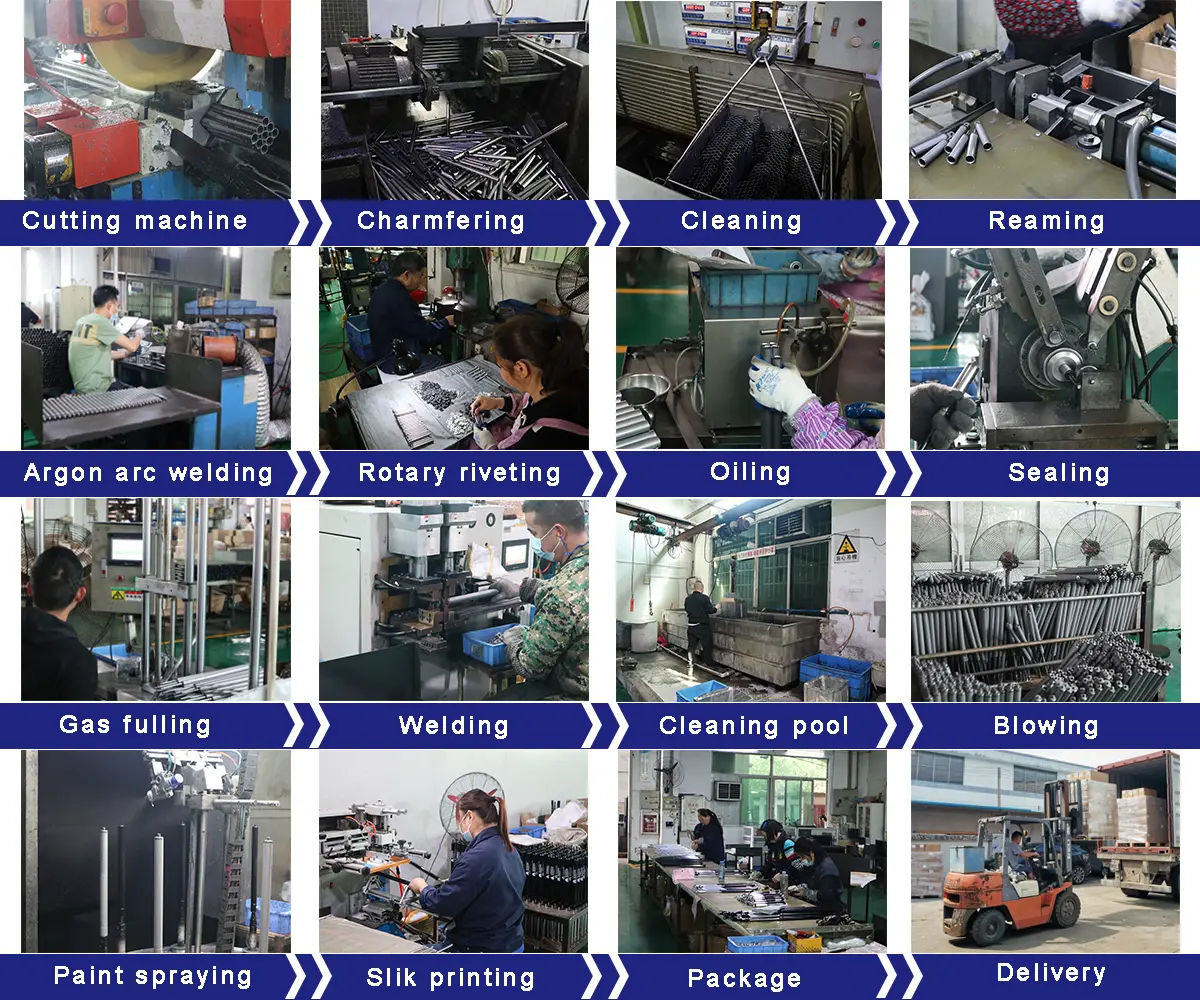
With more than two decades of gas spring manufacturing experience, TieYing understands the importance of matching product specifications to real operating conditions.Our manufacturing capabilities cover gas spring design, development, production and customization for different industrial applications, including furniture hardware.Working directly with a manufacturer gives buyers a clearer route for discussing product specifications, custom requirements and production arrangements, rather than relying solely on standard catalogue selections.2. Custom Gas Springs for Different Furniture Designs
Furniture mechanisms vary in panel weight, hinge position, installation space and opening angle. A standard gas spring may not provide the right fit or movement for every design.TieYing supports customized configurations based on your application requirements, drawings, samples or existing product specifications.Depending on the project, customization can include:- Gas spring force and stroke
- Extended and compressed length
- Cylinder and piston rod dimensions
- End fittings and mounting configurations
- Material and surface finish options
- OEM branding, packaging and labelling requirements
3. Application-Based Technical Support
Selecting a furniture gas spring requires more than matching the weight of a door or platform to a force rating.The position of the hinge, the moving component’s centre of gravity, the gas spring mounting points and the required travel range all influence the operating result.TieYing can review application photos, drawings, dimensions and existing samples to help evaluate the required force, stroke, overall length and mounting configuration.This application-based approach is particularly useful for OEM projects, redesigned furniture mechanisms and installations where available space is limited.4. Quality Management and Product Inspection
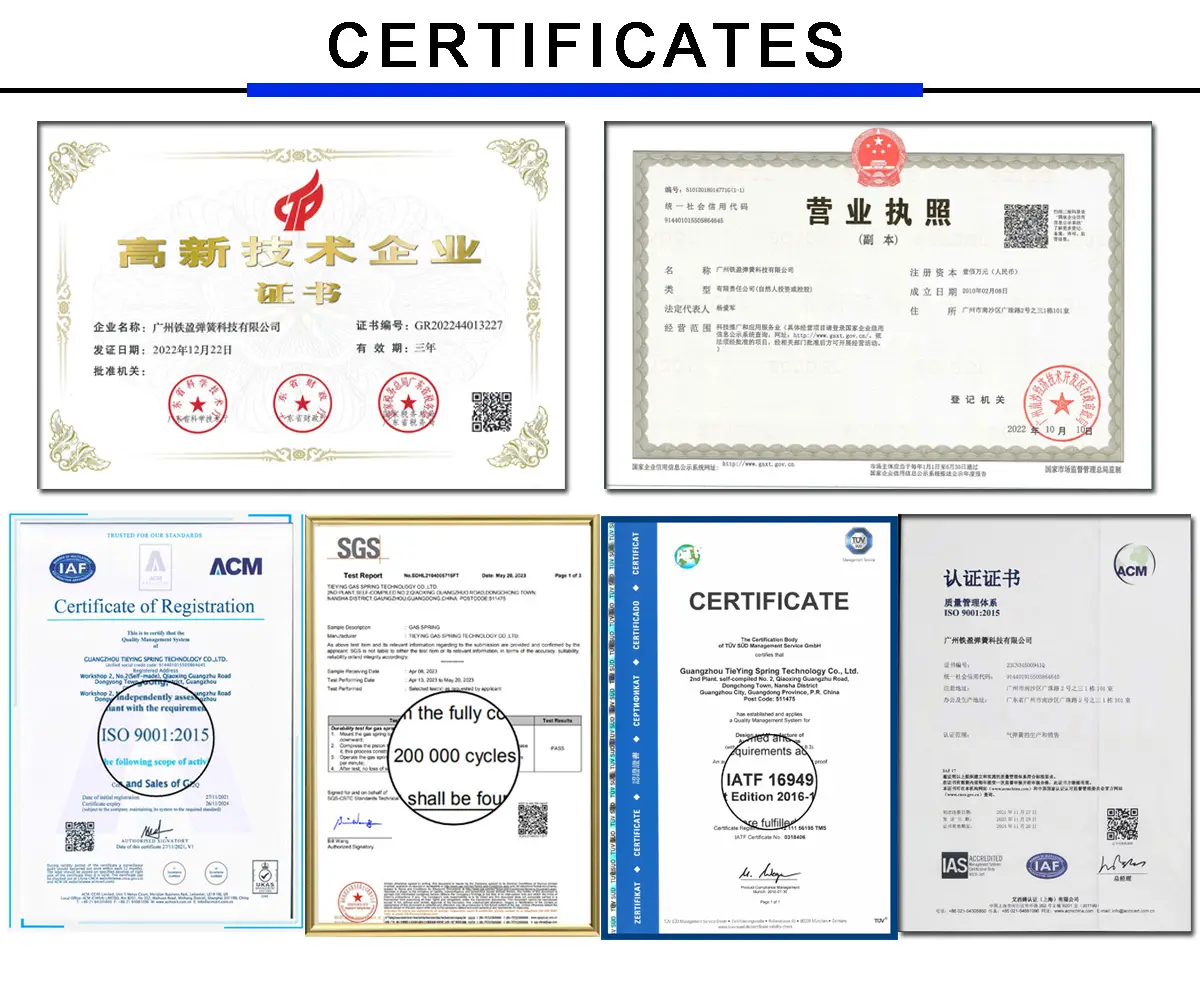
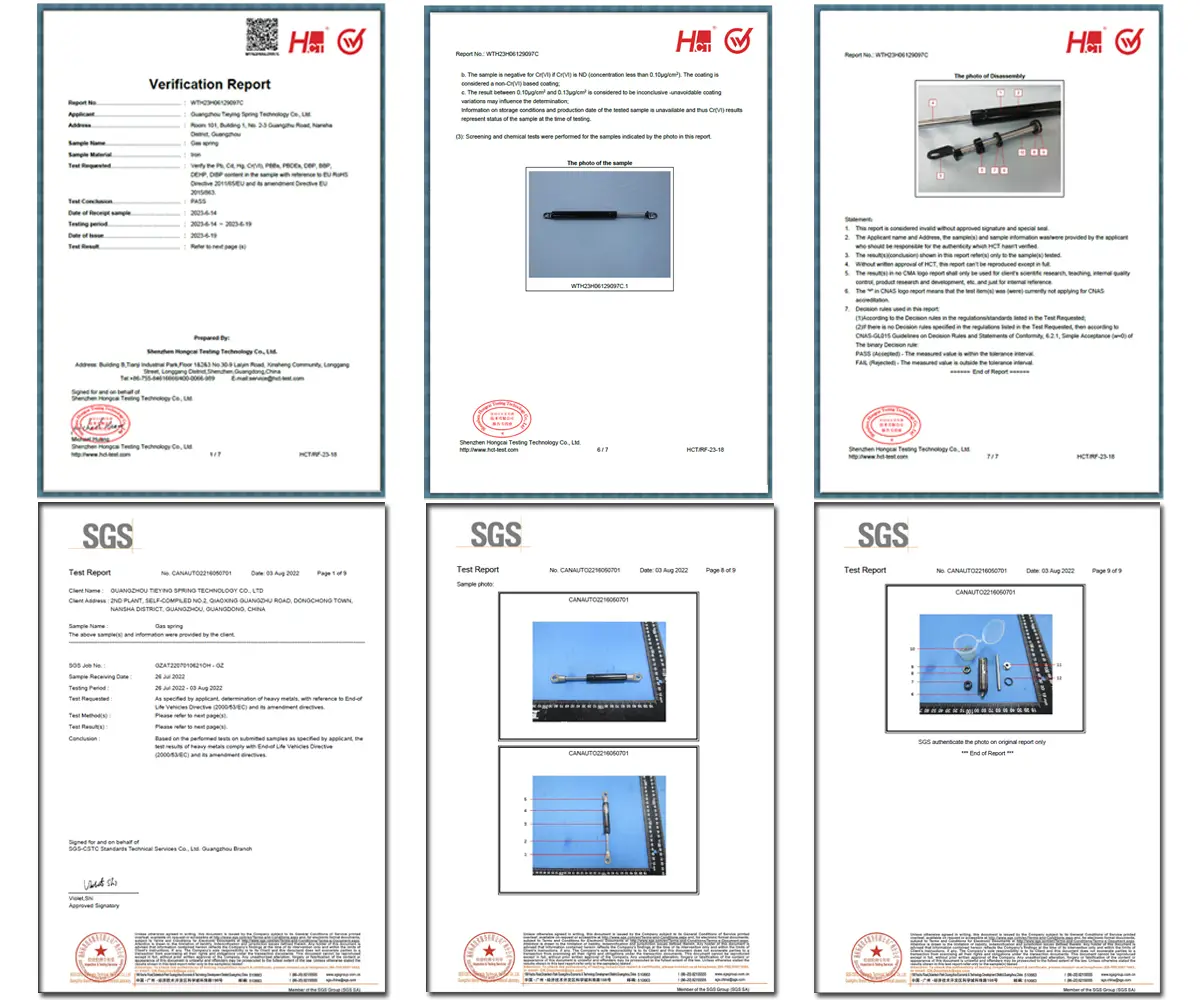
Consistent product quality matters when gas springs are installed in furniture produced across multiple batches.TieYing operates an IATF 16949-certified manufacturing facility and applies quality control procedures throughout its gas spring manufacturing process.Relevant inspection activities include pressure testing, sealing inspection, dimensional and appearance checks, and final product review before shipment.For furniture manufacturers and distributors, clear product specifications and appropriate inspection procedures help establish a more reliable basis for production approval and repeat orders.5. Manufacturing Capacity for OEM and Bulk Supply
TieYing’s manufacturing operation covers approximately 5,855 square metres, including a 1,200-square-metre manufacturing facility, with a stated annual production capacity of 3.6 million gas springs.This manufacturing base supports standard product supply, customized orders and ongoing cooperation with OEM customers and distributors.For furniture businesses planning repeat purchases, we can discuss product specifications, order quantities, packaging requirements and supply arrangements according to the project.6. A Practical Partner for International B2B Buyers
International buyers need more than a product quotation. They also need clear specification confirmation, effective communication and a workable process for samples, production and delivery.TieYing supports overseas customers with OEM/ODM manufacturing and wholesale gas spring solutions.Whether you are developing a new furniture mechanism, sourcing components for an established product line or looking for a long-term manufacturing partner, our team can discuss your technical and commercial requirements.7. Support from Initial Enquiry to Production
A successful furniture gas spring project starts with a clear understanding of the application.You can share your furniture drawings, application photos, existing gas spring samples or known technical specifications. Our team can then review the available information and discuss the next steps for product selection or customization.Where appropriate, sample evaluation can help confirm dimensions, installation compatibility and operating performance before moving to production.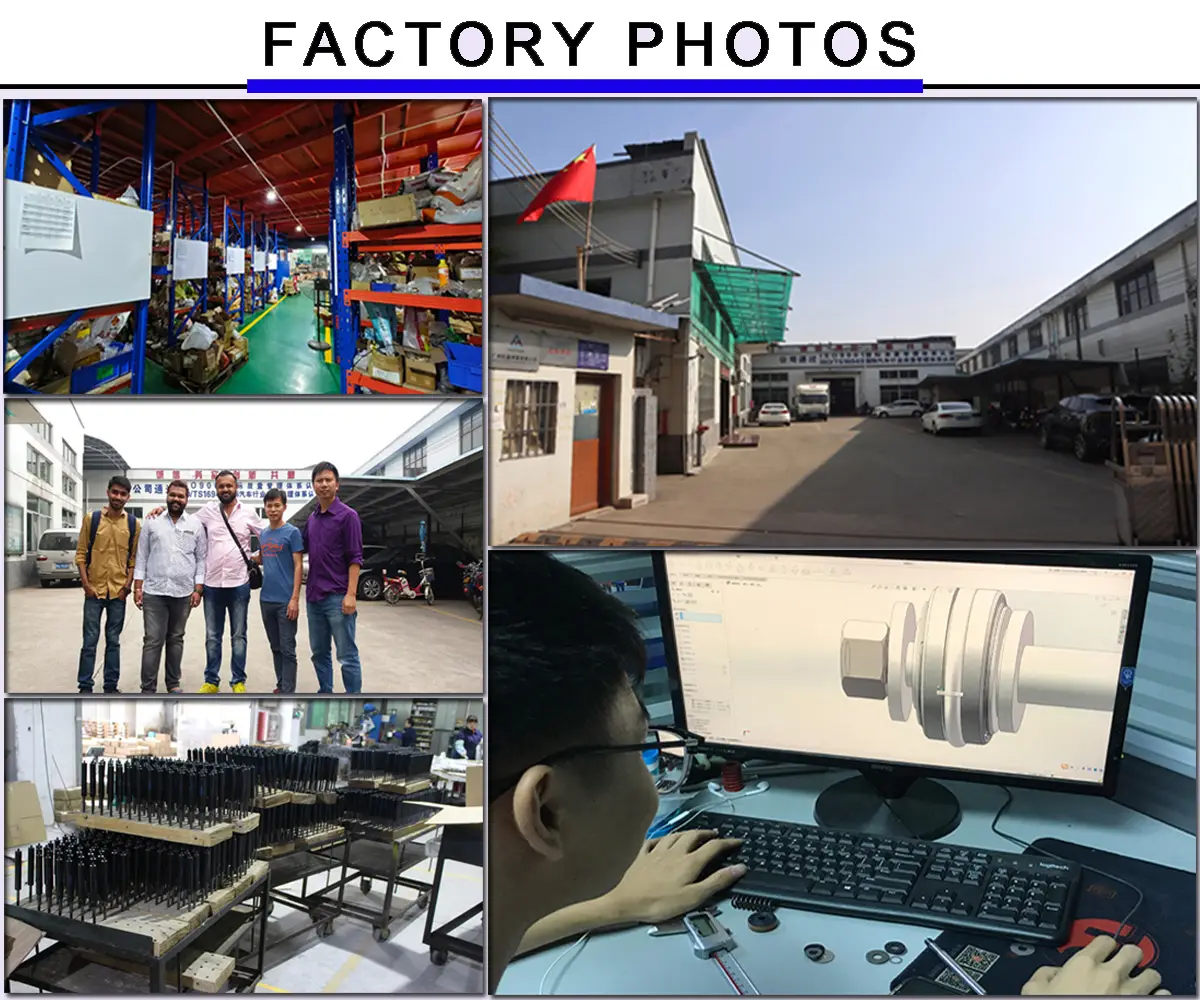

TieYing Factory Video Verified by SGS
Competitive Advantages of TieYing Gas Springs
| Item | TieYing Gas Springs (TieYing Supplier) | Standard Gas Springs (Other Supplier) |
|---|---|---|
| Certificate | SGS 200000 Cycles Durability Test, ROHS, T16949, IS09001 | Maybe just ISO9001 |
| Material | Top seamless steel (Full inspection by Professional testing equipment) | Maybe steel |
| Oil | Anti-wear hydraulic oil from Garmany | Maybe Semi-Synthetic |
| Piston Roughness | Up to Ra 0.696um | Maybe Ra 0.4um |
| Gas spring resistance | 100°C~-40°C | Maybe 60°C |
| Gas | 99.99% nitrogen | Maybe oxygen / Impure nitrogen |
| Uselife | 80,000-200,000 cycles with SGS test report | Maybe 50,000 cycles |
| Salt spray testing | Up to 96 hours | Maybe up to 12 hours |
| Inspection | All procedure sampling inspect, complete inspect before delivery | Maybe sampling inspection |
| Defective product | Re-produce new, If reach 10%, 100% items re-produce new | Maybe Repair |
Frequently Asked Questions About Furniture Gas Struts
What are furniture gas struts used for?
Furniture gas struts are used to assist the lifting or opening of moving furniture components. Common applications include cabinet doors, storage bed platforms, sofa storage seats, lift-up compartments and certain adjustable furniture mechanisms.
The correct specification depends on the load, mounting arrangement and required movement.
What is the difference between furniture gas struts and furniture gas springs?
The terms gas strut and gas spring are commonly used to describe the same type of gas-powered support component. Terminology can vary by country, industry and supplier.
When sourcing a component, it is important to confirm its actual function, force rating, dimensions, stroke and end fittings rather than relying on the product name alone.
How do I choose the correct force for a furniture gas strut?
The required force depends on the moving load, its centre of gravity, the number of gas springs, the hinge position and the mounting geometry.
A heavier panel does not automatically require a particular force rating. For a reliable recommendation, provide the panel weight, dimensions, opening angle and mounting details so the application can be evaluated.
Can TieYing manufacture custom furniture gas struts?
TieYing supports custom gas spring configurations according to project requirements and available manufacturing options. These may include force, stroke, overall length, end fittings and mounting arrangements.
Drawings, samples and application details can be provided for technical review.
Can gas struts provide soft closing for furniture?
A standard gas strut does not automatically provide a dedicated soft-closing function. Soft closing depends on the design of the gas spring or damper and how it works with the hinges and other furniture hardware.
If controlled closing is required, specify this as a separate performance requirement when discussing the application.
Should furniture use one gas strut or two?
The answer depends on the moving component’s dimensions, weight, stiffness, mounting geometry and required performance.
One gas spring may be suitable for certain smaller or lighter applications, while wider or heavier panels may require a matched pair. The correct arrangement should be evaluated for the specific furniture mechanism.
Can you supply gas struts for storage beds and wall beds?
TieYing has dedicated application pages for storage bed and wall bed gas spring solutions. These mechanisms require careful consideration of the moving load, mattress and frame configuration, hinge geometry, force requirements and travel range.
You can provide your drawings or existing specifications for review.
What information is needed for a furniture gas strut quotation?
Useful information includes the application type, moving component weight, dimensions, opening angle, mounting positions, required stroke, end fittings and estimated order quantity.
If you are replacing an existing gas strut, photographs and the markings on the original product can also help. If the specifications are unknown, an application drawing is a useful starting point.
Does TieYing support OEM and bulk furniture gas spring orders?
TieYing works with OEM/ODM customers, furniture manufacturers, hardware suppliers and distributors. Project requirements such as custom specifications, packaging, labelling and repeat supply arrangements can be discussed according to the order.
Can I use an existing gas strut specification for a redesigned furniture product?
An existing specification can provide a useful starting point, but it should not be assumed suitable if the panel weight, dimensions, hinge position or mounting geometry has changed.
Any significant design change should be reviewed before the gas spring is selected for the new configuration.
Looking for a Furniture Gas Strut Manufacturer?
The right gas spring should work with your furniture design, fit the available mounting space and deliver the intended movement.
TieYing supports furniture manufacturers, hardware brands, distributors and OEM customers with custom gas spring solutions for a range of lifting and adjustment mechanisms.
Send us your application photos, drawings, existing samples or technical specifications. Our team can review your requirements and discuss a suitable configuration for your project.