
Automotive Gas Springs for Cars, SUVs, Trucks and Special Vehicles
Automotive Gas Springs Manufacturer TieYing provides high quality automotive gas springs for OEM manufacturers, distributors and automotive suppliers worldwide.
Automotive gas springs, also known as car gas springs or vehicle gas struts, provide controlled lifting force and reliable support for vehicle components such as doors, hoods, trunks and tailgates. They improve opening and closing performance while ensuring smoother and safer operation across different vehicle applications.
Automotive Gas Spring Applications
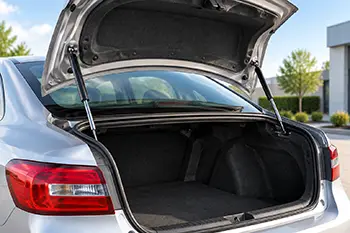
Car Trunk Lid Gas Springs
Provide support for exterior storage doors, compartments and interior panels in recreational vehicles.

SUV Tailgate Gas Struts
SUV and crossover tailgates require stronger automotive gas springs to support heavier rear doors and provide smooth opening movement.
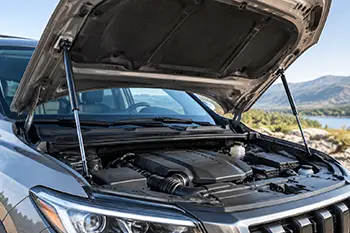
Hood Gas Springs
Replace traditional hood support rods and provide easier access during vehicle inspection and maintenance.
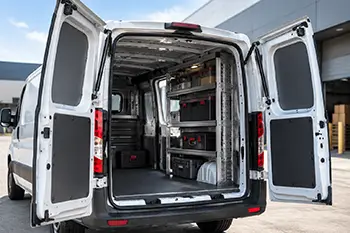
commercial vehicle Rear Door Gas Springs
Used for vans, delivery vehicles and service vehicles where frequent opening and closing operations are required.
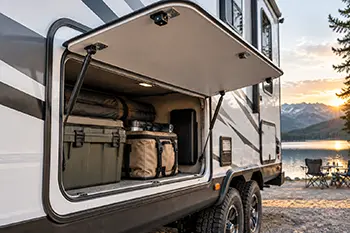
RV & Camper Storage Door Gas Springs
Provide support for exterior storage doors, compartments and interior panels in recreational vehicles.

Pickup Truck Cover Gas Springs
Designed for truck bed covers, tailgate accessories and customized vehicle structures.
Automotive Gas Springs by Vehicle Type
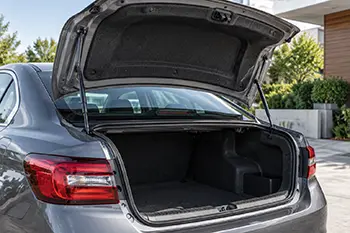
Gas Springs for Sedan Vehicles
Typical applications: • Trunk lids • Hood supports • Rear compartments

Gas Springs for Hatchback Vehicles
Typical applications: • Rear hatch doors • Glass hatch supports
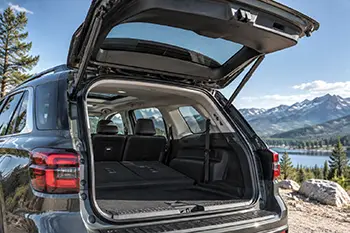
Gas Springs for SUVs
Typical applications: • Heavy tailgates • Rear doors • Electric liftgate assistance
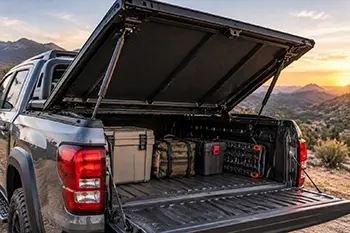
Truck Gas Springs for Pickup
Typical applications: • Tailgate covers • Truck accessories
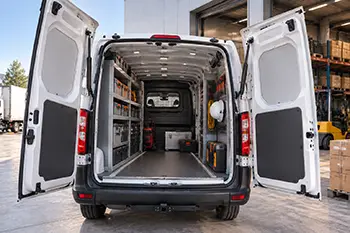
Gas Springs for Van
Typical applications: • Side doors • Rear cargo doors
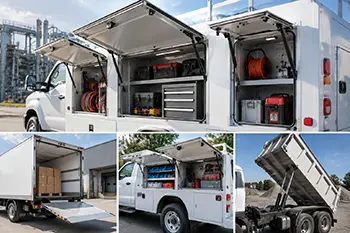
Gas Springs for Commercial Vehicles
Typical applications: • Service vehicles • Delivery trucks • Utility vehicles
Benefits of Automotive Gas Springs
Smooth Opening and Closing
Automotive gas springs provide controlled movement for vehicle doors, trunks and hoods. They reduce the effort required to open heavy panels and create a smoother user experience.
Safe and Stable Support
Gas springs help keep vehicle panels securely open during operation and maintenance, reducing the risk of sudden closing caused by gravity or vibration.
Improved User Convenience
From car trunks to SUV tailgates, gas springs make daily vehicle operation easier by providing reliable lifting assistance whenever users open or close vehicle components.
Space Saving Design
Compared with traditional mechanical support systems, automotive gas springs require less installation space while providing effective lifting force.
Reduced Component Stress
Properly selected gas springs reduce the load applied to hinges, brackets and vehicle panels, helping improve system durability.
Suitable for Various Vehicles
Automotive gas springs can be customized for different vehicle types including sedans, SUVs, pickups, vans, RVs and commercial vehicles.
Common Automotive Gas Spring Specifications
| Parameter | Common Options |
|---|---|
| Tube Diameter | 15mm, 18mm, 22mm, 24mm, 28mm |
| Rod Diameter | 6mm, 8mm, 10mm, 12mm, 14mm |
| Stroke Length | 50mm, 100mm, 150mm, 200mm, 300mm, 400mm+ |
| Force Range | 100N, 200N, 300N, 500N, 800N, 1000N, 1500N+ |
| End Fittings | Ball Socket, Eyelet, Fork, Threaded Connector |
| Working Temperature | Approximately -40℃ to +80℃ |
Automotive Gas Spring Selection Guide
Door Weight
Heavier doors and tailgates require higher gas spring force.
Installation Position
Mounting angle and installation distance affect actual support force.
Stroke Length
The stroke should match the required opening angle and available space.
Working Environment
Outdoor vehicles may require corrosion resistance and special surface treatment.
Typical Automotive Gas Spring Selection
| Vehicle Type | Application | Typical Force |
|---|---|---|
| Sedan | Trunk Lid | 300N to 600N |
| Hatchback | Rear Hatch | 400N to 800N |
| SUV | Tailgate | 600N to 1200N |
| Pickup Truck | Tailgate Cover | 800N to 1500N |
| Van | Rear Door | 1000N to 2000N |
| RV | Storage Door | 300N to 1000N |
Why Choose TieYing Automotive Gas Springs
We do not just supply products. We help B2B buyers source stable, customizable, and commercially practical automotive gas springs for long-term cooperation.
Custom Engineering
We support drawing-based production and can help optimize force, stroke, and fitting selection.
Stable Quality
Each production batch follows inspection procedures to ensure consistency and reliability.
B2B Supply Support
We work with distributors, wholesalers, importers, and OEM customers in different markets.
Flexible Customization
Custom dimensions, rod ends, finishes, packaging, and branding options are available.
Fast Sampling
For suitable projects, we can support sample development before mass production.
Responsive Communication
Our team helps evaluate your requirements quickly and supports technical discussion efficiently.
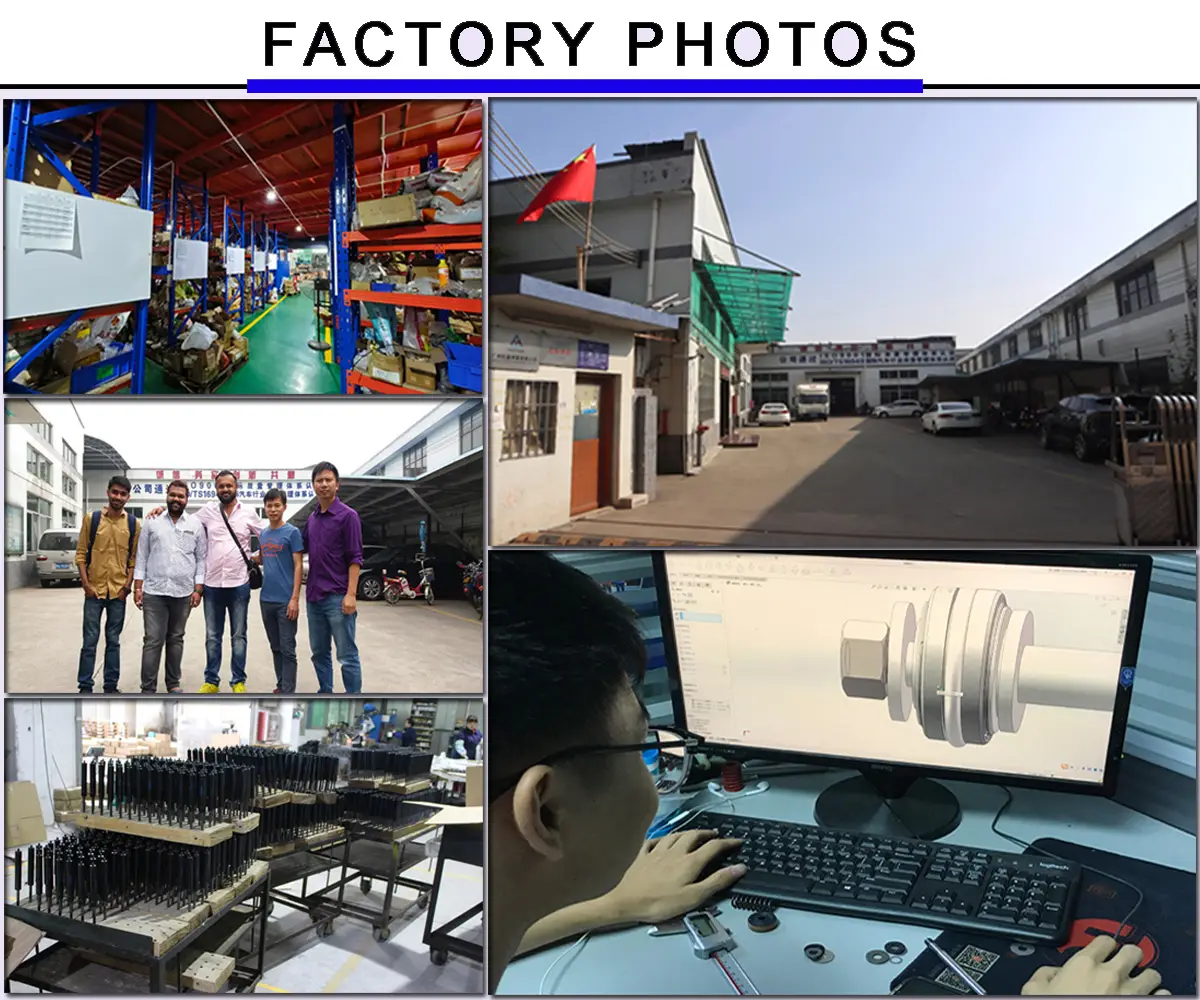

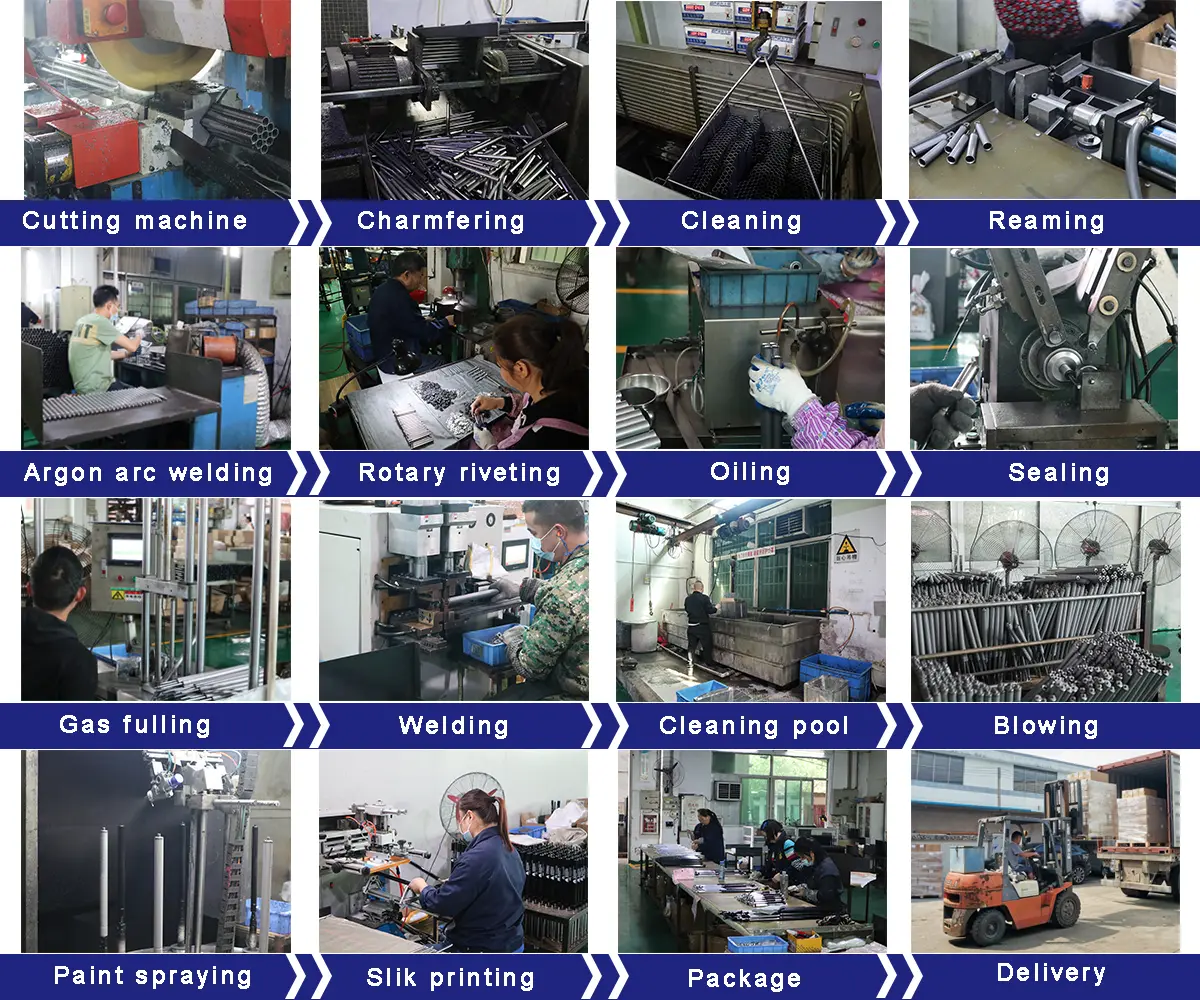
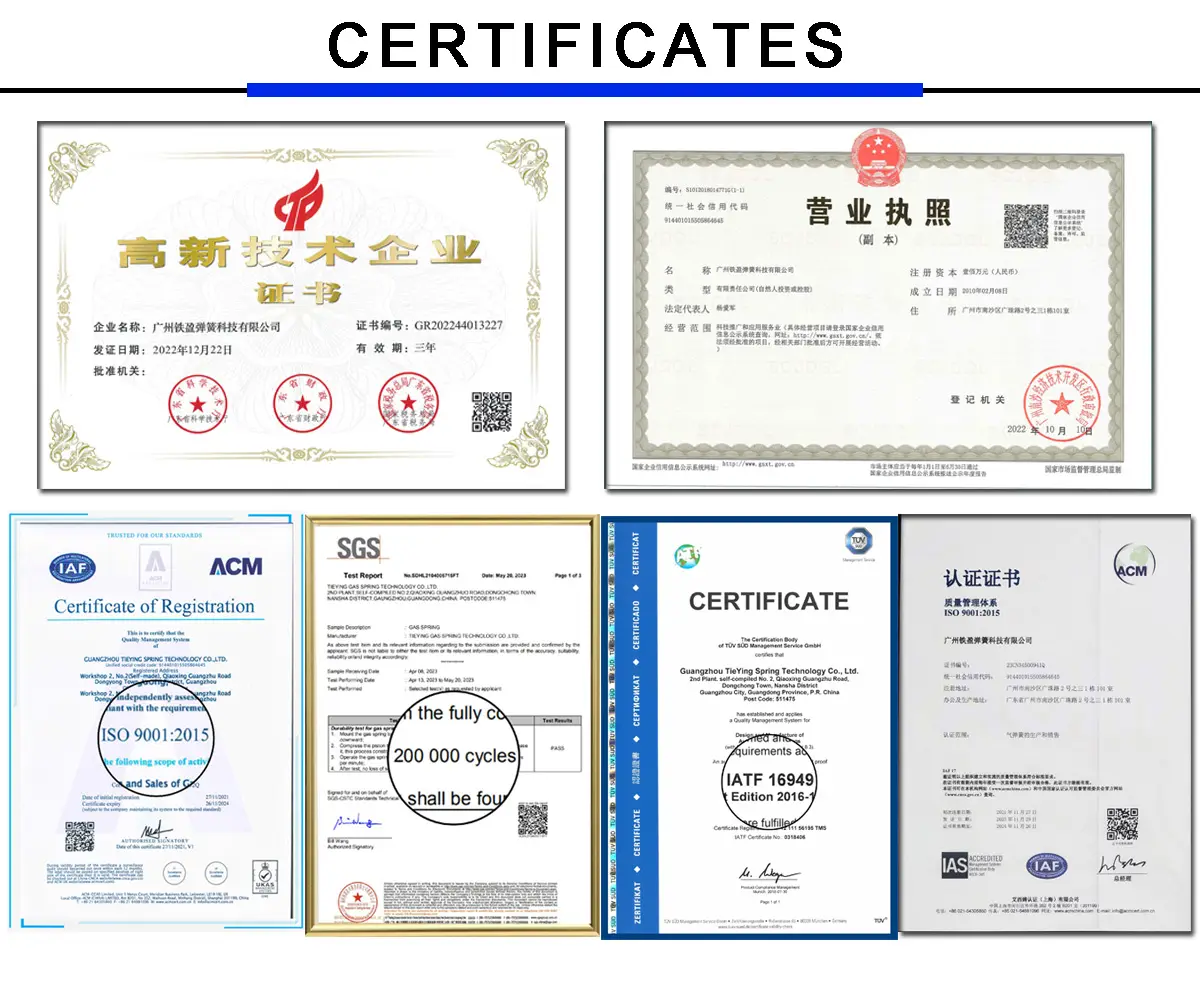
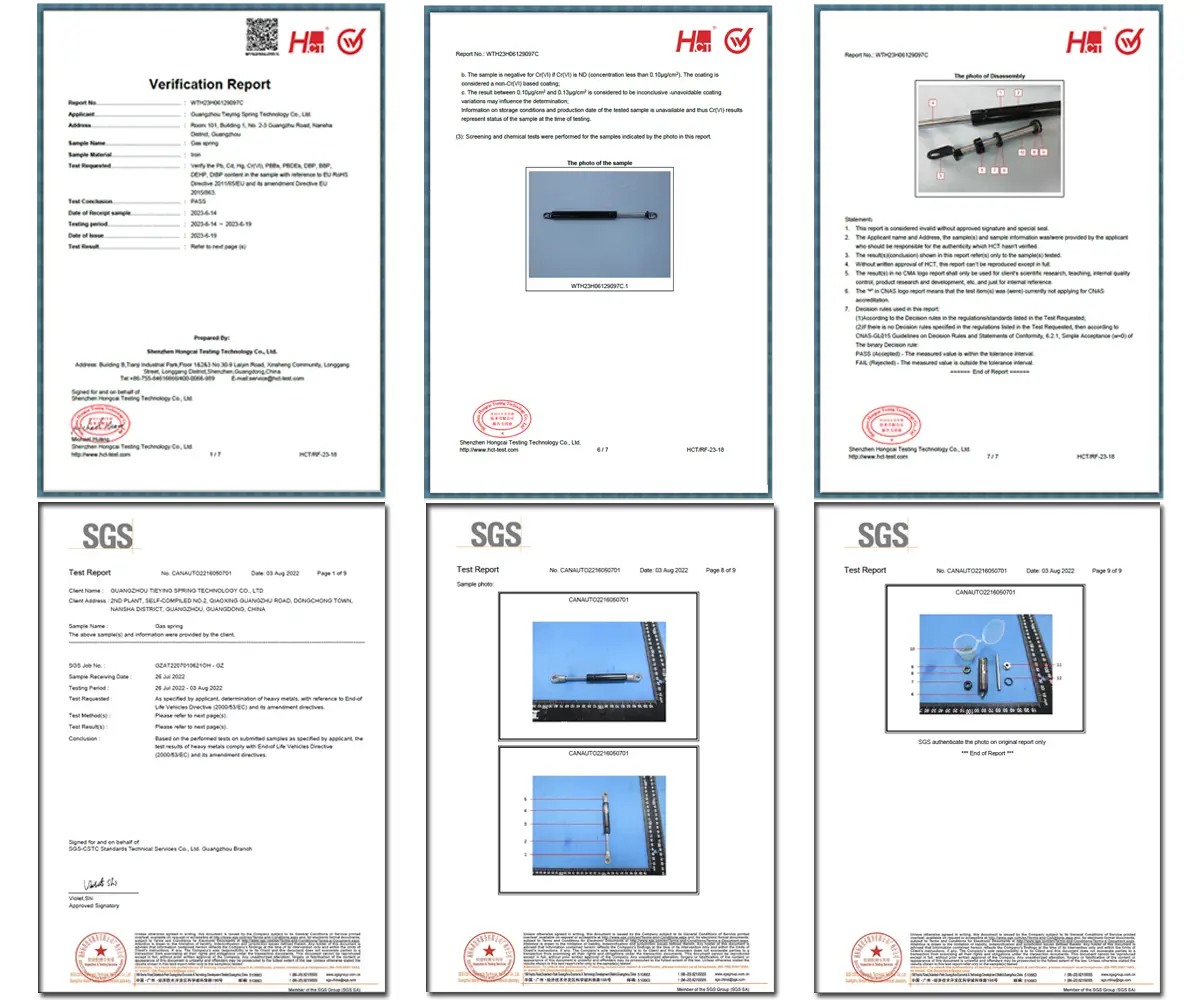
TieYing Factory Video Verified by SGS
Competitive Advantages of TieYing Gas Springs
| Item | TieYing Gas Springs (TieYing Supplier) | Standard Gas Springs (Other Supplier) |
|---|---|---|
| Certificate | SGS 200000 Cycles Durability Test, ROHS, T16949, IS09001 | Maybe just ISO9001 |
| Material | Top seamless steel (Full inspection by Professional testing equipment) | Maybe steel |
| Oil | Anti-wear hydraulic oil from Garmany | Maybe Semi-Synthetic |
| Piston Roughness | Up to Ra 0.696um | Maybe Ra 0.4um |
| Gas spring resistance | 100°C~-40°C | Maybe 60°C |
| Gas | 99.99% nitrogen | Maybe oxygen / Impure nitrogen |
| Uselife | 80,000-200,000 cycles with SGS test report | Maybe 50,000 cycles |
| Salt spray testing | Up to 96 hours | Maybe up to 12 hours |
| Inspection | All procedure sampling inspect, complete inspect before delivery | Maybe sampling inspection |
| Defective product | Re-produce new, If reach 10%, 100% items re-produce new | Maybe Repair |
Frequently Asked Questions
What are automotive gas springs?
Automotive gas springs are mechanical support components that use compressed nitrogen gas to provide controlled lifting force for vehicle parts such as trunks, hoods, tailgates, rear doors and storage compartments. They help vehicles open smoothly and keep movable panels safely positioned.
What is the difference between automotive gas springs, auto gas springs and car gas springs?
Automotive gas springs, auto gas springs and car gas springs generally refer to the same type of gas strut used in vehicle applications. Different terms are commonly used by buyers depending on their region and search preference.
Where are automotive gas springs commonly used?
Automotive gas springs are widely used in:
- Sedan trunk lids
- Hatchback rear hatches
- SUV tailgates
- Vehicle hoods
- Pickup truck covers
- Van rear doors
- RV storage compartments
- Commercial vehicle equipment doors
What types of vehicles use gas springs?
Automotive gas springs are used in various vehicle categories, including:
- Passenger cars
- SUVs
- Pickup trucks
- Vans
- RVs and campers
- Delivery vehicles
- Service vehicles
- Utility vehicles
How do I choose the correct gas spring for my vehicle application?
The correct gas spring depends on several factors:
- Door or panel weight
- Installation position
- Mounting angle
- Required opening angle
- Available installation space
- Required force rating
A properly selected gas spring ensures smooth operation and prevents excessive stress on hinges and mounting points.
What force rating do automotive gas springs usually have?
Automotive gas springs are available in a wide force range depending on the application.
Typical force ranges include:
- 100N to 500N for smaller trunk lids and hoods
- 500N to 1200N for SUV tailgates
- 1000N to 2000N for commercial vehicle doors and heavy panels
The required force depends on the actual weight and installation geometry.
What are the common sizes of automotive gas springs?
Common automotive gas spring configurations include:
Tube Diameter
15mm, 18mm, 22mm, 24mm and 28mm
Rod Diameter
6mm, 8mm, 10mm and 12mm
Stroke Length
50mm to 500mm or customized according to requirements
Can automotive gas springs be customized?
Yes. Automotive gas springs can be customized according to application requirements, including:
- Force rating
- Stroke length
- Tube and rod diameter
- Overall extended length
- End fittings
- Mounting structure
- Surface treatment
Can TieYing manufacture automotive gas springs based on samples?
Yes. Customers can provide existing gas springs, drawings or technical specifications. TieYing can analyze the required dimensions and develop suitable replacement or customized solutions.
How long do automotive gas springs normally last?
The service life depends on application conditions, operating frequency, environment and product quality.
Factors affecting lifespan include:
- Number of opening and closing cycles
- Temperature changes
- Corrosion exposure
- Installation accuracy
- Proper force selection
Correctly selected gas springs can provide reliable long-term performance.
Why do automotive gas springs lose pressure over time?
Gas springs may gradually lose performance due to:
- Natural gas leakage through seals
- Damaged piston rods
- Corrosion
- Excessive temperature exposure
- Incorrect installation
Regular inspection is recommended for frequently used vehicle doors.
Can automotive gas springs work in extreme temperatures?
Yes. Automotive gas springs can be designed for different operating environments.
For vehicle applications, common working temperature ranges are approximately:
-40°C to +80°C
Special materials and sealing solutions can be used for more demanding environments.
What end fittings are available for automotive gas springs?
Common mounting options include:
- Ball socket fittings
- Eyelet fittings
- Fork fittings
- Threaded connectors
- Custom mounting brackets
The correct fitting depends on the vehicle structure and installation requirements.
Are automotive gas springs interchangeable between different vehicles?
Not always.
Even if two vehicles have similar door designs, gas springs may differ in:
- Length
- Force rating
- Stroke
- Mounting position
- Connector type
Replacement gas springs should match the original specifications or application requirements.
What information is required for automotive gas spring quotation?
To provide an accurate quotation, suppliers usually need:
- Vehicle application
- Gas spring quantity
- Required dimensions
- Force requirement
- Stroke length
- Mounting details
- Sample or drawing if available
Can gas springs be used for electric vehicles (EVs)?
Yes. Automotive gas springs are also used in electric vehicles for applications such as:
- Front trunks (frunks)
- Tailgates
- Battery access covers
- Storage compartments
Lightweight and compact gas spring designs are commonly preferred for EV applications.
Do automotive gas springs require maintenance?
Gas springs generally require minimal maintenance. However, users should check:
- Mounting brackets
- Connection points
- Piston rod condition
- Signs of corrosion or leakage
Keeping the piston rod clean helps maintain smooth operation.
What is the difference between standard gas springs and automotive gas springs?
Automotive gas springs are designed specifically for vehicle environments where they must handle:
- Frequent operation cycles
- Vibration
- Temperature changes
- Outdoor exposure
- Limited installation space
They typically require higher durability and corrosion resistance compared with general industrial gas springs.
Looking for the Right Automotive Gas Spring Solution?
TieYing supplies customized auto gas springs and car gas springs for different vehicle applications.