Gas Spring Selector and Force Calculator
Find a practical starting specification for your gas spring application. Enter the panel weight, dimensions, opening angle, mounting distance and operating environment to estimate the required force, stroke and product size.
The selector is designed for industrial covers, vehicle hoods, tailgates, medical equipment, furniture lifts and marine hatches. Results can be sent directly to a TieYing spring application engineer for final verification and quotation.
Already know your required force, stroke or part number? Use the “Send an existing specification” option below.
Need a New Gas Spring Solution?
Use the “Start selection →” option above, Complete the gas spring selector and send your recommended specification to our engineering team. We will verify the force, stroke, mounting geometry and production requirements.
Already Have a Drawing or Part Number?
Use the “Send an existing specification” option above, Send your existing model, force, stroke or technical drawing directly to TieYing. PDF, product images and CAD files can be uploaded for review.
How to Select the Right Gas Spring
Choosing a gas spring requires more than matching the weight of a lid or cover. The correct specification depends on the centre of gravity, mounting position, opening angle, available installation space and number of gas springs used.
The TieYing gas spring selector uses these application details to estimate a suitable force and stroke. It then matches the result to an appropriate gas spring size and product family.
What Information Do You Need?
Before starting, prepare the following measurements:
- Total weight of the moving panel
- Distance from the hinge to the centre of gravity
- Panel length
- Required opening angle
- Distance from the hinge to the gas spring mounting point
- Number of gas springs
- Indoor, outdoor, marine or high temperature environment
What Your Recommendation Includes
After completing the five selection steps, you will receive:
- Recommended force per gas spring
- Suggested stroke length
- Tube diameter
- Piston rod diameter
- Recommended product family
- Downloadable selection summary
- Option to request engineering verification and pricing
How the Force Estimate Works
The selector estimates the force required to balance the panel load around its hinge. The calculation considers panel weight, gravity, centre of gravity, mounting distance, gas spring quantity and mounting efficiency.
A simplified engineering relationship is:
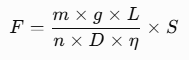
Where m is the panel mass, g is gravity, L is the centre of gravity distance, n is the number of gas springs, D is the mounting distance, η represents mounting efficiency and S is the application margin.
The calculated result is a preliminary recommendation. Final force, extended length, compressed length, mounting points, temperature range and end fittings should be confirmed before production.
Gas Spring Selection by Application
TieYing gas springs can be selected for a wide range of lifting, supporting and motion control applications.
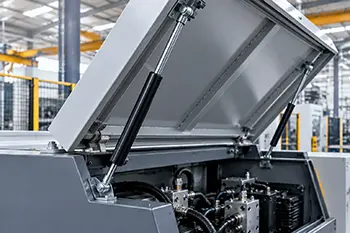
Industrial Covers
Machine guards, maintenance panels and equipment access covers.

Automotive Tailgates
Tailgates, bonnets, storage doors and vehicle access panels.
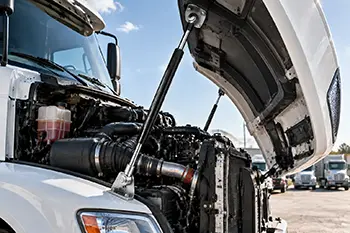
Truck Hoods
Heavy vehicle hoods and service compartments requiring higher lifting force.

Medical Equipment
Beds, chairs and positioning systems requiring controlled and consistent movement.

Furniture Lifts
Storage beds, cabinets, seating systems and adjustable furniture.
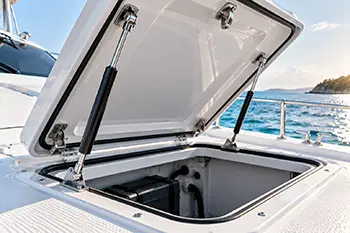
Marine Hatches
Boat compartments and deck hatches requiring corrosion resistant materials.
TieYing Gas Spring Manufacturing Capabilities
| Item | TieYing Gas Springs (TieYing Supplier) | Standard Gas Springs (Other Supplier) |
|---|---|---|
| Certificate | SGS 200000 Cycles Durability Test, ROHS, T16949, IS09001 | Maybe just ISO9001 |
| Material | Top seamless steel (Full inspection by Professional testing equipment) | Maybe steel |
| Oil | Anti-wear hydraulic oil from Garmany | Maybe Semi-Synthetic |
| Piston Roughness | Up to Ra 0.696um | Maybe Ra 0.4um |
| Gas spring resistance | 100°C~-40°C | Maybe 60°C |
| Gas | 99.99% nitrogen | Maybe oxygen / Impure nitrogen |
| Uselife | 80,000-200,000 cycles with SGS test report | Maybe 50,000 cycles |
| Salt spray testing | Up to 96 hours | Maybe up to 12 hours |
| Inspection | All procedure sampling inspect, complete inspect before delivery | Maybe sampling inspection |
| Defective product | Re-produce new, If reach 10%, 100% items re-produce new | Maybe Repair |
Gas Spring Selector FAQ
Find clear answers about gas spring force, stroke, mounting, materials and custom manufacturing. If your application requires a confirmed production specification, send the selector result or your existing drawing to the TieYing engineering team.
How do I calculate the required gas spring force?
The required gas spring force depends on the weight of the moving panel, the position of its center of gravity, the gas spring mounting point, the opening angle and the number of gas springs used.
A basic calculation compares the torque created by the panel weight with the lifting torque produced by the gas spring. Panel weight is multiplied by gravity and the distance from the hinge to the center of gravity. This value is then divided by the number of gas springs and their effective mounting distance.
Mounting angle and application conditions also affect the result. A gas spring installed close to the hinge usually requires more force than one installed farther away. Outdoor, marine, vehicle and heavy industrial applications may also require an additional operating margin.
Use the TieYing Gas Spring Selector to obtain a practical starting force, then request engineering verification before production.
What size gas spring do I need?
Gas spring size is not determined by force alone. A complete specification should include the required force, stroke, extended length, compressed length, tube diameter, piston rod diameter and end fittings.
Start by measuring the moving panel and available installation space. Enter the panel weight, panel length, center of gravity, opening angle, mounting distance and number of gas springs into the selector. The tool will recommend a starting force, stroke and product size.
The final gas spring must fit the application in both the open and closed positions. It should provide enough support without preventing the panel from closing or placing excessive load on the hinges.
If space is limited or the mounting geometry is unusual, send a drawing or application photo to TieYing for a detailed review.
Should I use one or two gas springs?
Two gas springs are generally preferred for wide, heavy or flexible panels. Placing one gas spring on each side distributes the load more evenly and reduces twisting around the hinges. It also lowers the required force per gas spring.
One gas spring may be suitable for a narrow or lightweight panel with a strong frame and stable hinge system. A single gas spring can reduce component cost and simplify installation, but the panel structure must be able to handle the uneven side load.
The best choice depends on panel width, weight, stiffness, hinge design and available mounting space. For machine covers, vehicle hoods and large access panels, two gas springs often provide smoother and more balanced movement.
Enter the intended quantity into the selector to calculate the estimated force required from each gas spring.
How is gas spring stroke calculated?
Gas spring stroke is the distance travelled by the piston rod between the fully compressed and fully extended positions.
The required stroke depends on the movement of the mounting points as the panel rotates around its hinge. Panel length, opening angle and mounting position all influence this movement. A larger opening angle does not always require the same increase in stroke because the exact mounting geometry also matters.
The selector estimates a suitable stroke from the panel dimensions and required motion. This provides a practical starting value, but the final stroke should be checked against the actual distance between both mounting points when the panel is fully open and fully closed.
The gas spring should not reach its full mechanical limit before the panel reaches its intended position. A TieYing engineer can confirm the final stroke from a drawing or dimensioned application sketch.
What is the difference between extended length and stroke?
Stroke is the distance that the piston rod moves in and out of the pressure tube.
Extended length is the total length of the gas spring when it is fully open. It is normally measured from the center of one end fitting to the center of the other end fitting.
For example, a gas spring may have a 200 mm stroke and a 500 mm extended length. These measurements describe different parts of the product and should not be used interchangeably.
Compressed length is the total length when the piston rod is fully pushed into the tube. The difference between the extended and compressed positions is related to the stroke, although the final dimensions also depend on the product construction and end fittings.
All three measurements must be checked before installation to ensure that the gas spring fits the available space throughout the full movement.
Can I use a gas spring outdoors?
Yes, a gas spring can be used outdoors when its materials, surface treatment, seals and end fittings are suitable for the operating environment.
Standard painted or coated steel gas springs may be suitable for protected outdoor equipment. Applications exposed to frequent rain, humidity, cleaning chemicals or salt water may require stainless steel components and corrosion resistant fittings.
Marine hatches and coastal equipment often need a higher level of corrosion protection than normal outdoor machinery. Temperature changes should also be considered because gas pressure and extension force can vary as the operating temperature changes.
Whenever possible, install a compression gas spring with the piston rod pointing downward in the closed position. This helps keep the internal rod seal lubricated and supports smooth operation.
Select the correct environment in the TieYing selector so the recommendation can account for outdoor or marine conditions.
Can TieYing manufacture a custom gas spring?
Yes. TieYing can review custom gas spring requirements for OEM equipment, replacement projects, prototypes and production applications.
Custom options may include force, stroke, extended length, compressed length, tube diameter, piston rod diameter, material, surface treatment, end fittings, extension speed and damping characteristics. Locking or controlled motion solutions can also be reviewed when the application requires position adjustment or movement control.
To begin a custom project, complete the Gas Spring Selector and send the recommendation to the engineering team. You can also submit an existing model number, dimensioned drawing, product photo or sample specification.
Please include the expected order quantity, operating environment, target application and any special performance requirements. TieYing will review manufacturing feasibility before confirming the final specification, sample arrangement and quotation.
Can I upload an existing drawing or sample specification?
Yes. If you already have a gas spring drawing, part number or technical specification, select “Send an Existing Specification” on the selector opening screen.
You can enter the existing model, force, stroke, extended length, end fitting type and estimated purchasing quantity. The form also accepts PDF, JPG, PNG, WEBP, DWG, DXF, STEP and STP files up to 10 MB.
The uploaded file is attached to the engineering enquiry together with your contact and project information. This allows TieYing to review the existing design, identify a suitable replacement or assess whether a custom version is required.
If no drawing is available, upload clear photographs of the gas spring and its installation position. Include visible markings and measurements whenever possible.
Is the online recommendation ready for production?
No. The online result is a preliminary engineering recommendation intended to help identify a suitable starting force, stroke and gas spring size.
Before production, the final design should be checked against the actual mounting geometry, open and closed dimensions, hinge strength, panel rigidity, operating temperature, required movement speed and end fitting arrangement.
Small changes in mounting position can create a significant difference in the force required. Manufacturing tolerances, friction and the effort needed to begin opening or closing should also be considered.
Send the calculated result to a TieYing application engineer before ordering samples or production quantities. The engineering team can review the application information and confirm whether any changes are needed.
Testing a sample on the actual equipment is recommended before approving a production order.
How can I request a sample or quotation?
Complete the Gas Spring Selector and click “Request Engineering Quote” on the result screen. Your application details and calculated recommendation will be attached automatically.
If you already know the required specification, choose “Send an Existing Specification” and enter the available dimensions. You may also upload a drawing, CAD file, product image or current part number.
Provide your name, business email, company, country, expected annual quantity and project requirements. Information about the application, operating environment and target production schedule will help the engineering team prepare a more relevant response.
TieYing will review the submitted information before confirming the recommended product, available custom options and quotation. Sample availability, preparation time and production requirements will depend on the final specification and quantity.