Custom Trailer Gas Struts for Doors, Hatches & Storage Lids
Trailer components are opened and closed during loading, unloading, maintenance and everyday use. They must also be designed for the vibration, changing temperatures, dust, moisture and other conditions associated with road transport and outdoor operation.
TieYing manufactures custom trailer gas struts and gas springs for hinged doors, storage lids, service hatches, access panels and equipment enclosures. We work with trailer manufacturers, body builders, equipment manufacturers, aftermarket suppliers, wholesalers and distributors to develop gas spring solutions around the actual application.
From lifting force and stroke to overall length, end fittings and material options, each specification can be evaluated according to the panel design, mounting geometry and working environment.
What We Offer
- Custom gas spring force, stroke and dimensions
- End fittings and mounting configurations for different trailer designs
- Material and surface finish options based on environmental requirements
- OEM and ODM manufacturing support
- Sample evaluation and bulk supply for repeat orders
Need trailer gas struts for your next project? Send us your application photos, technical drawings or existing gas spring specifications for review.
Trailer Gas Struts Designed Around the Complete Assembly
A trailer gas strut does more than help lift a door. It must work with the door or lid, hinges, mounting brackets and supporting structure throughout the intended range of movement.
The required force depends on more than panel weight. Dimensions, centre of gravity, hinge position, mounting locations and the angle of the gas spring all affect the lifting assistance delivered during opening and closing.
Trailer designs also differ in available installation space and operating conditions. A compact storage lid, a wide cargo access panel and a concession trailer serving hatch can require very different gas spring configurations, even when their moving panels have similar weights.
TieYing helps OEM customers evaluate these application-specific requirements before selecting a suitable specification for prototype testing or production.
Applications of Trailer Gas Struts
1. Enclosed Cargo Trailer Doors and Access Panels
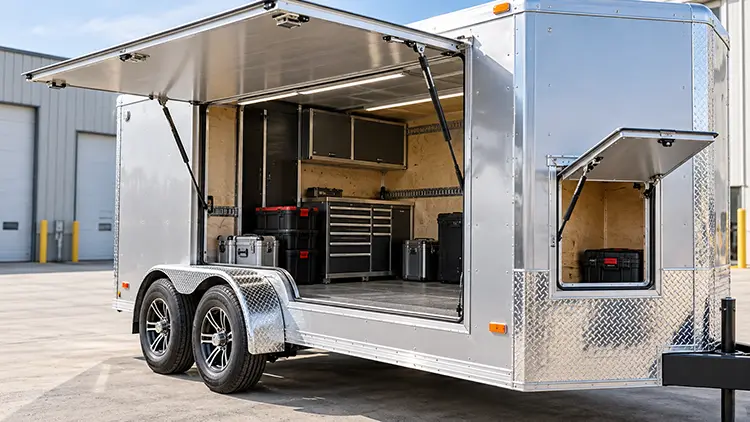
Enclosed cargo trailers may incorporate hinged access doors, upward-opening panels, service covers and storage compartment lids. These components need to provide convenient access without requiring unnecessary manual lifting effort.
Gas struts can assist suitable upward-opening panels and help support them in their intended open position when correctly specified. The selection should account for the door dimensions, hinge arrangement, opening angle, available mounting space and clearance from the cargo area.
For trailer manufacturers, evaluating gas spring placement during the design stage can help avoid interference with cargo access, internal fittings and door hardware.
2. Utility Trailer Storage Lids and Compartments

Utility and work trailers often include storage compartments for tools, accessories, spare parts and other equipment. Their lids may be exposed to road spray, dust, moisture and repeated opening during work.
A correctly selected gas strut can make these compartments easier to access and reduce the need to hold an upward-opening lid manually. The required force and dimensions should be based on the complete lid assembly and its mounting geometry.
For outdoor applications, material and surface finish options should also be evaluated according to the actual exposure conditions.
3. Trailer Toolboxes and Equipment Storage

Trailer-mounted toolboxes and equipment storage units may have different lid sizes, hinge positions and internal mounting clearances. A standard gas spring may not fit every design or provide the required opening assistance.
TieYing supports custom gas springs for toolbox and storage applications, including projects that require specific force ratings, stroke lengths and end fittings.
For dedicated toolbox projects, see our Truck Toolbox Gas Struts page for more application-specific information.
4. Camper and Travel Trailer Compartments
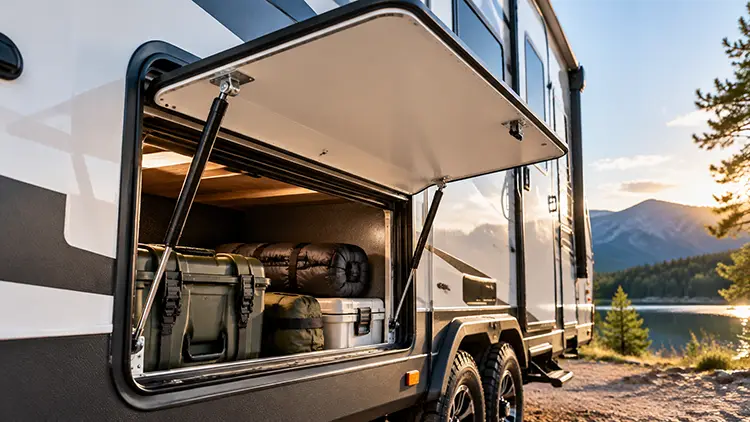
Camper trailers and travel trailers can incorporate exterior storage doors, utility access panels, equipment compartments and other hinged components.
Gas struts can assist suitable upward-opening compartment doors, making it easier to access stored equipment while keeping both hands available for loading or maintenance.
These applications may have limited mounting space and exposure to changing outdoor conditions. The gas spring should therefore be selected around the compartment dimensions, required opening angle, existing fittings and environmental requirements.
For dedicated recreational vehicle door applications, visit our RV Door Shock page.
5. Food and Concession Trailers

Food trailers, mobile kitchens and concession trailers often use upward-opening serving hatches, window covers and service access panels.
These panels need to open far enough to provide a practical working area while remaining compatible with the trailer structure and serving-window design.
Gas struts can provide lifting assistance for suitable hatch configurations. Selection should account for the hatch dimensions, attached hardware, hinge position, mounting points and intended open position.
Where wind exposure or frequent public-facing operation is a concern, the complete opening mechanism should also be assessed for appropriate restraint and safety provisions.
6. Horse Trailers and Equipment Trailers
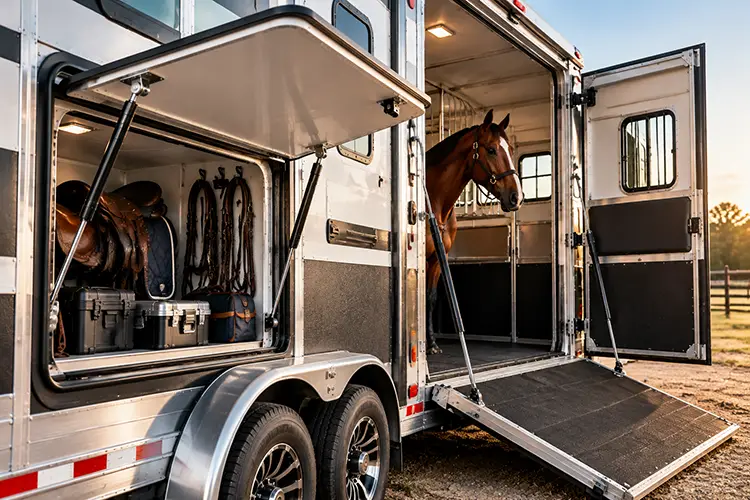
Horse trailers and equipment trailers may include tack-compartment doors, side access panels, storage lids and other hinged components that require lifting assistance.
The correct gas spring specification depends on the panel construction, operating frequency, mounting geometry and exposure to moisture, dirt and road vibration.
Large rear loading ramps and heavy swing doors require particular care. Their weight, movement path, hinge design and potential impact loads may require a purpose-designed counterbalance mechanism and independent mechanical safety supports. A standard gas strut should not be assumed to support a heavy ramp safely on its own.
TieYing can review the proposed application and discuss whether a gas spring is appropriate for the intended function.
7. Trailer-Mounted Machinery and Service Equipment

Trailers used for generators, pumps, compressors, mobile workshops and other equipment may require hinged covers or access panels for inspection and maintenance.
These enclosures can have different structural loads, internal clearances and operating temperatures. Gas springs must be selected to suit the panel movement and the environment around the equipment.
For OEM projects, TieYing can review drawings, existing components and installation requirements to discuss suitable gas spring dimensions, force ratings and end fittings.
Key Benefits of Application-Specific Trailer Gas Struts
Reduced Manual Lifting Effort
Gas springs provide lifting assistance to suitable hinged panels, making routine access easier for operators and maintenance personnel.
Support for Upward-Opening Panels
When correctly specified and installed, gas struts can help support doors, hatches and lids in their intended open position. The complete mechanism should still be assessed for any additional safety restraint required.
Better Fit with Trailer Design
Custom force, stroke, overall length and end fittings help manufacturers integrate the gas spring into the available mounting space and required movement range.
Material Options for Outdoor Conditions
Trailer applications can involve rain, dust, road spray, moisture and, in some locations, salt exposure. Material and surface finish should be selected according to the actual environment rather than assuming every trailer requires the same specification.
Consistent Specifications for OEM Production
For manufacturers and distributors, an agreed specification helps maintain consistency in dimensions, force ratings, end fittings and other purchase requirements across repeat orders.
Custom Trailer Gas Spring Options
TieYing supports gas spring customization according to the needs of the application and the agreed manufacturing specification.
| Parameter | What Can Be Customized or Evaluated | Why It Matters |
|---|---|---|
| Lifting force | Required force rating in newtons (N) | Determines the assistance delivered during movement |
| Stroke length | Required piston travel | Must accommodate the intended panel movement |
| Extended and compressed length | Overall dimensions between the mounting centres | Determines whether the strut fits in the closed and open positions |
| Tube and piston rod dimensions | Dimensions suitable for the required design | Affect packaging, structural design and product configuration |
| End fittings | Ball sockets, eyelets, clevis forks, threaded connections and other suitable fittings | Must match the mounting interface and movement |
| Material and finish | Carbon steel, stainless steel options and suitable finishes | Should reflect corrosion exposure and the intended service environment |
| Mounting configuration | Bracket positions and connection arrangements | Helps integrate the gas spring into the trailer structure |
| Quantity and supply requirements | Samples, trial quantities and production orders | Supports prototype evaluation and ongoing OEM supply |
How to Choose the Right Trailer Gas Strut?
Selecting a gas strut based on length alone can result in insufficient lifting assistance, excessive closing effort or interference with the panel. A more reliable selection process considers the complete mechanism.
1. Identify the Moving Component
Confirm whether the application involves an upward-opening cargo door, storage lid, service hatch, serving window or another hinged panel.The intended movement determines which type of gas spring or motion-control component should be considered.2. Measure the Panel and Its Weight
Record the panel’s width, height, weight and construction. Include attached hardware and accessories that move with the panel.Where possible, identify the approximate centre of gravity. Two panels with the same weight can require different gas spring configurations if their dimensions and weight distribution differ.3. Confirm the Hinge Position and Opening Angle
Measure the hinge axis and establish the required open position. The gas spring’s effective lifting assistance changes with its angle and leverage throughout the movement.The mounting positions must therefore be evaluated at both the closed and open positions.4. Check the Available Installation Space
Measure the distance between the mounting centres with the panel closed and in the intended open position. Confirm the required stroke, compressed length and extended length, while checking that the gas spring does not bottom out or restrict the movement.Allow sufficient clearance for the end fittings, brackets, surrounding structure and adjacent components.5. Determine the Required Force and Number of Struts
Force selection should consider panel weight, centre of gravity, hinge geometry, mounting locations and the number of gas springs used.For installations with two gas struts, the load distribution and mounting arrangement should be evaluated as a complete system. Do not select a force rating simply by matching the panel weight to a single numerical value.6. Consider the Operating Environment
Identify expected temperature changes, moisture, dust, road spray, salt exposure and opening frequency.These conditions help determine whether standard materials or more corrosion-resistant options should be considered.7. Confirm the End Fittings and Mounting Structure
Check the connection type, thread or pin dimensions, bracket arrangement and available mounting strength.A suitable gas spring cannot compensate for weak brackets, inadequate fasteners or a mounting structure that is not designed to carry the resulting loads.8. Evaluate the Complete Movement Before Production
For new designs or modified installations, prototype testing can help verify opening effort, travel, clearance, closing effort and support in the intended open position.Heavy panels and loading ramps may require additional mechanical support or locking provisions. A gas spring alone is not a substitute for an appropriate safety restraint.Which Gas Spring Type Is Suitable for a Trailer?
The right product depends on what the mechanism needs to do.
Compression Gas Springs
Compression gas springs are a common choice for assisting the opening of suitable hinged lids, access panels and upward-opening doors.Explore our Compression Gas Springs for more information about available configurations.Heavy Duty Gas Springs
Heavier panels may require a higher-force or specially configured gas spring. The required force, dimensions, mounting structure and operating conditions should be evaluated together.Explore our Heavy Duty Gas Springs for demanding applications.Stainless Steel Gas Struts
Where moisture or corrosion exposure is a concern, stainless steel options may be appropriate. The grade and configuration should be selected according to the actual operating environment.Explore our Stainless Steel Gas Struts for more information.Gas Dampers
A gas spring primarily provides force assistance. A damper is used when the main requirement is to resist or control movement speed and reduce impact. These functions are not interchangeable in every application.If your trailer mechanism needs dedicated motion control, discuss the required function with our team before specifying the component.
Why Choose TieYing for Custom Trailer Gas Struts?
Manufacturing Experience Since 2002
TieYing has experience in gas spring design, manufacturing and customization for OEM and industrial applications. We work with customers who require components designed around specific product structures and operating conditions.Custom Specifications for Different Trailer Designs
We can discuss force, stroke, overall dimensions, end fittings and material options based on drawings, existing samples or application requirements.OEM, ODM and Bulk Supply
Our manufacturing service supports equipment manufacturers, component suppliers, wholesalers and distributors who need a defined specification for prototype development and repeat production.Application-Based Technical Communication
Providing information about the actual panel, hinge arrangement, mounting space and intended movement helps establish a more suitable specification than selecting a component by dimensions alone.Quality and Order Consistency
For repeat orders, clear technical specifications and agreed inspection requirements help maintain consistency across product dimensions, force ratings, fittings and other defined characteristics.Support from Initial Review to Quotation
Whether you are developing a new trailer design or replacing an existing component, our team can review the information you provide and discuss the next steps for sample evaluation or production.


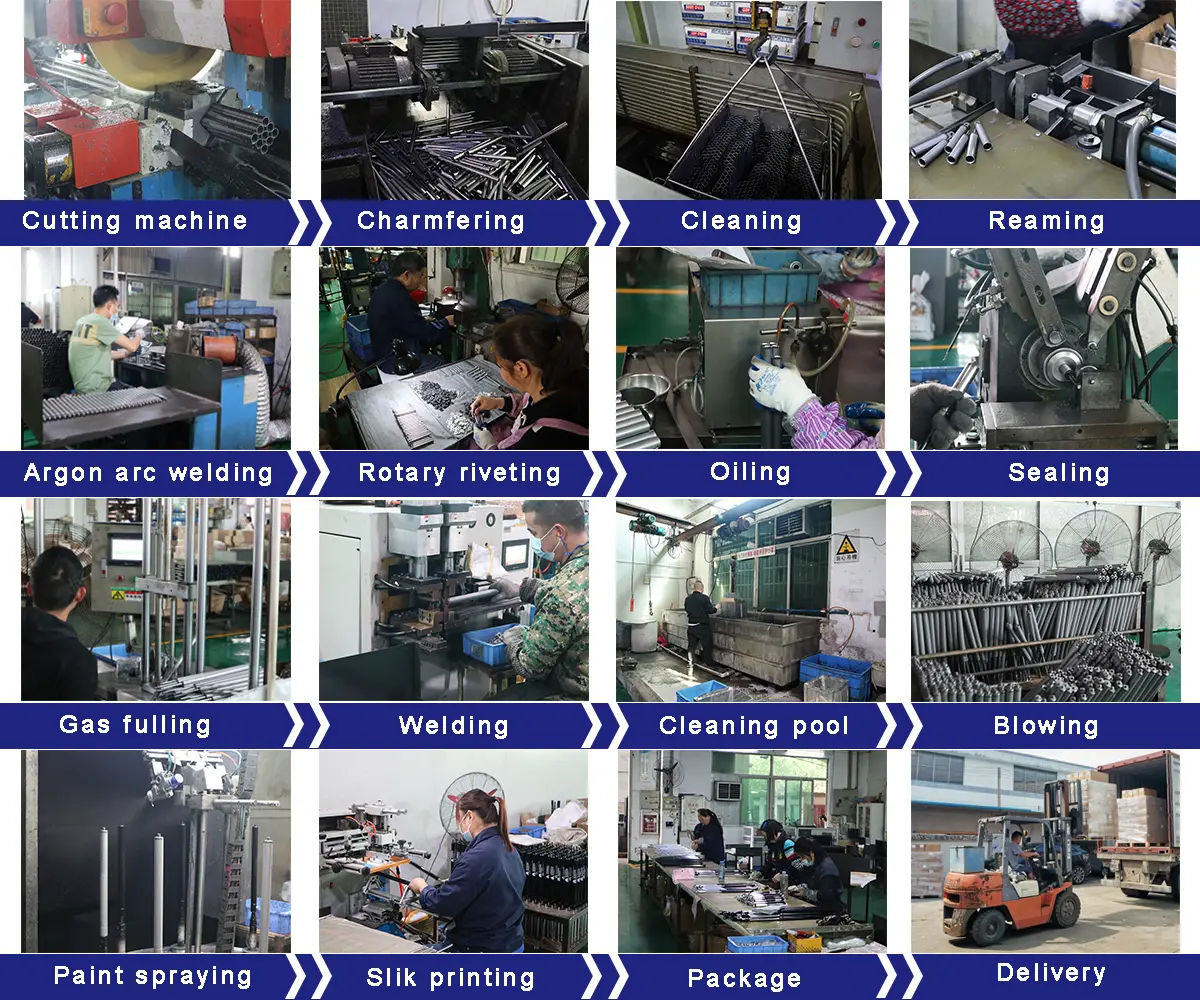
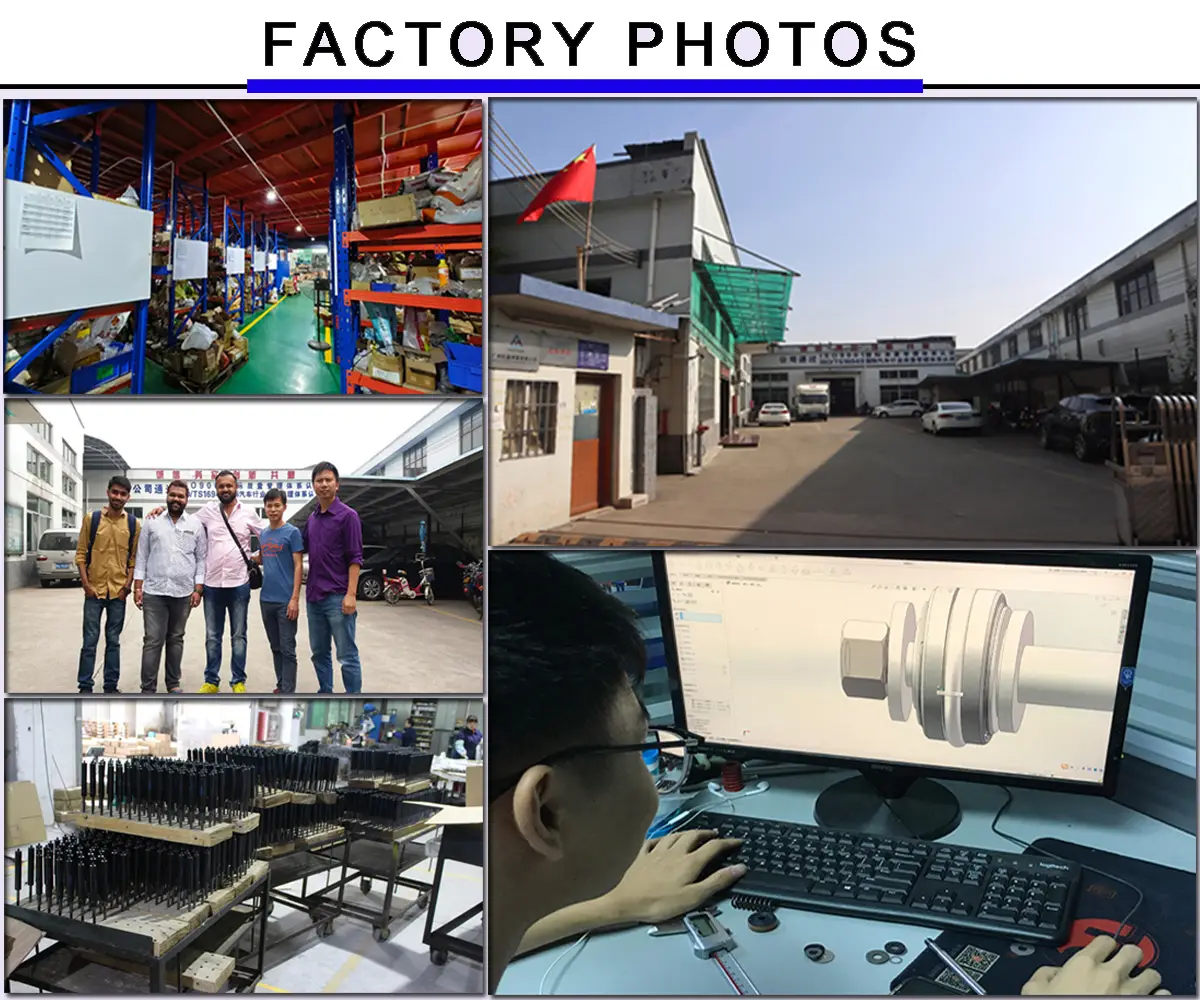
TieYing Factory Video Verified by SGS
Competitive Advantages of TieYing Gas Springs
| Item | TieYing Gas Springs (TieYing Supplier) | Standard Gas Springs (Other Supplier) |
|---|---|---|
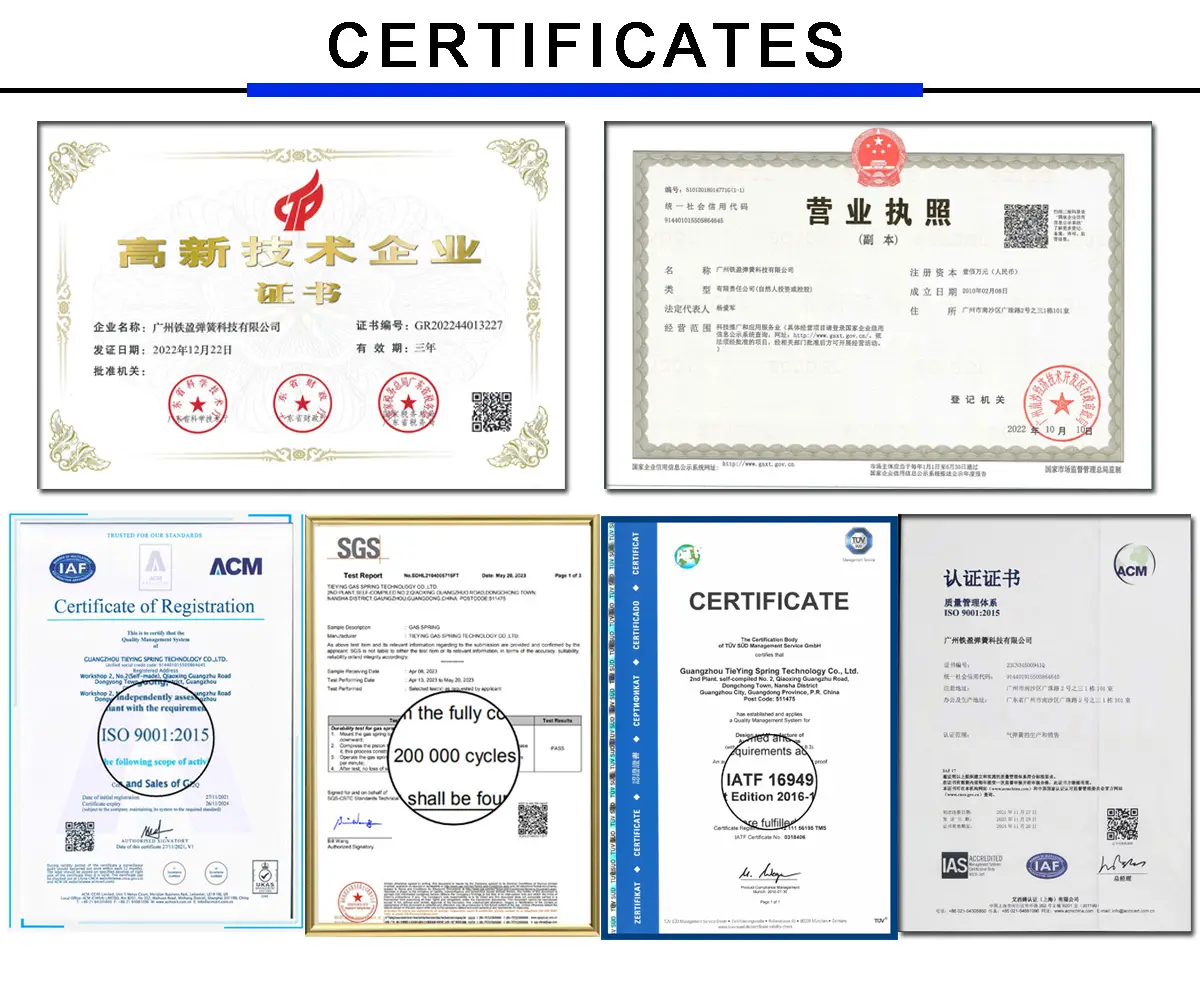
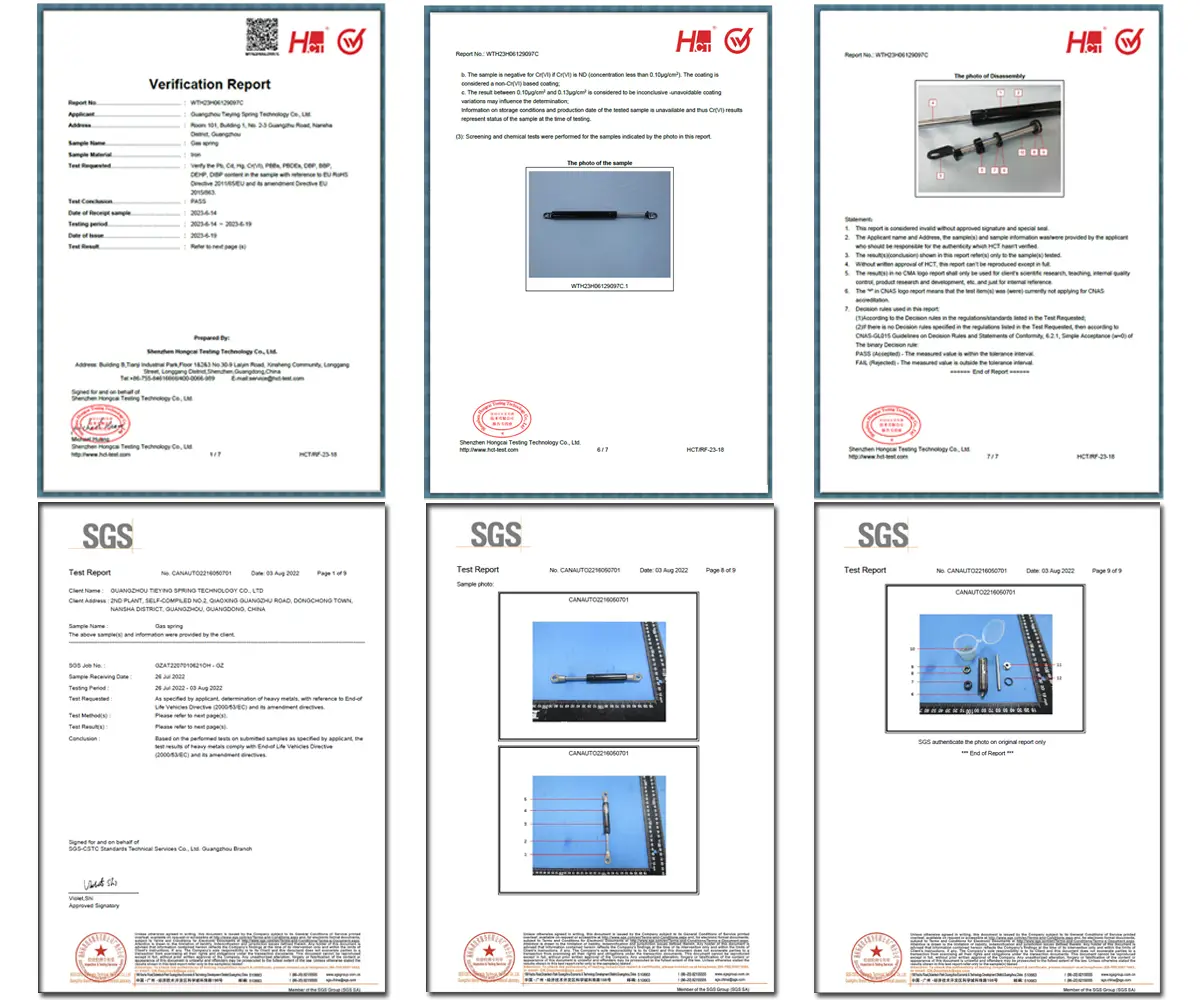
| Certificate | SGS 200000 Cycles Durability Test, ROHS, T16949, IS09001 | Maybe just ISO9001 |
| Material | Top seamless steel (Full inspection by Professional testing equipment) | Maybe steel |
| Oil | Anti-wear hydraulic oil from Garmany | Maybe Semi-Synthetic |
| Piston Roughness | Up to Ra 0.696um | Maybe Ra 0.4um |
| Gas spring resistance | 100°C~-40°C | Maybe 60°C |
| Gas | 99.99% nitrogen | Maybe oxygen / Impure nitrogen |
| Uselife | 80,000-200,000 cycles with SGS test report | Maybe 50,000 cycles |
| Salt spray testing | Up to 96 hours | Maybe up to 12 hours |
| Inspection | All procedure sampling inspect, complete inspect before delivery | Maybe sampling inspection |
| Defective product | Re-produce new, If reach 10%, 100% items re-produce new | Maybe Repair |
Frequently Asked Questions About Trailer Gas Struts
What are trailer gas struts used for?
Trailer gas struts are used to assist the opening of suitable hinged doors, storage lids, service hatches, access panels and equipment covers. Their purpose is to reduce manual lifting effort and help support the moving panel when the gas spring is correctly specified and installed.
Can TieYing manufacture custom gas struts for trailers?
TieYing supports custom gas spring projects based on application requirements. Depending on the design, customization can include force, stroke, extended and compressed length, end fittings and material options. Customers can provide drawings, existing samples, photographs or dimensional specifications for review.
How do I choose the correct force for a trailer gas strut?
The correct force depends on the moving panel’s weight, dimensions, centre of gravity, hinge position, gas spring mounting geometry, opening angle and number of struts. Panel weight alone is not sufficient to determine the final specification. Provide these details for an application-based assessment.
Can I replace a trailer gas strut with another one of the same length?
Not necessarily. The replacement should also match the required force, stroke, compressed and extended dimensions, end fittings and mounting arrangement. If the original mechanism was modified or did not operate correctly, the application should be reassessed rather than copying the old dimensions without checking them.
Are gas struts suitable for heavy trailer loading ramps?
Some ramp-assist mechanisms may use gas springs, but suitability depends on the ramp’s weight, geometry, hinge design, mounting structure and operating requirements. Heavy ramps may require a purpose-designed counterbalance system and independent mechanical safety supports. A standard gas strut should not be relied on as the sole safety support for a heavy ramp.
Which material is best for outdoor trailer gas struts?
The appropriate material and finish depend on moisture, road spray, dust, temperature and corrosion exposure. Carbon steel may suit many general applications, while stainless steel options may be considered for more demanding environments. The final choice should be based on the actual service conditions.
What information should I send to get a quotation?
Send the application type, panel weight and dimensions, hinge position, opening angle, available mounting space, existing gas spring details, environmental conditions and estimated order quantity. A drawing or photographs showing the mechanism in both open and closed positions can help clarify the requirements.
What is the difference between a gas spring and a gas damper?
A gas spring generates force to assist movement and support a moving component. A gas damper primarily resists movement to help control speed or impact. The correct choice depends on whether the application needs lifting assistance, motion control or a combination of functions.
Can TieYing support OEM and wholesale orders?
Yes. TieYing works with OEM customers, equipment manufacturers, wholesalers and distributors. Project requirements can be reviewed for sample evaluation, custom specifications and repeat production supply.
Have a trailer gas strut requirement? Contact TieYing with your drawings, samples or application details to discuss a suitable solution.Request a Custom Trailer Gas Strut Quote
Looking for a trailer gas strut manufacturer for an OEM project, replacement component or bulk order?
Send TieYing the available application details so our team can review the requirements and discuss a suitable configuration.For a more useful initial assessment, please provide:- Application type: Cargo door, storage lid, service hatch, serving window or other component.
- Panel details: Weight, dimensions, material and any attached hardware.
- Movement requirements: Hinge position, required opening angle and intended open position.
- Installation dimensions: Mounting-centre distances, available space and required stroke, if known.
- Existing component details: Part number, force rating, dimensions and end fittings, if available.
- Operating environment: Temperature, moisture, corrosion exposure and expected opening frequency.
- Order requirements: Sample quantity, estimated production quantity and any target specifications.
Contact TieYing to Discuss Your Trailer Gas Spring Project
Our team can review your requirements and discuss customization, sample evaluation and bulk supply options.