Custom Trailer Gas Struts for Doors, Hatches & Storage Lid
A heavy engine hatch that drops unexpectedly in a rolling sea. A deck hatch that slams shut on your fingers while the boat is underway. A once-smooth strut that has seized, pitted, or lost pressure after a season of salt spray, UV, and constant vibration. On the water, hatch hardware doesn’t just operate a door — it has to do so safely, reliably, and without corroding in one of the harshest environments any mechanical part can face.
TieYing gas struts for boat hatches are engineered specifically for marine conditions. Built around corrosion-resistant 316 stainless steel, marine-grade seals, and salt-tested construction, they hold hatches securely open, assist smooth lifting, cushion closing, and resist the salt, moisture, UV, and vibration that quickly destroy ordinary gas struts.
As a China-based OEM gas spring manufacturer with 23+ years of engineering experience, TieYing supplies marine hatch struts to boat builders, yacht manufacturers, marine fit-out shops, chandlers, and aftermarket distributors worldwide. Every unit is built to exact force, stroke, and fitting requirements and backed by global quality certifications.
Not sure which marine strut fits your hatch? Send your hatch weight, dimensions, or existing part number → Get a free fitment recommendation within 24 hours.
Types of Boat Hatches That Use Gas Struts
A “hatch” on a boat covers an opening in the deck, cabin, or hull, providing access, ventilation, or storage. Each type has different weight and damping requirements.
- Deck hatches — Low-profile, often glazed hatches set into the deck for light and ventilation, typically hinged at one edge.
- Engine hatches / engine room hatches — Among the heaviest hatches, covering inboard engines and machinery; require strong, reliable support and heat-resistant components.
- Locker & lazarette hatches — Storage compartments in the cockpit, transom, and stern lazarette, used for gear, ropes, fenders, and equipment.
- Cabin / companionway hatches — Sliding or hinged overhead hatchboards and cabin-top hatches on sailboats and cruisers.
- Anchor locker / anchor well hatches — Small, frequently opened covers at the bow over the anchor chain and windlass.
- Console & seat hatches — Cushioned seats and center-console compartments on powerboats and fishing boats.
Why Marine Struts Are Not Standard Gas Struts
A boat hatch operates on a moving, flexing platform in a saltwater atmosphere. A marine strut must resist chloride corrosion, avoid galvanic seizure with surrounding fittings, maintain force through vibration and temperature change, and support the hatch without compromising the waterproof gasket that keeps the opening dry. A standard carbon-steel or 304 strut will pit, bind, or leak far sooner in this environment.
How Marine Boat Hatch Struts Work?
TieYing boat hatch struts are sealed, nitrogen-charged gas springs built with marine-grade materials.
- On opening, compressed nitrogen drives the piston rod outward, counterbalancing most of the hatch weight so a heavy cover lifts with minimal effort and stays where positioned.
- In the hold position, internal gas pressure balances the hatch and keeps it open without a manual prop — even while the boat rocks.
- On closing, controlled motion lowers the hatch gently; optional damping cushions the final movement to prevent slamming and protect the gasket and frame.
- The piston rod passes through a wear-resistant marine-grade guide bushing and seal, engineered to retain pressure despite salt, moisture, and constant vibration.
Because gas pressure responds to temperature, struts feel firmer in heat and softer in cold — an important consideration in engine compartments and across seasons.
Why 316 Stainless Steel Is the Marine Standard?
- 316 stainless steel contains molybdenum, which dramatically improves resistance to chloride pitting and saltwater corrosion. It is the preferred grade for exposed marine hardware.
- 304 stainless steel is corrosion resistant but lacks molybdenum and is more prone to pitting in sustained salt exposure — better suited to indoor or freshwater use.
- Carbon steel, even plated, is not suitable for exposed saltwater service.
316 vs 304 vs Carbon Steel
| Property | 316 Stainless (marine) | 304 Stainless | Carbon Steel (plated) |
|---|---|---|---|
| Molybdenum content | Yes | No | No |
| Saltwater / chloride resistance | Excellent | Moderate | Poor |
| Pitting & rust risk in salt spray | Very low | Higher | High |
| Marine exposed use | Recommended | Limited / freshwater | Not recommended |
| Typical TieYing use | Boat hatch struts | Cabinets, indoor | General industrial |
Core Benefits of TieYing Boat Hatch Gas Struts
✅ Saltwater corrosion resistance — 316 stainless construction and marine-grade seals survive salt spray, humidity, and UV exposure.
✅ Secure stay-open on a moving boat — Hatches stay firmly open despite rocking, vibration, and wake, protecting hands and heads.
✅ Heavy engine hatch support — High force ratings safely counterbalance heavy engine and machinery covers.
✅ Anti-slam, anti-pinch closing — Controlled damping prevents sudden drops and protects both crew and the waterproof gasket.
✅ Galvanic-aware fittings — Stainless end fittings and isolated mounts reduce the risk of dissimilar-metal seizure.
✅ Long service life — Rated for 150,000+ cycles, far outlasting generic or carbon-steel struts in marine use.
✅ Matched pairs — Balanced left/right sets keep hatches traveling square without twisting hinges.
Boat Hatch Strut Size Chart & Standard Dimensions
| TieYing Model | Extended Length | Compressed Length | Stroke | Force (per strut) | Typical Marine Application |
|---|---|---|---|---|---|
| TY-MH-060-20 | 6 in (152 mm) | 4.0 in (102 mm) | 2.0 in (51 mm) | 20–30 lb / 89–133 N | Anchor lockers, small deck hatches |
| TY-MH-080-30 | 8 in (203 mm) | 5.2 in (132 mm) | 2.8 in (71 mm) | 30–40 lb / 133–178 N | Console & seat hatches, small lockers |
| TY-MH-100-40 | 10 in (254 mm) | 6.4 in (163 mm) | 3.6 in (91 mm) | 40–55 lb / 178–245 N | Standard deck hatches, cockpit lockers |
| TY-MH-120-50 | 12 in (305 mm) | 7.6 in (193 mm) | 4.4 in (112 mm) | 50–65 lb / 222–289 N | Lazarette & cabin hatches |
| TY-MH-150-60 | 15 in (381 mm) | 9.3 in (236 mm) | 5.7 in (145 mm) | 60–80 lb / 267–356 N | Large storage & cabin-top hatches |
| TY-MH-170-80 | 17 in (432 mm) | 10.6 in (269 mm) | 6.4 in (163 mm) | 80–100 lb / 356–445 N | Light/medium engine hatches |
| TY-MH-200-120 | 20 in (508 mm) | 12.2 in (310 mm) | 7.8 in (198 mm) | 100–130 lb / 445–578 N | Heavy engine room & large hatches |
Sizing Notes
- Forces are stated per strut; heavy hatches commonly use two struts, doubling total support.
- Standard sizes are stocked for fast shipment. Fully custom marine struts are available from 5 in (127 mm) to 28 in (711 mm) extended length with force from 10 lb (45 N) to 150 lb (667 N).
- Match both length/stroke and force — the correct length with the wrong force will either fail to hold or make the hatch hard to close.
- Send your existing part number or a photo of the fitted strut and we’ll confirm the exact 316 equivalent, including fittings and brackets.
End Fittings, Mounting & Galvanic Corrosion
Marine struts use standardized, serviceable fittings, with extra attention to dissimilar-metal corrosion.
Common End Fittings
- 10mm stainless ball socket (female) — The standard marine fitting; a reinforced socket with a retaining clip snaps onto a 10mm stainless ball stud and pivots through the hatch arc.
- 8mm ball socket — For small anchor lockers and light compartments.
- 13mm ball socket — For heavy engine hatches and high-force covers.
- Stainless eyelet / clevis — Bolted fittings for heavy-duty or custom installations.
Understanding Galvanic Corrosion
When two different metals are in contact in an electrolyte — and seawater is an excellent electrolyte — galvanic corrosion can occur at the contact point, causing fittings to seize or degrade. TieYing addresses this by:
- Supplying 316 stainless end fittings and brackets to match the surrounding hardware
- Offering isolating washers / bushings where the strut must mount to a dissimilar metal
- Recommending compatible fasteners rather than mixing stainless with incompatible alloys
Mounting Brackets
- Stainless L-brackets with integrated ball studs for surface mounting
- Flat-base brackets for low-profile, flush installation
- Adjustable sliding brackets for fine-tuning position and effective hold force
All external components are available in 316 stainless for maximum saltwater durability. For more options, see our stainless steel gas struts range.
Solutions by Boat Type
Sailboats
Hatchboards, cabin-top, and lazarette hatches that must hold while the boat heels and sails. Corrosion-resistant, vibration-tolerant struts keep openings usable without sacrificing the watertight seal.
Powerboats & Motor Yachts
Heavy engine hatches and cabin access covers requiring high force and heat-resistant components, with smooth controlled closing on polished joinery and gelcoat.
Center Console & Fishing Boats
Console, seat, and anchor locker hatches opened repeatedly throughout a day of fishing, exposed to washdown, bait, and salt spray.
Pontoon Boats & Houseboats
Seat and storage hatches in a relaxed, high-humidity environment where quiet, easy operation and corrosion resistance matter.
For oversized or unusually heavy custom hatches, our heavy-duty gas spring range delivers higher force and reinforced construction.
Marine Strut vs Standard (Non-Marine) Strut
| Feature | Standard 304 / Carbon Strut | Standard Gas Springs (Other Supplier) |
|---|---|---|
| Primary material | 316 stainless | 304 or plated carbon steel |
| Saltwater rated | Yes | No / limited |
| Marine-grade seals | Yes | General-purpose |
| Salt spray validation | Tested | Typically not |
| Galvanic-aware fittings | Yes | No |
| Engine compartment heat tolerance | Optional high-temp spec | Limited |
| Expected life in salt environment | Long | Short (pitting/seizure) |
| Best for | Boat & yacht hatches | Indoor/freshwater/industrial |
How to Choose the Right Boat Hatch Struts?
- Weigh the hatch Include the cover, glazing, frame, gasket, and any hardware. Choose two struts whose combined force targets roughly 60–80% of the hatch weight for a stable hold and easy closing.
- Measure extended length and stroke With the hatch fully open, measure center-to-center between ball studs (extended length), then the travel from closed to open (stroke). Measure mounting points, not the old strut body.
- Specify 316 for saltwater Choose 316 stainless for any exposed marine hatch. Only consider 304 for protected freshwater or cabin-interior use.
- Consider heat and location For engine compartments, specify high-temperature seals and adequate force margin. For bow and deck locations, prioritize maximum corrosion resistance.
- Check mounting and galvanic compatibility Confirm ball stud size (typically 10mm) and match metal grades; use isolators where dissimilar metals are unavoidable.
- Always replace in pairs Mismatched force causes uneven travel, hinge twist, and premature failure of the new unit.
30-Second Marine Hatch Selector
Send these details for an exact recommendation:
- Hatch total weight: ____ lb / kg
- Extended length (center-to-center, full open): ____ in / mm
- Fitting: ☐ 10mm ball ☐ 8mm ball ☐ eyelet ☐ custom
- Environment: ☐ saltwater ☐ freshwater ☐ engine compartment ☐ coastal/UV
Installation Guide & Safety Precautions
Before You Start
- Secure the hatch fully open with a prop or a helper before removing old struts. On a heavy engine hatch, never rely on a person alone — a released cover can fall without warning.
- Tools required: a flathead screwdriver for retaining clips and a wrench/socket for mounting bolts.
- Verify orientation. Install struts with the piston rod pointing downward in the closed position so internal oil keeps the seal and bushing lubricated.
Step-by-Step Installation
- Pry up the retaining clip on each ball socket and pull straight off the stud; avoid twisting or levering sideways.
- Compare the new strut to the old one to confirm length, force, damping, and fittings.
- Attach the cylinder (body) end to the lower mounting point first, pressing until it clicks.
- Attach the rod end to the upper point, moving the hatch slightly to align.
- Confirm both ends are locked, then cycle the hatch slowly through its full range, checking for smooth lift, a stable hold, and even travel with no binding.
Protecting the Watertight Seal
- Ensure strut mounting does not interfere with the hatch gasket/sealing surface; the gasket must compress evenly when closed.
- Do not drill new holes through a sealed deck unless properly bedded and sealed against water ingress.
- Use the existing mounting points wherever possible.
Critical Mistakes to Avoid
- ❌ Do not manually force or compress the strut.
- ❌ Do not twist or bend the piston rod.
- ❌ Do not use the strut as a mechanical end stop; fit bump stops that contact before full extension.
- ❌ Do not over-torque fasteners or mix incompatible metals without isolation.
Marine Maintenance to Extend Strut Life
Every Trip / Washdown
- Rinse the struts and fittings with fresh water after saltwater use to remove salt residue, then dry.
- Wipe the exposed piston rod with a clean, soft cloth; salt and grit on the rod can scratch the seal and cause leakage.
Routine Inspection (Every 1–3 Months)
- Check for pitting, rust streaks, or corrosion on the rod, cylinder, and ball studs.
- Confirm brackets and fasteners remain tight and that no fitting is beginning to seize.
- On damped models, verify the closing action and hold force still meet your needs.
- Inspect the hatch gasket and ensure the strut allows even compression.
Do’s & Don’ts
✅ Do cycle hatches periodically if the boat is laid up, keeping seals lubricated.
✅ Do use a light silicone product only if specified, wiping away excess.
❌ Don’t apply oil, grease, WD-40, or petroleum lubricants to the piston rod.
❌ Don’t paint, coat, or wrap the piston rod.
❌ Don’t ignore early signs of pitting — replace before the strut fails at sea.
Storage
If the boat is winterized or stored, keep struts in a relaxed (not fully compressed) position where possible, and store spare units horizontally in a dry place away from chemicals.Custom Marine Hatch Struts From TieYing
When a standard unit does not match your boat, our OEM/ODM engineering team develops a fully custom solution:
- Force: 10–150 lb (45–667 N), calibrated to your hatch weight and geometry
- Length & stroke: 5–28 in (127–711 mm) with custom stroke and opening angle
- Material: Full 316 stainless cylinders, rods, end fittings, and brackets
- Seals: Marine-grade nitrile or high-temperature FKM for engine compartments
- Damping: End-of-stroke, linear, or adjustable closing speed
- Special features: Custom branding, private label, bespoke packaging, and matched pairs
We support prototypes, fitment and corrosion validation, and smooth scaling into high-volume production with automated, cost-efficient manufacturing.
Why Choose TieYing as Your Marine Hatch Strut Supplier?
23+ Years of Gas Spring Engineering
Founded in 2002, TieYing has focused exclusively on gas spring design and manufacturing for more than two decades, building deep application knowledge across marine, automotive, RV, and industrial markets.
Certified, Traceable Quality
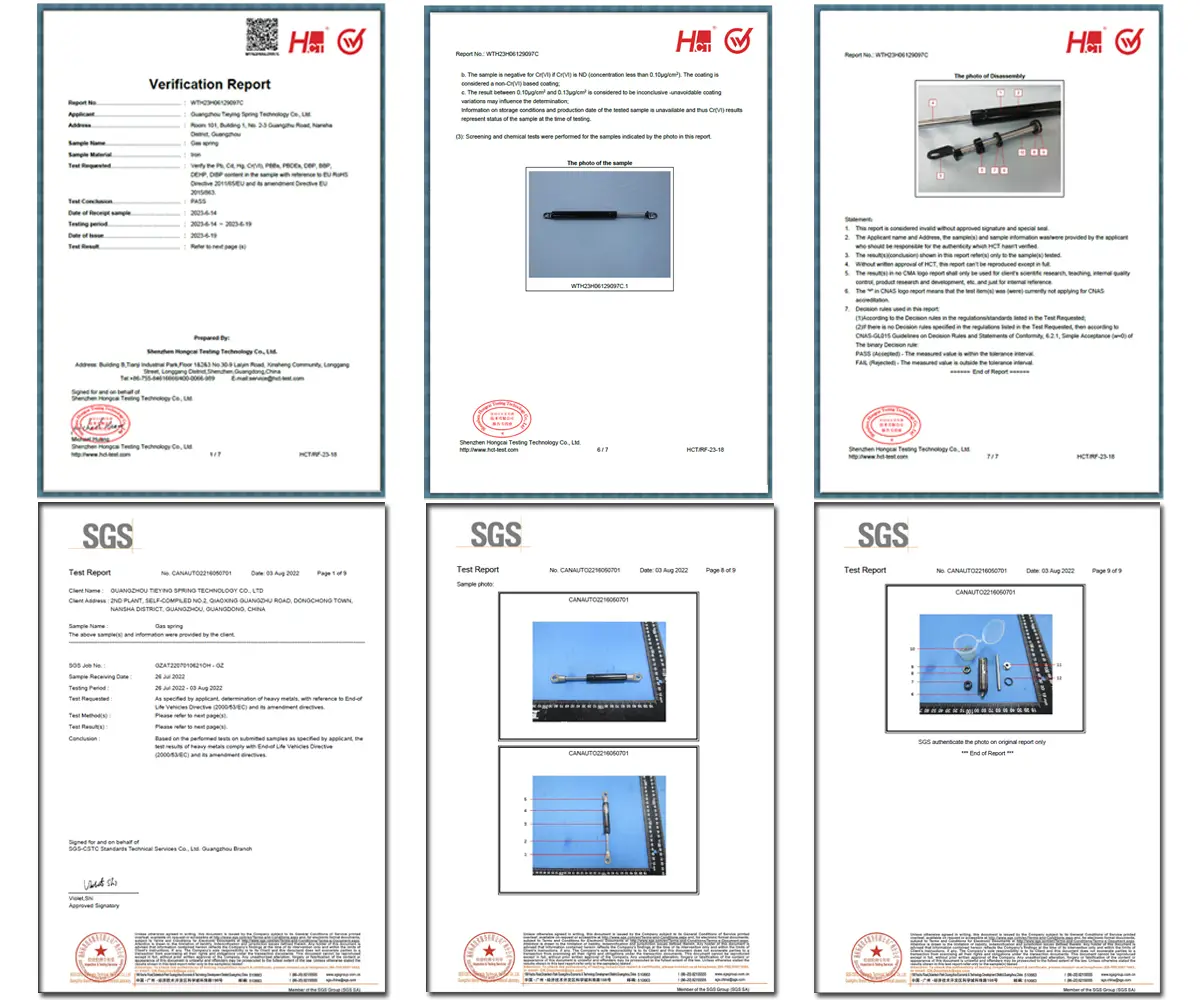
Our factory operates under ISO 9001 and IATF 16949 systems. Marine struts are tested for cycle life, force consistency, leak integrity, and salt-spray corrosion, with test reports available on request, and all products are RoHS and REACH compliant. Every unit undergoes 100% inspection before shipment.
Scalable Capacity & Fast Lead Times
Our Guangzhou facility runs automated assembly lines with an annual output of millions of units, supporting fast shipment of standard sizes and dependable lead times for custom OEM production.
Global Export Experience
We supply customers in 56+ countries, including the USA, Germany, Australia, Canada, and the UK, handling export documentation, customs coordination, and flexible shipping terms including DDP.
Dedicated End-to-End Support
A dedicated account manager and engineering team support you from initial consultation and samples through after-sales service, with prompt responses to technical and commercial inquiries.
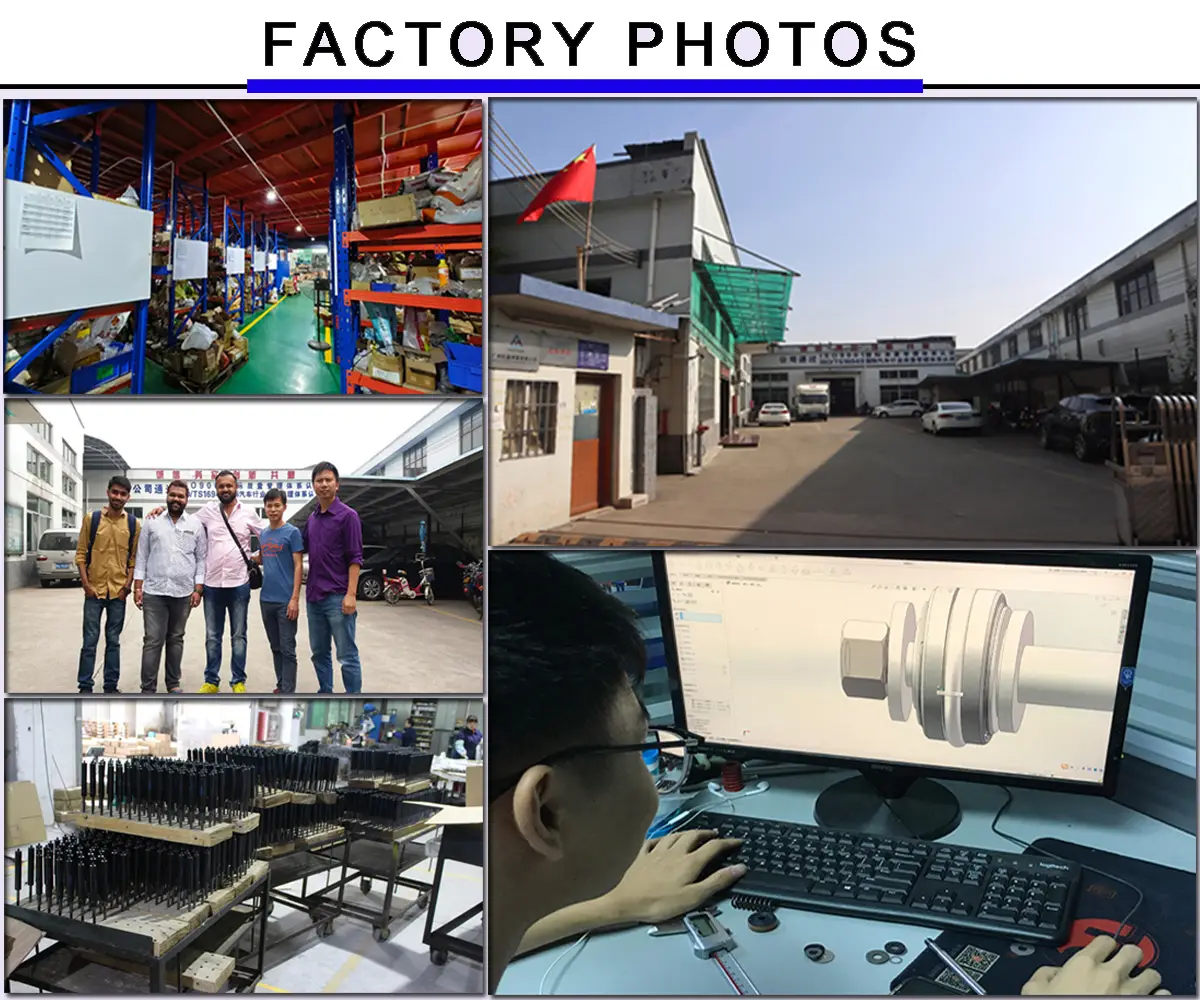

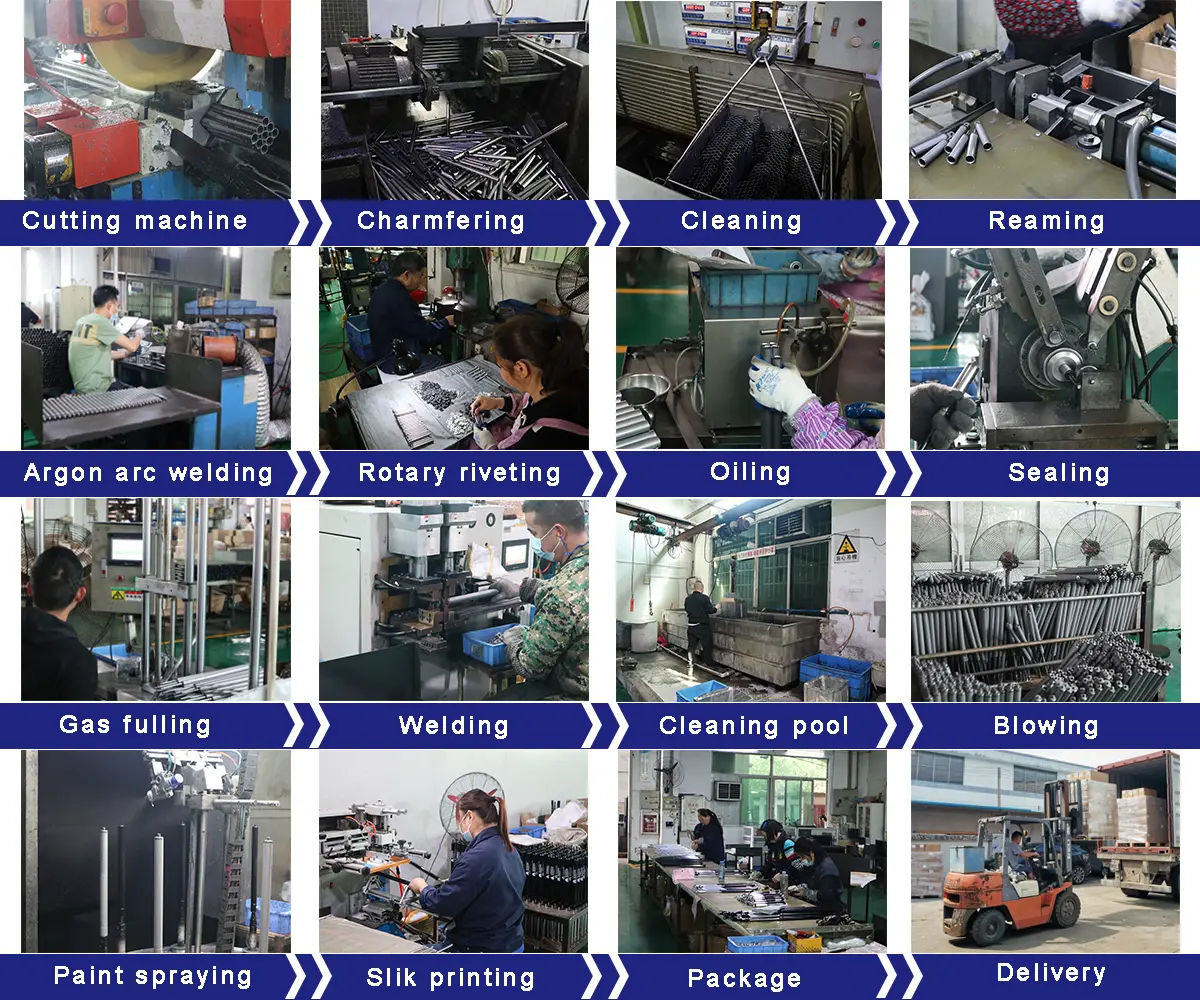
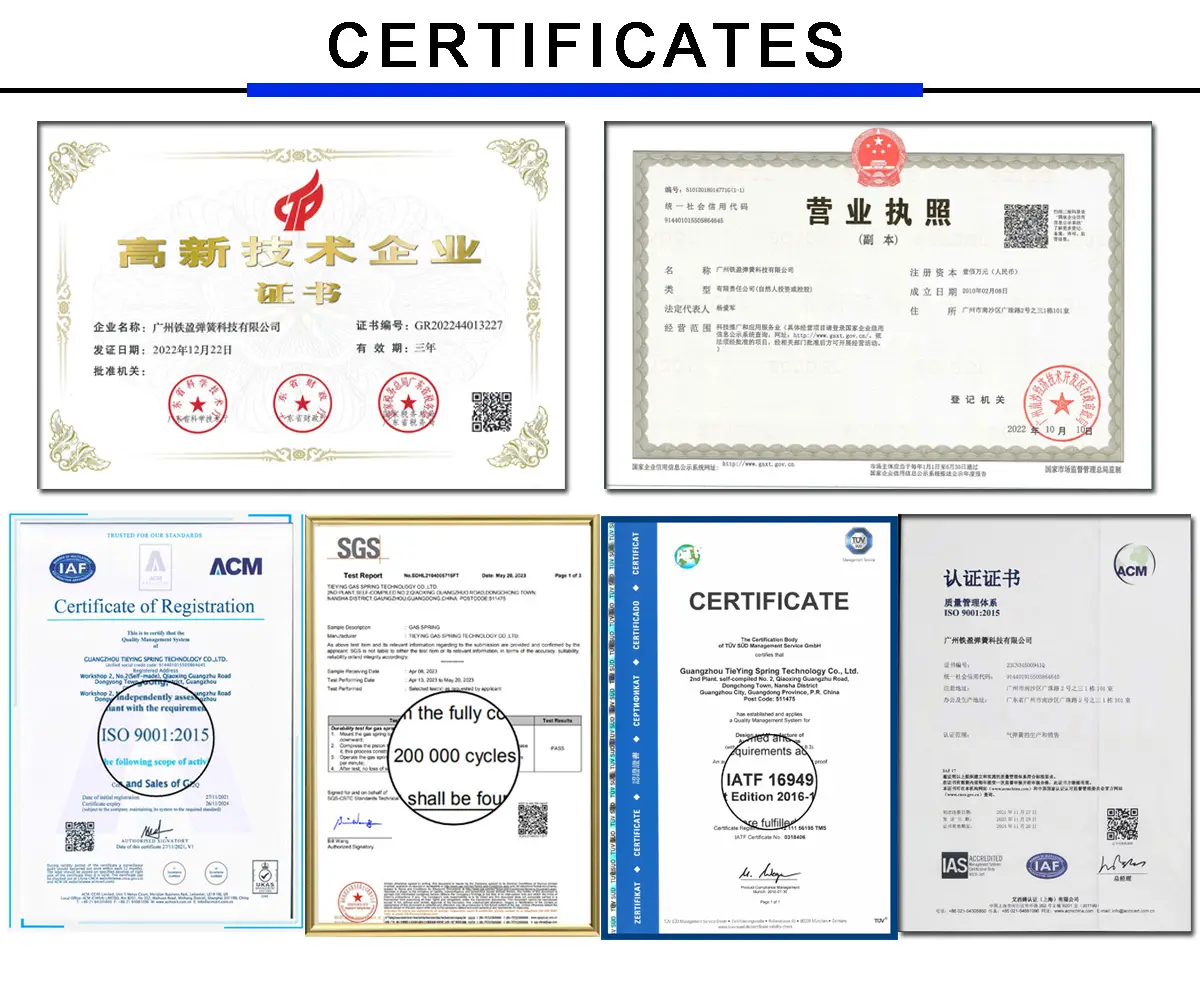
TieYing Factory Video Verified by SGS
Competitive Advantages of TieYing Gas Springs
| Item | TieYing Gas Springs (TieYing Supplier) | Standard Gas Springs (Other Supplier) |
|---|---|---|
| Certificate | SGS 200000 Cycles Durability Test, ROHS, T16949, IS09001 | Maybe just ISO9001 |
| Material | Top seamless steel (Full inspection by Professional testing equipment) | Maybe steel |
| Oil | Anti-wear hydraulic oil from Garmany | Maybe Semi-Synthetic |
| Piston Roughness | Up to Ra 0.696um | Maybe Ra 0.4um |
| Gas spring resistance | 100°C~-40°C | Maybe 60°C |
| Gas | 99.99% nitrogen | Maybe oxygen / Impure nitrogen |
| Uselife | 80,000-200,000 cycles with SGS test report | Maybe 50,000 cycles |
| Salt spray testing | Up to 96 hours | Maybe up to 12 hours |
| Inspection | All procedure sampling inspect, complete inspect before delivery | Maybe sampling inspection |
| Defective product | Re-produce new, If reach 10%, 100% items re-produce new | Maybe Repair |
Frequently Asked Questions (FAQ)
Do boat hatch struts need to be 316 stainless?
For any hatch exposed to saltwater, yes — 316 stainless contains molybdenum and resists chloride pitting far better than 304 or carbon steel. 304 can be considered only for protected freshwater or interior use.
Which struts fit a heavy engine hatch?
Engine hatches are heavy, so choose a high-force pair (commonly 80–130 lb per strut depending on weight), with high-temperature marine seals. Weigh the hatch and let us calculate the exact force and length.
Why does my boat hatch slowly fall or won't stay open?
The struts have lost nitrogen pressure through seal wear, age, or corrosion. Cold temperatures can also temporarily reduce force. If it still drifts when warm, replace both struts as a pair.
How do I measure boat hatch struts?
Open the hatch fully and measure the center-to-center distance between ball studs (extended length), then measure the stroke from closed to open. Always measure mounting points rather than the old strut body.
Will a new strut damage my watertight hatch gasket?
Not when correctly fitted. Use existing mounting points, ensure the strut doesn’t cross the sealing surface, and confirm the gasket compresses evenly. Avoid unsealed new holes through the deck.
What is galvanic corrosion and how do I prevent it?
It is corrosion between dissimilar metals in contact in seawater. Use matching 316 stainless fittings and fasteners, and add isolating washers where contact with a different metal is unavoidable.
Can I replace the struts myself?
Yes, most replacements take 10–15 minutes with a flathead screwdriver. Always prop the hatch securely open first, and install with the rod pointing down.
How long do marine hatch struts last?
TieYing 316 struts are rated for 150,000+ cycles. Actual life depends on salt exposure, maintenance, and heat; fresh-water rinsing and regular inspection maximize service life.
What is the minimum order quantity?
MOQs are flexible. Standard sizes support small batch and sample orders, while fully custom marine struts typically begin at a low production MOQ. Contact us for exact terms.
Get Your Boat Hatch Strut Quote Today
Whether you need direct replacement hatch struts, heavy engine hatch supports, or high-volume OEM production for boat manufacturing, TieYing provides a complete marine solution:
- Free engineering consultation and force/fitment calculation
- 316 stainless, salt-tested marine construction
- Samples for fit and hold-force validation
- Matched pairs with optional anti-slam damping
- Competitive factory-direct pricing and dependable lead times
- Global shipping and dedicated after-sales support
Contact our marine gas spring specialists with your hatch details, part number, or required quantity. We’ll respond within 24 hours with a detailed specification and tailored recommendation.