
Camper Door Struts: Smooth, Safe & Durable Gas Spring Solutions for RV, Camper & Caravan Doors
Worn-out camper door struts that slam shut in gusty campsite winds? Struggling to find exact OEM replacements that don’t fail after one cold winter? Tired of cheap aftermarket struts that leak gas and need replacement every 2 years?
TieYing’s purpose-built camper door gas struts solve the #1 frustration of RV builders, fleet operators, caravan distributors and camper owners alike: unreliable door hardware that fails mid-trip. Engineered exclusively for recreational vehicle environments, our struts deliver consistent performance from desert heat to mountain cold, with a 150,000-cycle rated lifespan 2–3x longer than standard aftermarket alternatives.
As a China-based OEM gas spring manufacturer with 23+ years of expertise, we supply bulk camper door struts to RV manufacturers, camper builders, distributors, and aftermarket parts suppliers worldwide. Every strut is engineered to your exact specifications, rigorously tested, and backed by global quality certifications.
Not sure which size fits your door? Send your door weight & dimensions → Get a free professional recommendation in 24 hours.
Core Benefits of TieYing Camper Door Gas Struts
✅ Controlled jolt-free operation: Integrated end-of-stroke damping eliminates slamming and frame vibration, protecting camper body hardware and preventing pinched fingers
✅ Wind-resistant stay-open performance: Holds doors firmly open in 25+ mph gusts, no more propping doors open at campsites
✅ All-weather reliability: Operates consistently from -40°C to 80°C (-40°F to 176°F) across desert, mountain and coastal environments
✅ Industry-leading service life: 150,000+ SGS-tested cycles, translating to 8–12 years of normal recreational use
✅ Drop-in OEM replacement: Matches all major brand part numbers, no drilling or modification required for installation
Standard Camper Door Strut Size Chart & Dimensions
Our catalog covers all industry-standard sizes for direct OEM replacement and retrofit projects. All models feature 10mm ball socket fittings as standard, with custom end fittings available on request.
| TieYing Model No. | Extended Length | Compressed Length | Stroke Length | Force Rating (per strut) | Typical Applications | OEM Cross Reference |
|---|---|---|---|---|---|---|
| TY-CDS-100-10N | 10 inch (254 mm) | 6.2 inch (157 mm) | 3.8 inch (97 mm) | 10 lbs / 45 N - 20 lbs / 89 N | Small camper cabinet doors, compact caravan access panels, pop-up camper side windows | C16-06389, GSNI-2200 |
| TY-CDS-140-24N | 14 inch (356 mm) | 8.5 inch (216 mm) | 5.5 inch (140 mm) | 24 lbs / 107 N - 30 lbs / 133 N | Truck camper shell side doors, small teardrop trailer entry doors, RV storage compartment doors | C16-08316, SX-140-24 |
| TY-CDS-150-26N | 15 inch (381 mm) | 9.5 inch (241 mm) | 5.5 inch (140 mm) | 26 lbs / 115 N - 35 lbs / 156 N | Standard pickup topper rear doors, mid-size camper entry doors — most popular OEM replacement size | C16-1526, GSNI-3800 |
| TY-CDS-170-38N | 17 inch (432 mm) | 10.8 inch (274 mm) | 6.2 inch (157 mm) | 38 lbs / 169 N - 40 lbs / 178 N | Full-size camper shell rear hatch doors, Class C RV side entry doors, heavy-duty cargo trailer doors | C16-20651, SX-170-40 |
| TY-CDS-200-40N | 20 inch (508 mm) | 11.8 inch (300 mm) | 8.2 inch (208 mm) | 40 lbs / 178 N - 67 lbs / 300 N | Class A motorhome main entry doors, large horse trailer ramp doors, double-wide camper doors | Stabilus 082551, Suspa C16-22 |
| TY-CDS-240-80N | 24 inch (610 mm) | 14.5 inch (368 mm) | 9.5 inch (241 mm) | 80 lbs / 356 N - 100 lbs / 445 N | Extra-large RV entry doors, heavy toy hauler rear doors, full-height cargo trailer doors | Lift-O-Mat 240-80 |
Key Sizing Notes
- Force ratings listed are per single strut. Most camper doors use 2 struts (one per side), so total lift capacity is double the per-strut rating.
- All standard sizes are in stock for immediate bulk shipment. Custom sizes from 6 inch (150 mm) to 30 inch (762 mm) with force ratings 5–150 lbs (22–667 N) are available via our custom gas springs service.
- Can’t find your OEM part number? Send us your existing part number → We’ll cross-reference and supply a direct equivalent.
Request free 2pcs samples for fit testing | Only pay shipping cost.
Standard End Fittings & Mounting Hardware
Camper door struts rely on compatible end fittings for secure installation and smooth angular movement. TieYing offers all industry-standard mounting options to match any existing setup.
Common End Fitting Types
- 10mm Ball Socket (Female) — Industry standard Nylon-reinforced socket with spring steel retaining clip, snaps onto 10mm ball studs for 360° angular movement. Tool-free release for easy servicing. Brass threaded insert for maximum durability.
- 8mm / 13mm Ball Socket Smaller 8mm for lightweight cabinet doors; larger 13mm heavy-duty for high-load toy hauler and horse trailer doors.
- Eyelet End (Ring Fitting) U-shaped circular eye with 8mm / 10mm hole, bolt-mounted. Used on vintage caravans and heavy-duty applications requiring rigid pivot connection.
- Clevis Fork End U-shaped fork with cross pin, high lateral stability for heavy doors and high-vibration expedition vehicles.
- Blade / Tang End Flat blade fitting for quick-release pin mounting, common on custom camper builds and specialty OEM projects.
Mounting Bracket Options
- Standard L-brackets: 90° angled steel with pre-threaded ball stud, for surface mounting on flat door and frame surfaces
- Flat base brackets: Low-profile design for recessed mounting or thin-wall installations
- Adjustable sliding brackets: Slotted design for fine-tuning mounting position and force after installation
All fittings and brackets are available in zinc-plated carbon steel, black powder coat, or full 304/316 stainless steel. For maximum corrosion resistance, explore our stainless steel gas struts range.
Camper Door Strut Solutions by Application Scenario
Different camper use cases demand different performance specifications. TieYing offers targeted solutions for every scenario:
Cold Climate Camper Struts
Engineered for Canada, Scandinavia, and other winter-heavy regions. Features low-temperature nitrogen charge formula that maintains 90%+ of rated force at -40°C, unlike standard struts that lose up to 30% force in freezing weather. Ideal for year-round RVs and overwintering campers.
Coastal & Marine Grade Struts
316 stainless steel piston rod + marine-grade nitrile seals + salt spray tested cylinder coating. Passes 500-hour neutral salt spray test with zero corrosion. Perfect for coastal campers, houseboat doors, and caravan fleets operating in salt-air environments.
Commercial Fleet Camper Struts
Reinforced seal system + heavy-duty guide bushing, rated for 200,000+ opening cycles. Designed for rental RV fleets, campsite shuttle vehicles, and work campers with high daily usage. Reduces annual maintenance costs by 60% compared to standard aftermarket struts.
Vintage Camper Restoration Struts
Custom-sized struts for retrofitting classic travel trailers, vintage caravans, and old motorhomes. We can match obsolete dimensions and unusual mounting patterns, so you don’t have to modify original bodywork or drill new holes. Ideal for restoration workshops and classic camper enthusiasts.
For extreme high-load applications, our heavy duty gas springs range offers even higher force ratings and reinforced construction.
💡 Engineer’s Note A common mistake in camper door strut sizing is only matching static door weight. For doors wider than 36 inches (91cm), wind leverage can increase effective load by 30–40% in 25mph gusts. We recommend upsizing force by 20% for wide doors to prevent unexpected closure in windy campsites.
For storage compartment doors, always install struts with the piston rod pointing downward when the door is closed. This keeps the seal submerged in internal oil, reducing wear and extending service life by up to 40%.
30-Second Camper Door Strut Selector
Use this quick checklist to get an exact recommendation. Send these 4 details to our team and we’ll reply with the perfect model and pricing within 24 hours.
- Total door weight: ____ lbs / kg
- Extended length (mount center to mount center, fully open): ____ inch / mm
- Mounting type: ☐ 10mm ball socket ☐ eyelet ☐ clevis ☐ custom
- Operating environment: ☐ normal ☐ coastal/salt air ☐ extreme cold ☐ high-frequency fleet use
Complete Installation Guide & Safety Precautions
Proper installation is critical for safety, performance, and maximum service life. Follow this step-by-step guide:
Pre-Installation Safety
- Secure the door fully open: Before removing old struts, prop the door completely open with a sturdy wooden rod or telescoping support pole. Never rely on a person alone to hold the door — a failing gas spring can release suddenly and cause serious injury.
- Tools required: Small flathead screwdriver (for retaining clips), 10mm wrench / socket (for mounting bolts)
- Verify orientation: Gas struts are designed to be installed with the piston rod pointing downward when the door is closed. This position allows internal oil to continuously lubricate the seal. Reversing orientation will cause premature seal failure and gas leakage.
Step-by-Step Installation
- Remove the old strut by prying up the metal retaining clip on each ball socket with a flathead screwdriver. Pull the socket straight off the ball stud — do not twist or pry sideways, as this can bend the stud or crack the socket.
- Compare the new strut to the old one to confirm matching length, force rating, and end fittings.
- Attach the cylinder end (thicker body) to the lower mounting point on the door frame first, snapping the ball socket firmly onto the stud until you hear a click.
- Attach the rod end to the upper mounting point on the door. You may need a helper to slightly move the door to align the socket with the stud.
- Pull firmly on both ends to confirm they are securely locked onto the ball studs. Test door operation slowly through full range of motion to ensure smooth travel and no binding.
Critical Mistakes to Avoid
- ❌ Do not manually compress the strut. High-pressure gas springs cannot be compressed by hand. Forcing them can cause personal injury or permanent seal damage.
- ❌ Do not twist the piston rod. Twisting damages the internal guide bushing and seal. Always keep the strut aligned straight with the mounting points.
- ❌ Do not use struts as door stops. Gas springs are not designed to act as mechanical end stops. Ensure the door has built-in rubber bump stops that contact before the strut reaches full extension.
- ❌ Do not over-torque mounting bolts. Over-tightening can strip threads or warp brackets, causing misalignment and binding. Recommended torque: 8–12 Nm for M8 bolts.
Maintenance Tips to Extend Strut Life
With proper care, TieYing camper door struts deliver 8–12 years of reliable service. Follow these simple practices:
Routine Inspection (Every 6 Months)
- Wipe the exposed piston rod clean with a soft dry cloth to remove road dust, dirt, salt, and debris. Abrasive particles on the rod surface will scratch the seal over time, causing slow gas leakage.
- Check mounting brackets and bolts for tightness. Road vibration can loosen hardware over time, leading to misalignment and uneven stress.
- Inspect the piston rod for scratches, pitting, or corrosion. If you see visible damage, replacement is recommended to prevent sudden failure.
Do’s & Don’ts
✅ Do: Cycle the door fully open and closed at least once every 3 months if the camper is in long-term storage. This keeps seals lubricated and prevents them from drying out.
✅ Do: Use a small amount of silicone-based spray on the rod only if operating in extremely dry, dusty environments. Wipe off any excess immediately.
❌ Don’t: Apply oil, grease, WD-40, or petroleum-based lubricants to the piston rod. These attract dirt and debris, acting like sandpaper on the seal.
❌ Don’t: Paint or powder coat the piston rod. Any added coating will damage the seal and cause leakage.
❌ Don’t: Expose struts to open flame or extreme heat above 100°C. High-pressure nitrogen can rupture if overheated.
Storage Recommendations
- Store spare struts horizontally in a cool, dry place, away from direct sunlight and corrosive chemicals.
- Never store struts in fully compressed position for extended periods — this causes permanent seal deformation.
TieYing vs Standard Aftermarket Camper Door Struts
| Performance Parameter | TieYing Camper Door Struts | Standard Aftermarket Struts |
|---|---|---|
| Rated Cycle Life | 150,000+ cycles (SGS tested per ISO 11901) | 50,000–80,000 cycles (typical) |
| Operating Temperature Range | -40°C to 80°C (-40°F to 176°F) | -10°C to 60°C (14°F to 140°F) |
| Seal Material | High-performance nitrile rubber + oil bath lubrication | General-purpose rubber |
| Quality Control | 100% force & leak test per unit | Batch sampling only |
| Force Consistency | ±5% tolerance per unit | ±10–15% typical tolerance |
| Expected Service Life | 8–12 years (normal recreational use) | 2–4 years |
| OEM Cross Reference | Full database of 1,000+ part numbers | Limited common sizes only |
Why Choose TieYing as Your Camper Door Strut Supplier?
23+ Years Specialized in RV & Industrial Gas Springs
Founded in 2002, we’ve focused exclusively on gas spring design and manufacturing for over two decades, building deep application expertise for RV, caravan, automotive and industrial markets. Our team understands the unique stresses camper door hardware faces on the road — from constant vibration to extreme temperature cycling. To date, we’ve supplied over 1.2 million camper door struts to 120+ RV brands across 56 countries.
Certified Quality You Can Trust
Our factory operates under ISO 9001 and IATF 16949 quality management systems. Every camper door strut is tested per ISO 11901 gas spring performance standards, with full SGS cycle test reports available upon request. All products are RoHS and REACH compliant for global automotive and RV market access. We implement 6 Sigma quality control throughout production to ensure consistent force and dimensional accuracy.
Scalable Production with Fast Lead Times
Our 5,855㎡ Guangzhou facility includes 1,200㎡ of dedicated manufacturing space with fully automated assembly lines, supporting an annual output of 3.6 million units.
- Standard catalog sizes: 1,000+ units shipped within 7 days
- Custom engineered orders: Prototypes in 7 days, bulk production in 15–20 days
Global Export & Logistics Support
We supply camper door struts to customers in 56+ countries, including the USA, Germany, Australia, Canada, and the UK. Our logistics team handles all export documentation, customs clearance, and shipping coordination for a seamless procurement process. We also offer DDP delivery options to major global markets.
End-to-End Customer Service
From free initial consultation and prototype samples to 24/7 after-sales technical support, we guide you through every step of your project. You’ll work with a dedicated account manager who understands your business needs and responds to all inquiries within 24 hours.
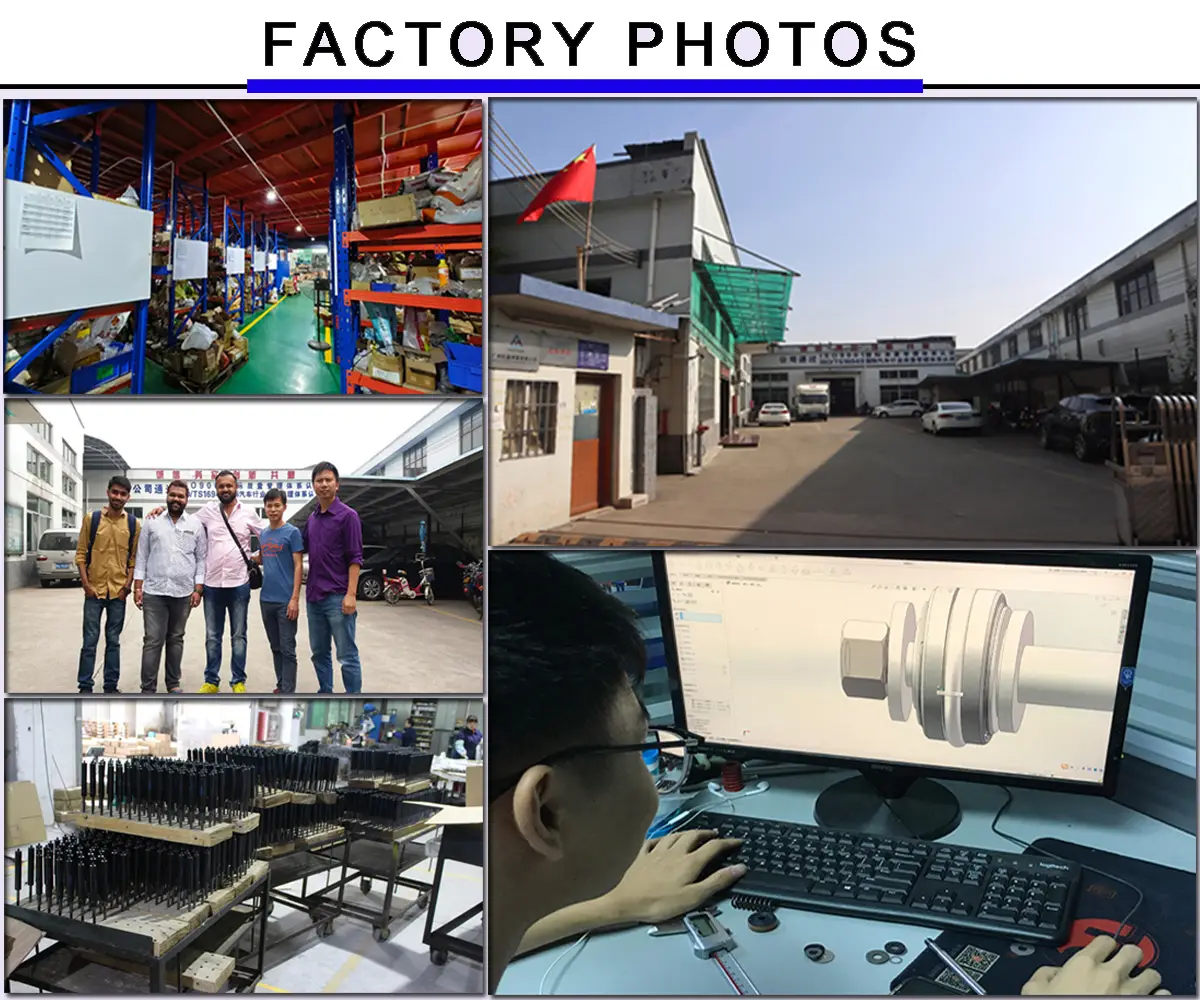

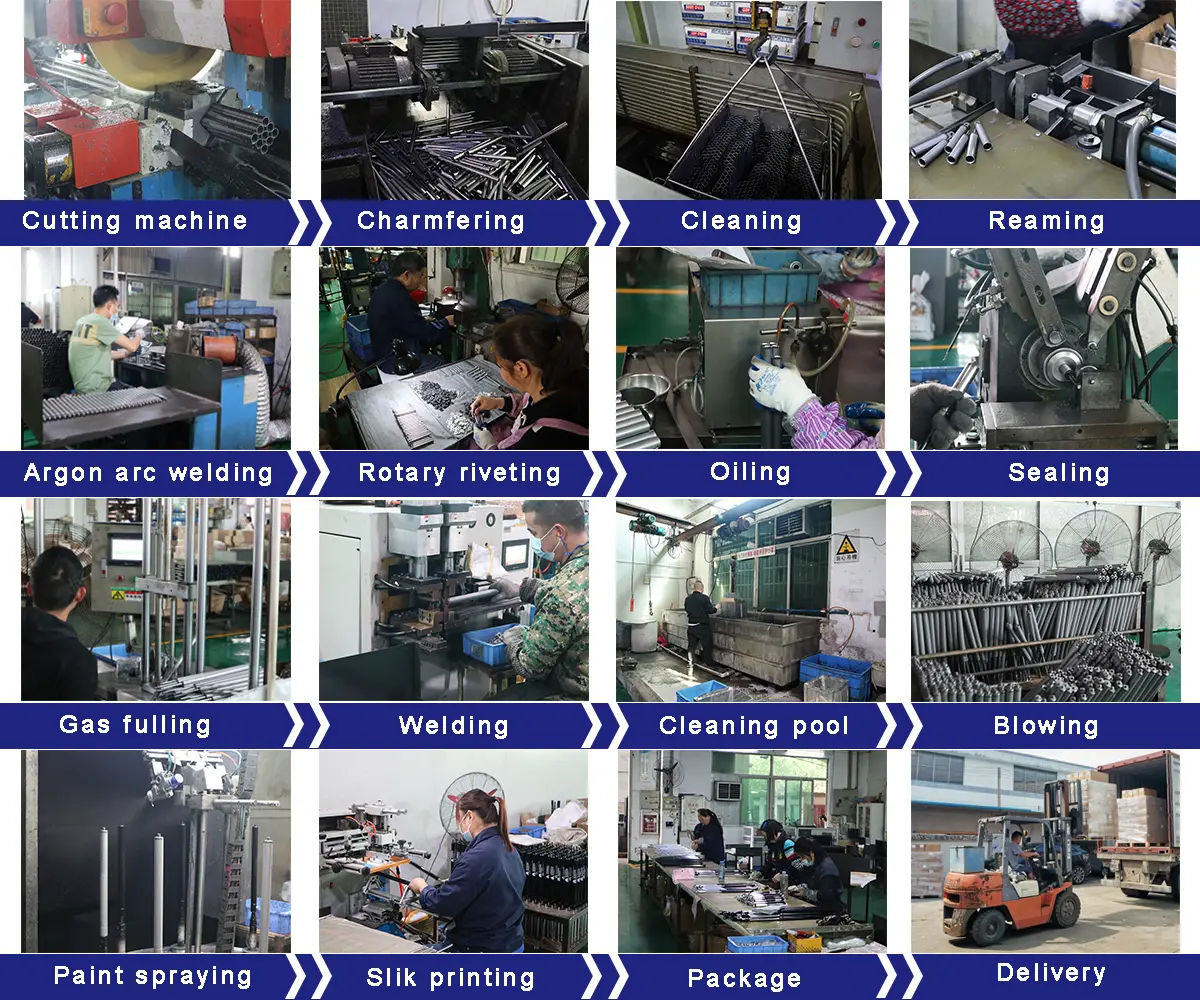
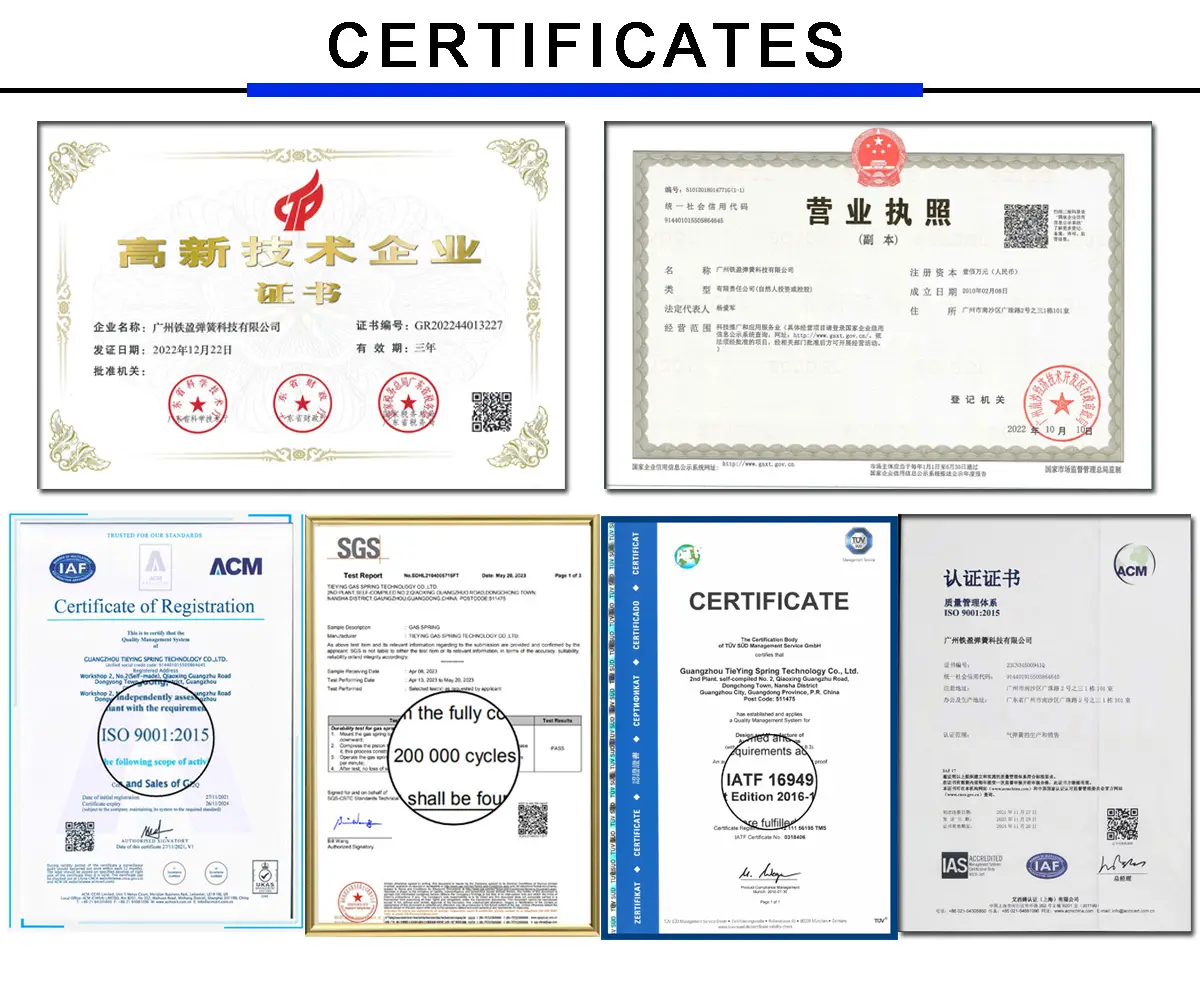
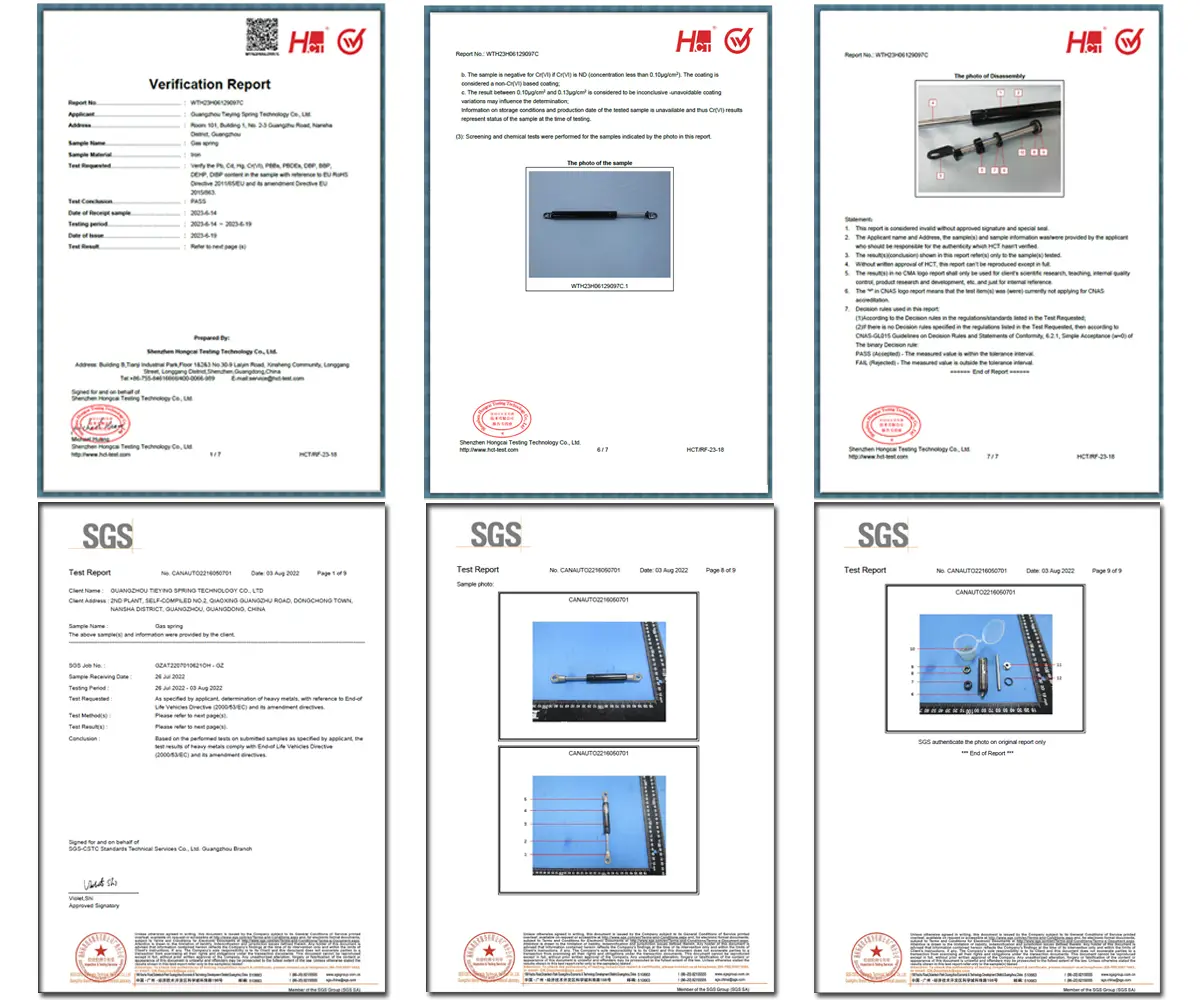
TieYing Factory Video Verified by SGS
Competitive Advantages of TieYing Gas Springs
| Item | TieYing Gas Springs (TieYing Supplier) | Standard Gas Springs (Other Supplier) |
|---|---|---|
| Certificate | SGS 200000 Cycles Durability Test, ROHS, T16949, IS09001 | Maybe just ISO9001 |
| Material | Top seamless steel (Full inspection by Professional testing equipment) | Maybe steel |
| Oil | Anti-wear hydraulic oil from Garmany | Maybe Semi-Synthetic |
| Piston Roughness | Up to Ra 0.696um | Maybe Ra 0.4um |
| Gas spring resistance | 100°C~-40°C | Maybe 60°C |
| Gas | 99.99% nitrogen | Maybe oxygen / Impure nitrogen |
| Uselife | 80,000-200,000 cycles with SGS test report | Maybe 50,000 cycles |
| Salt spray testing | Up to 96 hours | Maybe up to 12 hours |
| Inspection | All procedure sampling inspect, complete inspect before delivery | Maybe sampling inspection |
| Defective product | Re-produce new, If reach 10%, 100% items re-produce new | Maybe Repair |
Frequently Asked Questions (FAQ)
How long do camper door gas struts last?
Under normal recreational use (approximately 150–200 cycles per year), TieYing camper door struts are rated for 150,000+ opening cycles, which translates to 8–12 years of service life. Heavy-use commercial or rental fleets may require replacement every 5–7 years. Actual lifespan depends on operating conditions, temperature exposure, and regular seal maintenance.
Why won’t my camper door stay open?
This is almost always caused by a gas strut that has lost internal pressure due to seal wear or age. Cold weather can also temporarily reduce strut force (gas pressure decreases with lower temperatures). If the problem persists in warm temperatures above 20°C (68°F), replacement is recommended. Always replace struts in pairs to ensure even, balanced performance and prevent door twisting.
How do I measure camper door struts correctly?
To measure extended length: open the door fully, measure the distance between the centers of the two ball studs (mounting points). To measure stroke: measure the distance the door travels from fully closed to fully open. Do not measure the old strut while compressed, as worn struts may not fully extend. Always measure mounting point center-to-center, not end-to-end of the strut body.
Can I replace camper door struts myself?
Yes, most installations take 10–15 minutes with only a flathead screwdriver. Most struts use quick-release ball sockets — simply pry the retaining clip to remove the old strut, then snap the new one into place on existing mounting studs. Always ensure the door is securely propped open before beginning work.
Do you offer stainless steel camper door struts?
Yes, we manufacture full 304 and 316 stainless steel gas struts ideal for marine-grade campers, permanent coastal installations, and expedition vehicles where maximum corrosion resistance is required. These feature stainless steel rods, cylinders, and end fittings for saltwater and harsh environment durability.
What is your minimum order quantity?
We offer flexible MOQs to suit businesses of all sizes. No MOQ for standard catalog sizes — we support small batch orders and even complimentary sample quantities for fit and performance testing. For fully custom engineered designs with unique dimensions or fittings, MOQ starts at 100 pieces.
Can you match existing OEM part numbers?
Yes. Our engineering database includes cross-references for over 1,000 OEM gas spring part numbers from major brands including Stabilus, Suspa, Lift-O-Mat, and more. Provide us with your existing part number and we can supply a direct equivalent with matching force, dimensions, and end fittings.
How do I know if I need 24 lb or 40 lb struts?
As a rule of thumb, multiply the per-strut force by 2 (for two struts) and aim for 60–80% of your total door weight. For example, a 50 lb door works well with two 20 lb struts (40 lb total = 80% of door weight). Too much force will make the door hard to close; too little will not hold it open reliably. For wide doors exposed to wind, add 20% extra force margin.
Can gas struts be recharged or adjusted?
Standard sealed gas struts cannot be recharged or adjusted once manufactured. They are permanently charged with nitrogen and sealed during production. If a strut has lost pressure, replacement is the only solution. We do offer adjustable lockable gas springs for applications requiring variable force.
Get Your Custom Camper Door Strut Quote Today
Whether you need bulk aftermarket supply, OEM production for your camper manufacturing line, or custom struts for a restoration project, TieYing has the solution.
- Free technical consultation and professional force calculation
- Complimentary 2pcs samples for fit and performance validation
- Competitive bulk pricing with 30%+ factory-direct cost savings
- Fast global shipping from our Guangzhou production facility
- 3-year quality warranty on all products
Reach out to our gas spring specialists today with your door specifications, OEM part number, or required quantity. We’ll respond within 24 hours with a detailed quote and product recommendation tailored to your needs.