RV Gas Struts for Motorhomes, Caravans and Campervans
Custom Gas Spring Solutions for RV Doors, Storage Hatches and Lifting Systems
TieYing manufactures custom RV gas struts and gas springs designed to improve the opening, lifting and positioning of components used in recreational vehicles. From exterior storage compartment doors and baggage hatches to interior cabinets, lift-up bed platforms and roof access panels, our gas spring solutions help make everyday RV operation smoother, easier and more controlled.
Unlike conventional automotive applications, recreational vehicles combine multiple storage areas, lightweight body structures and compact interior mechanisms within a mobile environment. Their gas struts must therefore be selected according to the actual component weight, hinge geometry, available mounting space, operating conditions and expected usage.As an experienced gas spring manufacturer since 2002, TieYing provides standard and customized gas spring solutions for RV manufacturers, motorhome builders, caravan manufacturers, campervan converters, component suppliers and international distributors.Our RV gas spring solutions include:
- Custom lifting force, stroke and extended length
- Gas struts for exterior storage compartments and access hatches
- Compact gas springs for interior cabinets and storage systems
- Heavy-duty solutions for larger RV panels and lifting mechanisms
- Stainless steel options for moisture-exposed applications
- Customized end fittings, mounting brackets and connections
- OEM/ODM manufacturing and wholesale supply
Why RV Gas Struts Require Application-Specific Engineering?
Recreational vehicles operate differently from stationary equipment. Their doors, hatches, storage compartments and interior mechanisms experience repeated movement, road vibration and changing environmental conditions.
A gas strut that works well on a stationary cabinet may not deliver the same performance when installed on an exterior RV compartment exposed to changing temperatures and continuous vehicle movement.
Several engineering considerations influence RV gas spring selection.
Road Vibration and Continuous Movement
Motorhomes, caravans, travel trailers and campervans regularly travel across different road surfaces. Vibrations and repeated vehicle movement can place additional demands on mounting brackets, end fittings and connection points.
Gas struts must be integrated with suitable mounting hardware to minimize unwanted movement, misalignment and excessive stress on the supporting structure.
Lightweight RV Construction
Many recreational vehicles use lightweight aluminium, composite panels and framed structures to reduce overall vehicle weight.
The gas spring must provide sufficient lifting assistance without placing excessive loads on hinges, brackets or the surrounding body structure.
Correct mounting geometry and load distribution are particularly important for larger storage doors and access panels.
Limited Installation Space
RV manufacturers must maximize storage capacity and usable interior space.
Gas springs often need to fit inside narrow cabinets, compact furniture assemblies, concealed storage compartments and specially designed vehicle structures.
Custom extended lengths, compressed lengths, stroke configurations and end fittings can help integrate gas springs into these restricted spaces.
Outdoor Exposure and Corrosion Resistance
Exterior RV components are exposed to rain, dust, road spray, sunlight and changing temperatures.
The selected gas spring material and surface treatment should be appropriate for the actual operating environment. Applications exposed to frequent moisture or corrosive conditions may require stainless steel construction.
Reliable Opening and Closing Performance
RV doors and storage compartments should open with manageable effort and remain in their intended open position.
An incorrectly selected gas spring may make a door difficult to open, cause it to close unexpectedly or place unnecessary stress on hinges and mounting points.
TieYing considers the complete application rather than selecting a gas spring based on force or length alone.
RV Gas Strut Applications Across Different Vehicle Components
Different recreational vehicles have different storage configurations, interior layouts and access requirements.
TieYing supports gas spring applications across a variety of RV structures, with product specifications adapted to the individual mechanical design.
1. RV Exterior Storage Compartment Doors
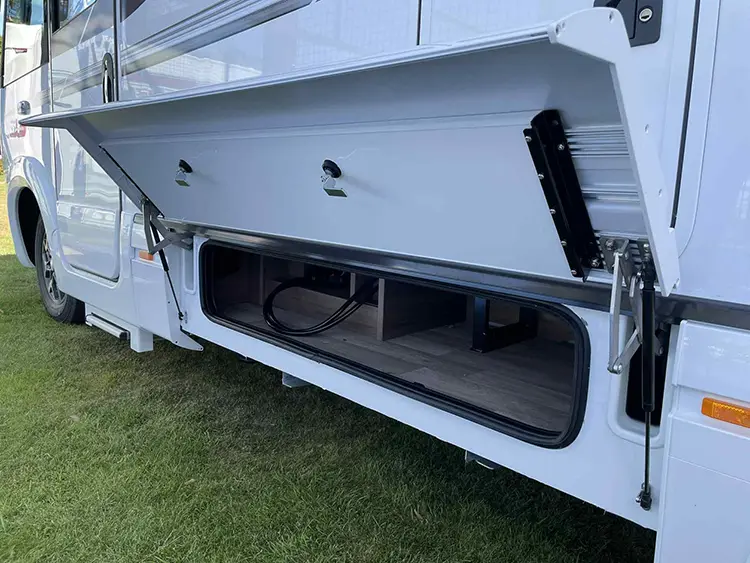
Exterior storage compartments provide access to equipment, travel supplies, tools and other essential items.
Many RV storage doors open upward and require lifting assistance to make loading and unloading more convenient.
Gas struts installed between the vehicle body and compartment door help counterbalance the moving panel and support it in the intended open position.
Typical applications include:
- Side-mounted RV storage doors
- Motorhome basement storage compartments
- Front and rear baggage compartment hatches
- Underbody storage access panels
- External utility storage doors
- Large pass-through storage compartments
For these applications, gas spring force, mounting distance, opening angle and door weight must be considered together.
2. RV Utility and Service Access Panels

Recreational vehicles contain several external service areas that require periodic inspection and maintenance.
These access panels may cover electrical equipment, battery compartments, water systems, generator installations and other vehicle components.
Gas struts can assist with lifting upward-opening service covers and provide convenient access during maintenance.
Common applications include:
- Battery compartment access doors
- Electrical equipment covers
- Generator access panels
- Water system inspection hatches
- Utility equipment compartments
- External maintenance access panels
Depending on the panel size and installation environment, manufacturers may require compact, heavy-duty or corrosion-resistant gas spring configurations.
3. RV Interior Cabinet and Overhead Storage Doors
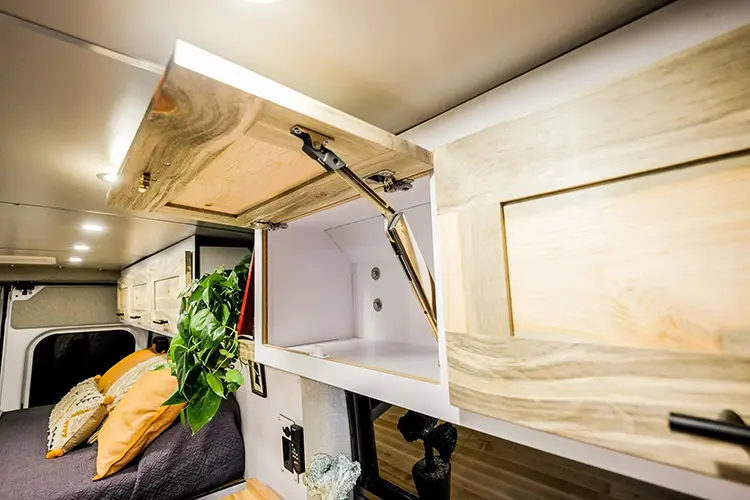
Interior storage is essential to recreational vehicle design. Overhead cabinets, kitchen storage units and compact furniture systems need practical opening mechanisms without consuming excessive interior space.
Gas springs provide lifting assistance for upward-opening cabinet doors and help maintain access while users retrieve or organize stored items.
Typical applications include:
- Overhead RV kitchen cabinets
- Bedroom storage cabinets
- Interior wardrobe compartments
- Lift-up furniture panels
- Under-seat storage lids
- Small interior access covers
Compact gas springs with suitable force ratings and mounting fittings can help manufacturers integrate lifting support into different cabinet designs.
4. RV Bed Lifting and Under-Bed Storage Systems

Many motorhomes, campervans and travel trailers use lift-up bed platforms to create additional storage space underneath the sleeping area.
Gas springs assist with lifting the mattress and supporting platform, reducing the physical effort required to access the storage compartment.
These mechanisms require careful consideration of the combined moving weight, hinge position, centre of gravity, opening angle and mounting geometry.
Typical applications include:
- Lift-up RV storage beds
- Motorhome bed platforms
- Campervan sleeping platforms
- Fifth-wheel bed storage systems
- Hinged bunk bed structures
For detailed information about these applications, visit our dedicated RV Bed Gas Struts page.
5. RV Roof Hatches and Ventilation Panels

Roof-mounted access points and ventilation systems often incorporate hinged panels that need controlled opening and positioning.
Depending on the structure and load requirements, gas struts can assist with lifting roof hatches, ventilation covers and selected access panels.
Potential applications include:
- Roof ventilation hatches
- Hinged roof access covers
- RV skylight opening mechanisms
- Selected pop-top and lift-roof mechanisms
These applications require particular attention to wind exposure, opening geometry, sealing arrangements and secure positioning. Larger roof structures may require dedicated mechanical assistance systems rather than conventional gas struts.
6. RV Equipment Covers and Special Storage Mechanisms

Some recreational vehicles include specialized equipment and multifunctional storage assemblies that require additional motion assistance.
Custom gas springs can be considered for suitable hinged mechanisms where the moving component requires lifting or counterbalancing.
Examples include:
- Outdoor kitchen access covers
- Equipment enclosure doors
- Appliance service covers
- Custom storage lids
- Hinged work surfaces
- Specialized recreational vehicle equipment panels
The final product configuration should be evaluated according to the actual mechanical arrangement and intended operating function.
Gas Spring Solutions for Different RV Applications
Not every RV component requires the same type of gas spring. The correct solution depends on whether the application needs lifting assistance, controlled movement, adjustable positioning or corrosion resistance.
Compression Gas Springs
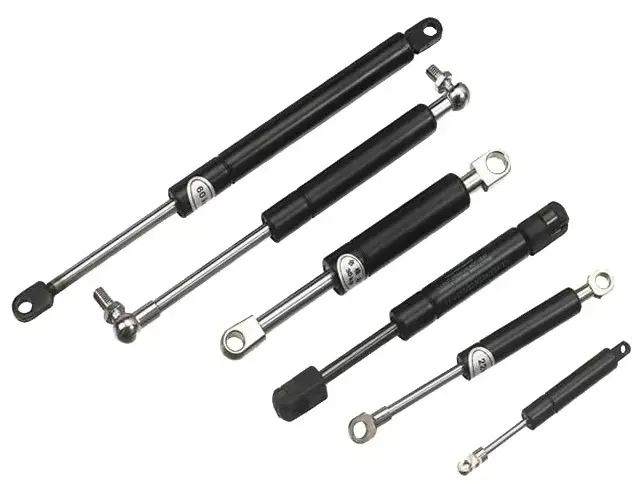
Compression gas springs are commonly used in RV applications requiring lifting assistance and support for upward-opening components.
Compressed nitrogen generates an extension force that helps counterbalance the weight of the moving panel.
Suitable applications:
- RV storage compartment doors
- Baggage compartment hatches
- Interior cabinet doors
- Lift-up storage panels
- Equipment access covers
Key features:
- Controlled lifting assistance
- Reduced manual operating effort
- Compact installation possibilities
- Custom force and stroke configurations
- Multiple end fitting options
Heavy-Duty Gas Springs
Larger RV doors, heavy access panels and equipment covers may require greater lifting assistance.
Heavy-duty gas springs can be designed with appropriate force ratings, cylinder dimensions, piston rod sizes and mounting connections to meet higher-load requirements.
Suitable applications:
- Large motorhome storage doors
- Heavy equipment access panels
- Larger baggage compartment covers
- Selected roof lifting mechanisms
- Heavy-duty RV service covers
The required force must be calculated according to the complete mechanical arrangement rather than the panel weight alone.
Stainless Steel Gas Struts
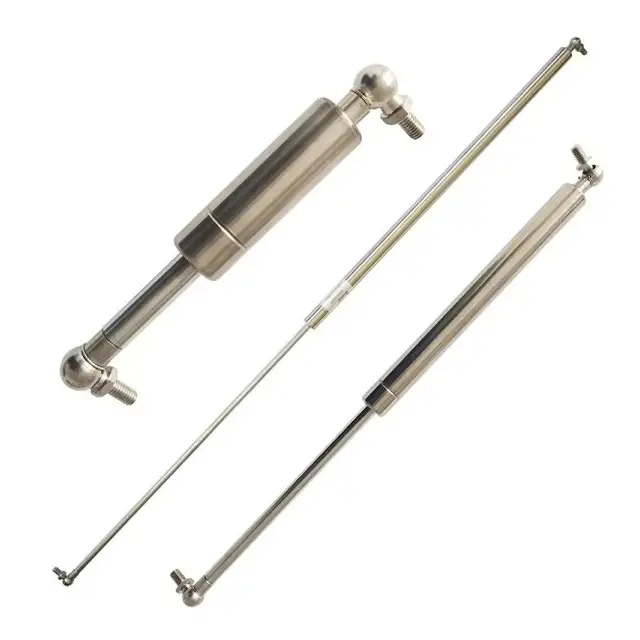
Exterior RV components can experience moisture, rain, road spray and other environmental exposure.
Stainless steel gas struts offer improved corrosion resistance compared with conventional carbon steel construction.
TieYing can discuss stainless steel 304 and 316 options according to the application requirements.
Suitable applications:
- Exterior RV storage compartments
- Moisture-exposed access panels
- Outdoor equipment covers
- Coastal and humid operating environments
- Recreational vehicle components requiring additional corrosion protection
Material selection should consider the complete assembly, including the piston rod, cylinder, fittings and mounting hardware.
Gas Dampers
Some RV doors and covers require controlled movement rather than additional lifting force.
Gas dampers provide resistance to movement and can help reduce sudden closing, impact and unwanted movement.
Suitable applications:
- Selected RV door control mechanisms
- Controlled-closing access panels
- Equipment covers requiring movement resistance
- Applications where reduced impact is important
A damper and a compression gas spring serve different functions. The correct product must be selected according to whether the mechanism needs lifting force or motion resistance.
Locking Gas Springs
Some specialized RV mechanisms require a component to remain positioned at a selected point during operation.
Locking gas springs incorporate a locking function that can maintain a position until the release mechanism is operated.
Potential applications include:
- Adjustable RV furniture structures
- Selected movable interior panels
- Position-adjustable equipment assemblies
- Specialized lifting mechanisms
The locking mechanism, release arrangement and required load capacity must be confirmed for each design.
Custom RV Gas Struts Designed Around Your Requirements
Standard gas springs may not always match the dimensions, force requirements or mounting arrangements of a particular recreational vehicle.
TieYing supports customized gas spring manufacturing for customers developing new RV products, sourcing replacement components or requiring specific OEM configurations.
Our customization options can include the following:
Adjustable Gas Spring Force
The appropriate extension force depends on the moving component, its centre of gravity, hinge position, mounting geometry and required operating effort.
TieYing can discuss different force configurations to help achieve suitable opening and closing performance.
Custom Stroke Length
Stroke length determines how far the piston rod can travel.
The required stroke must accommodate the intended movement without allowing the gas spring to reach its mechanical limit before the RV panel reaches its designed position.
Extended and Compressed Length
Available installation space is often limited in recreational vehicles.
Custom extended and compressed lengths help integrate gas springs into different compartment depths, cabinet structures and lifting mechanisms.
Customized End Fittings
The end connection must match the mounting hardware and allow the gas spring to move freely throughout the operating cycle.
Available connection options can include:
- Ball socket fittings
- Eyelet fittings
- Threaded connections
- U-fork fittings
- Clevis connections
- Customized mounting brackets
Material and Surface Treatment
Depending on the application, TieYing can discuss:
- Precision steel construction
- Stainless steel 304
- Stainless steel 316
- Zinc-plated finishes
- Black oxide finishes
- Other project-specific surface treatments
OEM and ODM Manufacturing
For RV manufacturers and component suppliers, TieYing supports customized manufacturing based on technical drawings, existing samples, dimensions and application requirements.
We can discuss product specifications, mounting configurations, packaging and repeat manufacturing requirements for different projects.
How to Select the Right RV Gas Struts?
Selecting a suitable gas spring requires more than identifying the weight of a door or hatch.
The installation geometry determines how effectively the gas spring can support the moving component throughout its opening and closing movement.The following factors should be evaluated before finalizing the specification.1. Identify the RV Component
Start by identifying the exact component that needs lifting assistance.Determine whether the application involves an exterior baggage door, storage hatch, overhead cabinet, bed platform, roof access panel or another hinged mechanism.Each application has different load and movement requirements.2. Determine the Moving Weight
Measure the total weight of the moving assembly.This should include the door or panel and any permanently attached hardware or components that move with it.For lifting furniture or bed systems, the complete moving assembly must be considered.3. Identify the Centre of Gravity
The centre of gravity determines how the moving component behaves around its hinge or pivot point.A wide or heavy door may require a different gas spring arrangement from a smaller panel with the same overall weight.Correct force selection must account for the distance between the centre of gravity, hinge and gas spring mounting points.4. Measure the Installation Geometry
Determine the mounting positions on both the fixed structure and the moving component.Important measurements include:- Distance between mounting points
- Fully extended mounting length
- Fully compressed mounting length
- Available stroke
- Hinge or pivot position
- Required opening angle
- Available clearance
5. Calculate the Required Force
Gas spring force is determined by the required counterbalancing torque and the mechanical leverage provided by the installation geometry.For systems using two gas springs, the load distribution and mounting arrangement must be evaluated rather than simply dividing the door weight by two.The final force specification should provide manageable opening and closing effort throughout the operating range.6. Consider the Operating Environment
RV gas springs can experience considerable temperature changes during seasonal use and vehicle storage.Gas spring extension force changes with temperature, which can affect opening and closing performance.For exterior installations, moisture exposure, road spray and corrosion risks should also be considered.7. Select Suitable Mounting Hardware
End fittings and brackets must provide secure attachment while allowing the gas spring to pivot freely.The installation should avoid twisting, bending and lateral forces on the piston rod.For conventional compression gas springs, rod-down installation is generally preferred when compatible with the mechanism and manufacturer’s instructions.8. Test the Complete Assembly
Before approving a final specification, evaluate the complete mechanism.Check:- Initial opening effort
- Movement throughout the stroke
- Open-position support
- Closing effort
- Mechanical clearance
- Mounting stability
- Performance under the intended temperature conditions
Important Engineering Considerations for RV Gas Spring Installation
Correct installation is essential for maintaining gas spring performance and service life.
RV manufacturers should pay attention to several important technical details.
Avoid lateral loading: Gas springs should operate along their intended axis. Misaligned mounting points can create excessive side loads and premature wear.
Protect the piston rod: Scratches, dirt, corrosion and physical damage can affect the sealing system and reduce product life.
Use appropriate mounting orientation: Standard compression gas springs are generally installed with the piston rod facing downward to support internal lubrication and damping. Always confirm the requirements of the selected model.
Allow sufficient stroke clearance: The gas spring should not bottom out before the moving panel reaches its mechanical stopping position.
Account for temperature changes: The selected force must provide acceptable operation across the intended working temperature range.
Use independent transportation locks: Gas springs provide lifting assistance and support. They should not be treated as the only device securing RV doors, beds, hatches or panels during vehicle travel. Appropriate mechanical latches or retaining systems must independently secure moving components.
Consider safety support: Where an open panel could create a risk of injury, use an appropriate mechanical safety support or locking arrangement rather than relying solely on gas spring pressure.
Why Choose TieYing for RV Gas Spring Manufacturing?
Choosing a gas spring manufacturer requires more than comparing product dimensions and unit prices. RV manufacturers and distributors need a supplier that understands application requirements, manufacturing consistency and long-term sourcing needs.
TieYing has specialized in gas spring manufacturing since 2002, providing customized products and OEM/ODM manufacturing support to international customers.
More Than Two Decades of Manufacturing Experience
Our experience in gas spring production supports different applications requiring controlled lifting, positioning and movement.
Application-Based Customization
We work with customers to discuss the relationship between moving weight, mounting geometry, force requirements, stroke and end fittings.
Multiple Material Options
Our manufacturing solutions include precision steel and stainless steel 304/316 options, subject to product design and application requirements.
OEM and ODM Manufacturing
We support custom product development based on customer drawings, samples, technical specifications and project requirements.
Multiple Gas Spring Product Types
Our product range includes compression gas springs, heavy-duty gas springs, locking gas springs, stainless steel gas springs and dampers.
Wholesale and Bulk Supply
TieYing works with manufacturers, importers, distributors and wholesalers requiring consistent product specifications and ongoing supply arrangements.
Our goal is to provide gas spring solutions that match the actual requirements of your RV components and manufacturing projects.
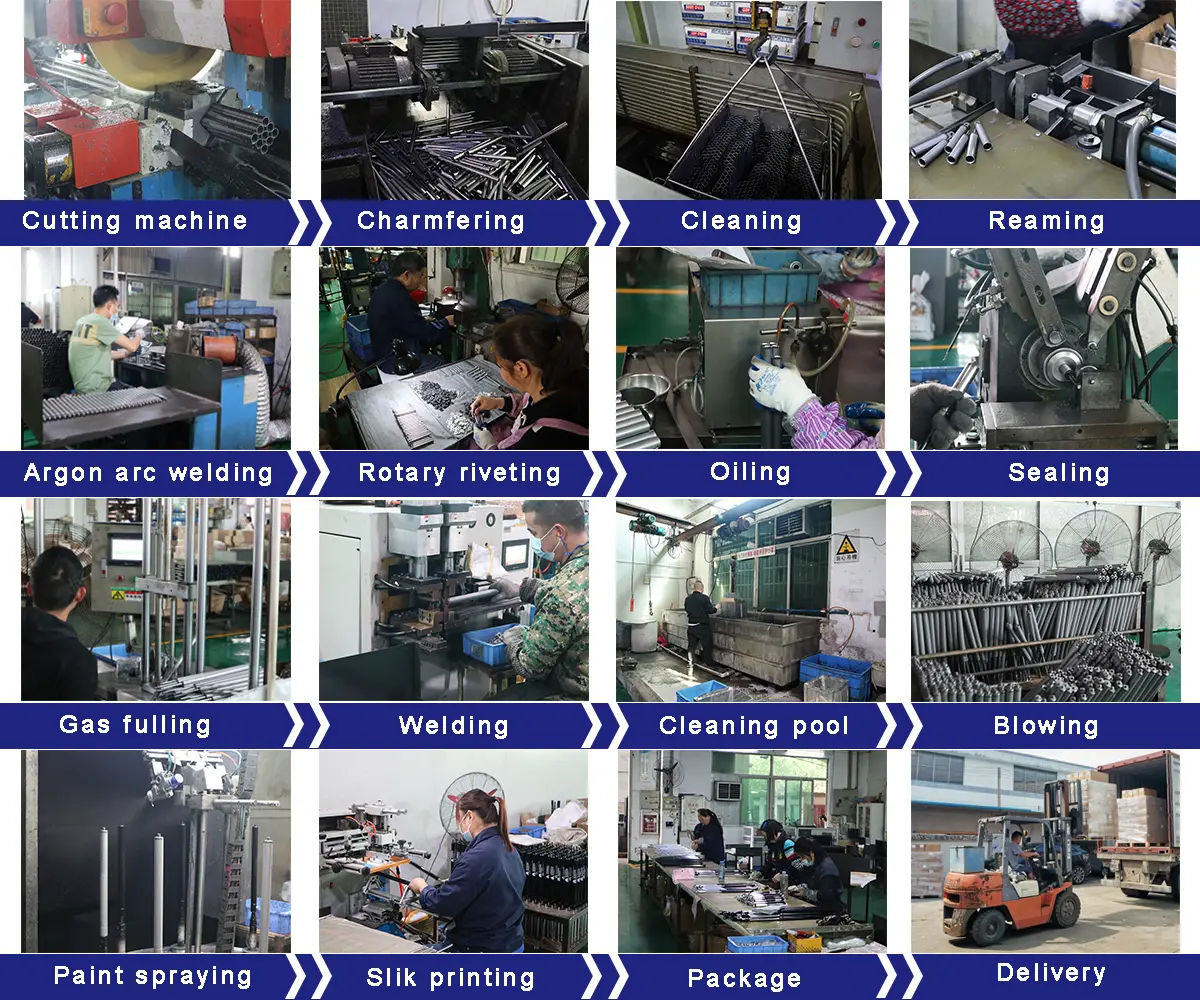
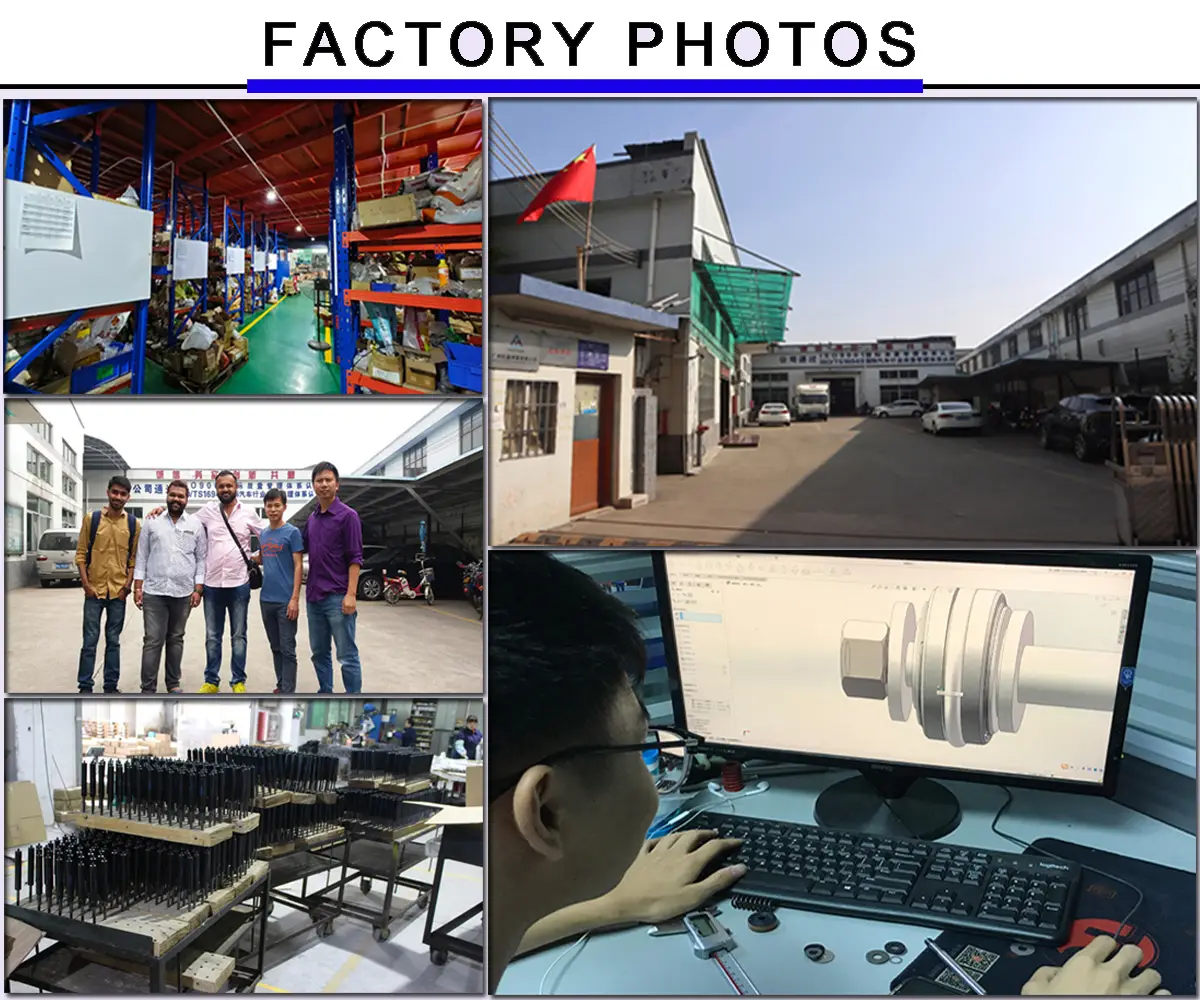
TieYing Factory Photos Show

TieYing Factory Gas Springs Production Flow


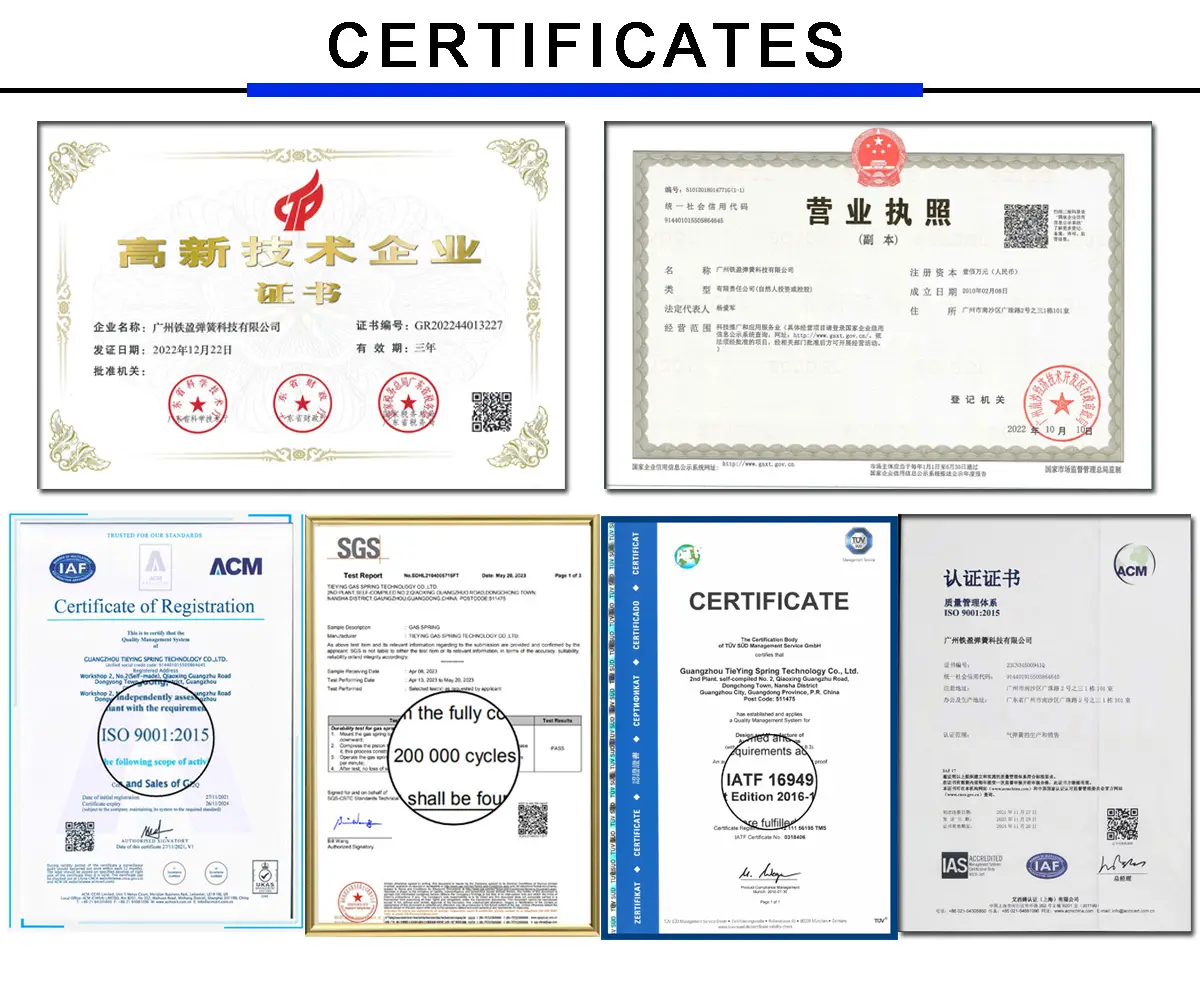
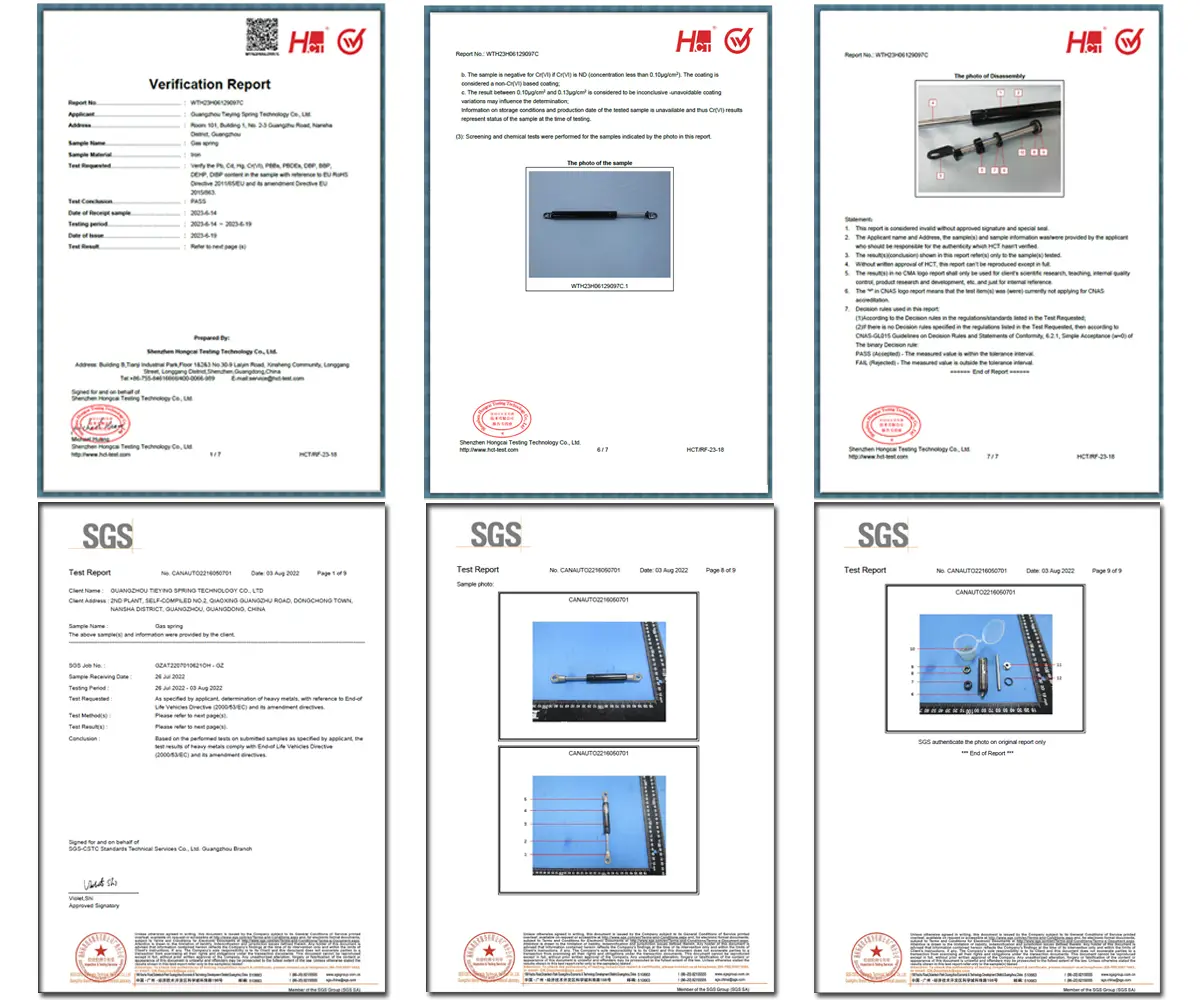
TieYing Factory Certifications & Quality Assurance
Factory Management System Certifications:
ISO 9001 – Quality Management System;IATF 16949 – Automotive Quality Management System
Product Testing & Compliance:
SGS – 200,000-Cycle Durability Test;RoHS – Restriction of Hazardous Substances


TieYing Factory Video Verified by SGS
Competitive Advantages of TieYing Factory Gas Springs
| Item | TieYing Gas Springs | Standard Gas Springs (Other Supplier) |
|---|---|---|
| Certificate | SGS 200000 Cycles Durability Test, ROHS, T16949, IS09001 | Maybe just ISO9001 |
| Material | Top seamless steel (Full inspection by Professional testing equipment) | Maybe steel |
| Oil | Anti-wear hydraulic oil from Garmany | Maybe Semi-Synthetic |
| Piston Roughness | Up to Ra 0.696um | Maybe Ra 0.4um |
| Gas spring resistance | 100°C~-40°C | Maybe 60°C |
| Gas | 99.99% nitrogen | Maybe oxygen / Impure nitrogen |
| Uselife | 80,000-200,000 cycles with SGS test report | Maybe 50,000 cycles |
| Salt spray testing | Up to 96 hours | Maybe up to 12 hours |
| Inspection | All procedure sampling inspect, complete inspect before delivery | Maybe sampling inspection |
| Defective product | Re-produce new, If reach 10%, 100% items re-produce new | Maybe Repair |
RV Gas Strut Manufacturing and Customization Process
We follow an application-focused process to help customers move from initial requirements to an approved gas spring specification.
Step 1 – Application Review
Share the RV component, its intended movement and the operating environment.
Step 2 – Technical Assessment
Our team reviews the moving weight, hinge position, mounting geometry, available space and required movement.
Step 3 – Specification Confirmation
Discuss the required force, stroke, extended length, compressed length, material and end fittings.
Step 4 – Sample Development
Where required, samples can be arranged for dimensional verification, installation checks and functional evaluation.
Step 5 – Production and Quality Inspection
Once the specification is approved, manufacturing proceeds according to the agreed product requirements and inspection arrangements.
Step 6 – Repeat Supply
For approved OEM and wholesale projects, TieYing can support repeat orders and ongoing product supply.
What Information Should You Provide for an RV Gas Strut Quote?
To help our team understand your requirements and recommend an appropriate gas spring configuration, please provide as much of the following information as possible.
| Required Information | Details |
|---|---|
| RV Type | Motorhome, caravan, campervan, fifth wheel or travel trailer |
| Application | Storage door, baggage hatch, cabinet, bed platform or other component |
| Moving Weight | Approximate weight of the door or moving assembly |
| Extended Length | Fully extended mounting distance |
| Compressed Length | Fully compressed mounting distance |
| Stroke | Required piston rod travel |
| Force | Required force in Newtons or pounds-force, if known |
| Mounting Points | Hinge position and mounting dimensions |
| End Fittings | Ball socket, eyelet, threaded or fork connections |
| Material | Steel, stainless steel 304 or 316 |
| Operating Environment | Indoor, outdoor, humid or corrosive conditions |
| Order Quantity | Sample, trial order or bulk production |
Don’t have the technical specifications?
You can start by sending:
- A photograph of the RV component.
- A photograph showing the existing gas spring.
- Pictures of the component in fully open and closed positions.
- The approximate weight of the moving panel.
- Measurements of the existing gas spring, if available.
- Your expected purchasing quantity.
Our team can review the information and discuss the next steps for your project.
Frequently Asked Questions About RV Gas Struts
What are RV gas struts used for?
RV gas struts are used to assist the opening and support of hinged components in recreational vehicles. Common applications include exterior storage doors, baggage compartments, utility access panels, overhead cabinets, lift-up beds and selected roof hatches.
Are RV gas struts different from standard automotive gas springs?
The operating principle is similar, but RV applications have different installation and environmental requirements. Road vibration, limited mounting space, lightweight structures, larger storage panels and temperature variations must all be considered when selecting an appropriate gas spring.
Can TieYing manufacture custom RV gas struts?
Yes. TieYing supports customized gas spring manufacturing based on technical drawings, samples, dimensions and application requirements. Force, stroke, extended length, compressed length, materials and end fittings can be discussed according to the project.
How do I calculate the correct force for an RV gas strut?
The required force depends on the moving component’s weight, centre of gravity, hinge position, mounting geometry, opening angle and number of gas springs. Panel weight alone is not sufficient to determine the correct force. A complete mechanical assessment is recommended.
Should RV gas struts be installed in pairs?
Some applications use two gas struts to distribute lifting support across a wider door or panel. Other mechanisms may use a single gas spring. The correct arrangement depends on the component dimensions, load distribution, mounting structure and mechanical design.
Can stainless steel gas struts be used on RV exterior compartments?
Yes. Stainless steel 304 and 316 options can be considered for applications exposed to moisture and corrosive environments. The appropriate material depends on the expected exposure and the requirements of the complete assembly.
Can gas struts hold RV storage doors open during travel?
Gas struts can assist with lifting and support during normal operation, but they should not be used as the only transportation locking system. RV doors and compartments require appropriate independent latches or retaining mechanisms to prevent unintended opening during travel.
What is the difference between an RV gas strut and an RV door shock?
A gas strut generates extension force to lift and support a moving panel. A damper or door check primarily controls movement and reduces unwanted speed or impact. Some RV entry doors use door checks, while upward-opening baggage doors commonly use gas struts.
Can TieYing manufacture replacement RV gas springs?
Yes. Existing samples, product markings, technical drawings, photographs and measurements can be used as starting points for replacement product evaluation.
Do gas spring forces change with temperature?
Yes. Gas spring extension force changes with temperature. Colder conditions generally reduce available extension force, while warmer conditions increase it. The selected gas spring should be evaluated against the intended operating temperature range.
Does TieYing support OEM and wholesale RV gas spring orders?
Yes. TieYing works with RV manufacturers, caravan builders, campervan converters, importers, distributors and component suppliers. We support customized manufacturing, sample development and bulk supply according to project requirements.
Looking for a Reliable RV Gas Strut Manufacturer?
Whether you are manufacturing motorhomes, designing caravan storage systems, developing campervan furniture or sourcing replacement gas springs, TieYing can help you find a suitable solution.
From exterior compartment doors and interior storage systems to specialized lifting mechanisms, we provide customized gas spring manufacturing based on your technical requirements.
Tell us about your RV application.
Send your drawings, product photographs, existing samples or technical specifications to our team.
Let TieYing help you develop reliable RV gas spring solutions for your next manufacturing project.
Contact TieYing Today for a Custom RV Gas Strut Quote.